
Online Casino Security in Australia: What It Means
 Available in AU

Technical safeguards, operator legality and payment routes are separate questions when assessing offshore real-money casino services in Australia.
Table of Contents
- What “Secure” Can—and Cannot—Mean in Australia
- A Secure Website Is Not the Same as a Safe Gambling Service
- Real-Money Play and the Limits of Offshore Protection
- Bonuses Do Not Verify a Casino’s Identity
- PayID, E-Wallets and the Route Back to the Bank
- Wallet Security, Game Versions and the Numbers Behind a Pokie
- Mobile Pokies Meet the Same Australian Rules
- Responsible-Gambling Protections and Their Legal Context
- Judging Security Without a “Best Casino” List
- Canadian Casino Searches, Australian Rules
- Casino Access
What “Secure” Can—and Cannot—Mean in Australia
“Secure” can describe a narrow set of technical qualities: a website may protect information in transit, for instance, or apply checks to account access. It cannot, by itself, settle the more consequential question of whether an online casino is permitted to serve people in Australia. Here, those ideas are often folded into one reassuring word. The law keeps them apart.
The Interactive Gambling Act 2001 prohibits operators based in Australia from offering online casino games to Australian residents. The wider legal position is that operators must not provide real-money online casino games to people physically in Australia. The Act does not explicitly make individual players criminally liable for using an offshore casino site. That distinction matters: the rules principally target providers, not the person who visits a site. It does not turn an offshore service into an authorised or protected one.
So “most secure online casino Australia 2026” is not a legal category. Nor does the phrase “secure online casino” establish that an operator is licensed in Australia. A service can make technical promises while remaining outside the Australian framework for online casino games. Security language may describe how a business handles data or accounts; it does not create a local licence, change the law, or confer the protections that come with an authorised service.
When assessing online casino security, check the licensing information and the practical details available for payments rather than relying on broad claims. The entries below summarise the stated facts for each operator.
1. Playfina Casino
License: Curacao eGaming (Hollycorn N.V., since 2017) · Min. deposit: A$20-30 (depends on the offer) Playfina Casino is listed with a Curacao eGaming license held by Hollycorn N.V. since 2017. Its minimum deposit is A$20–30, depending on the offer.
2. DragonSlots Casino
License: Curacao Gaming Authority (Jumpman Gaming Ltd) DragonSlots Casino is listed with a Curacao Gaming Authority license held by Jumpman Gaming Ltd.
3. LevelUp Casino
License: Curacao eGaming OGL/2023/174/0082 (Dama N.V.) · Min. deposit: A$15 LevelUp Casino is listed with Curacao eGaming license OGL/2023/174/0082, held by Dama N.V. Its minimum deposit is A$15.
4. Bizzo Casino
License: Curacao Gaming Control Board (TechSolutions Group N.V.) Bizzo Casino is listed with a Curacao Gaming Control Board license held by TechSolutions Group N.V.
5. LuckyVibe
License: Curacao Gaming Control Board OGL/2023/176/0095 (Hollycorn N.V.) LuckyVibe is listed with Curacao Gaming Control Board license OGL/2023/176/0095, held by Hollycorn N.V.
6. Thor Casino
License: Curacao – Antillephone N.V. (Versus Odds B.V.) · Min. deposit: EUR 20 Thor Casino is listed with a Curacao license associated with Antillephone N.V. and Versus Odds B.V. Its minimum deposit is EUR 20.
7. SpinsUp
License: Curacao Gaming Control Board OGL/2023/174/0082 (Dama N.V.) SpinsUp is listed with Curacao Gaming Control Board license OGL/2023/174/0082, held by Dama N.V.
8. SkyCrown
License: Tobique Gaming Commission · Payout speed: crypto ~10-15 minutes, fiat 1-5 days · Min. deposit: A$30 SkyCrown is listed with a Tobique Gaming Commission license. Stated payout times are around 10–15 minutes for crypto and 1–5 days for fiat; the minimum deposit is A$30.
9. MrPacho
Payout speed: crypto 30-120 minutes, fiat 24-72 hours · Min. deposit: A$30 MrPacho’s stated payout times are 30–120 minutes for crypto and 24–72 hours for fiat. Its minimum deposit is A$30.
10. Golden Pokies
License: Curacao Golden Pokies is listed with a Curacao license.
This is where a tidy label becomes misleading. A site might appear polished, publish detailed policies and describe itself as secure. Those features may be relevant to assessing its own systems, but they do not answer whether it is legally permitted to offer casino games to people in Australia. The adjective belongs to one part of the assessment, not the whole thing.
ACMA is Australia’s primary online gambling regulator. It can take enforcement action against operators that breach the Interactive Gambling Act, including issuing fines and seeking to block access to sites. ACMA can ask internet service providers to block websites that offer prohibited interactive gambling services to Australian customers, as well as unlicensed services offered to adults in Australia. Blocking orders are also available as a last resort where customer safety is considered to be at risk.
That enforcement role is not merely theoretical. Since its first request to block a gambling website, made in November 2019, ACMA has restricted access to 1,369 illegal gambling and affiliate sites. A block is a signal of regulatory action, not a consumer review or a verdict on every technical feature of a website. The distinction is worth keeping: enforcement addresses the service’s place in the Australian market; a security claim concerns what the service says it does.
No-minimum-deposit casinos in Australia: what it means · $2 Minimum Deposit Casinos in Australia: What to Know
The legal position also calls for care with the word “safe.” Offshore casino services do not sit inside Australia’s consumer-protection framework for locally authorised gambling services. If an offshore operator withholds winnings or disputes an account, Australian law may not provide the same practical route to remedy. The fact that the Act does not explicitly criminalise a player’s use of an offshore site should not be mistaken for a promise that the player will be protected in a dispute. Different questions, different answers.
Nor does technical confidence make an offshore offer lawful. Using a VPN to reach a casino may breach the site’s own terms and can lead to winnings being voided, an account being closed, or a deposit being lost. It does not change the Australian legal status of the service. Concealment is not authorisation.
The language of online safety tends to gather everything into one basket: encryption, identity checks, fair treatment, legal oversight, reliable payment and help when something goes wrong. But those safeguards belong to different systems, and one cannot stand in for another. A website’s technical controls may help protect information. They cannot make a prohibited service legal, compel an offshore operator to resolve a dispute fairly, or supply Australian consumer protections where none apply.
That is the useful limit on any claim to be a secure casino online. In Australia, “secure” may describe a technical feature; it cannot serve as a blanket endorsement of the service. The law draws a boundary around what operators may offer, while leaving individual players outside the Act’s explicit criminal provisions. Neither side of that distinction should be stretched into more than it says.
VPN Usage
Using a VPN to access a casino may breach terms and lead to winnings being voided, accounts being closed, or deposits being lost.
A careful assessment therefore begins by separating the questions. What does the operator claim about its systems? Is it permitted to offer the service in Australia? What protection exists if the relationship breaks down? A favourable answer to the first question cannot answer the second or third.
The word sounds complete. It isn’t.
A Secure Website Is Not the Same as a Safe Gambling Service
A secure internet casino can mean little more than a website that encrypts information moving between a visitor’s device and its servers. SSL encryption is used to protect transactions and sensitive details from being read in transit. That is a worthwhile technical safeguard. It is also a narrow one.
The familiar signs of a protected connection can tell something about the route data takes, not what happens at the other end. Encryption does not establish who operates a site, whether its security claims are accurate, how information is handled once received, or what recourse exists if a dispute arises. A locked door says nothing about the character of the house.
That distinction matters especially in Australia. A secure connection does not make an online casino authorised to serve people here, nor does it turn a prohibited service into a lawful one. The Interactive Gambling Act 2001 bars domestic operators from offering online casino games to Australian residents. Technical protection and legal status answer different questions.
The phrase “secure casino site” is therefore incomplete as a judgement. It describes, at best, one layer of the website’s operation. It cannot stand in for a broader assessment of the service or its standing under Australian law. A polished interface, encryption badge or confident privacy statement may look reassuring; none independently proves that customers have enforceable protections.
Low Deposit Online Casinos in Australia: What to Know
There is a social history in this confusion. The internet made a visible sign of security easy to display, while the harder questions—who holds power, who answers complaints, and which rules apply—remain less visible. The small symbol is immediate. Accountability is not.
A website’s encryption claim should be read for what it can support: sensitive information and transactions may be shielded as they travel. It should not be stretched into a promise about the operator, the legality of the service, or the treatment of customers. Security is a component, not a verdict.
Real-Money Play and the Limits of Offshore Protection
A real-money casino account can appear orderly from the customer’s side: a balance is displayed, a withdrawal request can be submitted, and a support channel may answer. Those details describe how a service presents and handles an account. They do not establish what protection applies if a dispute arises, or whether the service may offer casino games to people in Australia.
$20 Minimum Deposit Pokies in Australia
That distinction matters because the Interactive Gambling Act 2001 prohibits operators from providing online casino games to people physically located in Australia. Online slots and table games such as blackjack are among the prohibited offerings. A site’s offshore location, branding or claims about its home jurisdiction do not change the Australian status of the service. Nor does a polished cashier turn a prohibited product into a lawful one.
The rules are directed at operators, not framed as a general criminal penalty for individual players using offshore casinos. That does not make an offshore account equivalent to an Australian consumer relationship. Where the service is not licensed in Australia, the ordinary protections associated with a locally authorised gambling product are absent; Australian laws may not help if winnings are withheld or an account dispute cannot be resolved. The gap is practical as well as legal: an Australian customer may have limited routes to enforce a claim against a business operating elsewhere.
ACMA Verification
ACMA provides a public register to check whether a wagering service holds a valid Australian licence, though this does not make online slots or blackjack permissible.
A site may still process deposits and withdrawals as part of its own business. But a record of successful transactions, a posted payout policy or an account balance is not a local guarantee that money will be returned when requested. The operator controls its own account rules, and a customer’s ability to challenge a decision depends on more than the appearance of a functioning website. Offshore protection is not simply Australian protection delivered from another address.
The difference can be obscured by the language of safety. A service may describe itself as secure, present a real-money cashier and show games that appear familiar. None of those signals answers the prior question of whether online casino play is legally available to Australian residents. In this market, online casino games are not a class of service that becomes lawful through a foreign licence or a reassuring interface.
ACMA, Australia’s online gambling regulator, points people towards its website and public register for information about legal gambling products. The register can be used to check whether a wagering service holds a valid Australian licence. That is a useful verification step for services that may lawfully operate here; it should not be read as a way to locate a licensed online casino. The category matters. A wagering service on the register does not thereby make online slots or blackjack permissible.
The register is also a better starting point than a badge reproduced on an operator’s own page. A claim is made by the party that benefits from belief in it; a public record serves a different purpose. Even so, the check has a defined scope: it concerns whether a wagering service holds an Australian licence, not whether an offshore casino’s account procedures are dependable or whether a particular dispute would be resolved in the customer’s favour.
Casino sites not on BetStop in Australia explained
The word “safe” often carries several ideas at once: that personal details are handled carefully, that money can be withdrawn, that games are offered lawfully, and that someone can intervene when things go wrong. These are separate questions. A technical safeguard may concern information; an operator’s policy may concern transactions; Australian law determines whether the underlying casino service can be provided here. Combining them into one reassuring label hides the most consequential distinction.
Access can also be less stable than a site’s own presentation suggests. ACMA can ask internet service providers to block prohibited interactive gambling services offered to Australian customers. A site that opens today is not thereby authorised to serve the Australian market tomorrow, and an attempt to reach it through a VPN does not repair that status. Using a VPN may lead to winnings being voided, an account being closed and a deposit being lost. A detour is not a licence.
For anyone assessing real-money casino claims in Australia, the essential separation is between a business’s handling of an account and the protection the law can actually provide. A smooth transaction is evidence of a transaction. It is not evidence that the service is licensed in Australia, that casino play is permitted, or that an Australian remedy will be available if the money is disputed. The register helps identify lawful products. It does not make prohibited ones safe.
Real-Money Risks
- Technical security does not equal legal authorisation in Australia.
- Offshore operators may fall outside the Australian consumer-protection framework.
- A functioning cashier is not a guarantee of fund recovery.
- ACMA may block prohibited interactive gambling services.
Bonuses Do Not Verify a Casino’s Identity
A welcome offer can make a gambling service look established: polished wording, a prominent bonus figure and a list of conditions create the impression of a business with its paperwork in order. They prove no such thing. A promotion is a claim made by the operator, not evidence of who stands behind the site or what safeguards apply. For Australian residents, it is not proof that an online casino offer is lawful or available.
Identity checks are more concrete, though they answer a narrower question. Casinos conduct know-your-customer procedures and require identity verification before allowing withdrawals. The process commonly asks for photo identification, proof of address and evidence that the payment method belongs to the account holder. Those documents connect a person to an account and a payment route; they do not turn a promotional promise into a guarantee.
The timing matters. Verification may arise only when money is being withdrawn, after an account has been opened and activity has taken place. That can make the bonus feel like the entrance to a straightforward arrangement, while the identity review is waiting at the exit. The paperwork is not a decorative afterthought. Nor does its presence settle every question about a service: it shows that a check is being requested, not that the promotion is dependable or the operator is authorised to offer casino games in Australia.
There is a small social history in the bonus itself. Gambling promotions borrow the language of welcome and generosity, though the relationship they describe is commercial. A gift is usually understood as freely given; a bonus arrives with conditions and a separate identity process. The word does a great deal of quiet work.
Pokies Open Near Me in Australia: Hours and Access
A safer reading of such claims keeps the categories apart. Promotional language says what an operator wants to advertise. KYC describes a procedure connected with identity and withdrawals. Neither should be mistaken for the other, and neither establishes that a casino is licensed in Australia. A site can request documents without making its offer lawful for Australian residents.
When withdrawal verification is requested, the documents commonly concern three things: identity, residence and ownership of the payment method. That is the useful detail to recognise in the process. A bonus headline cannot substitute for it, and an identity check cannot certify the headline.
Different questions.
PayID, E-Wallets and the Route Back to the Bank
A payment method is often judged by the speed of money arriving. The more revealing question is whether the route works in both directions. A deposit option may be prominent at checkout yet have no matching role when a withdrawal is requested. The names on a payment page, then, describe possible entry points—not necessarily a complete journey.
A specialist gambling-payment review describes PayID transfers as generally moving through Australia’s New Payments Platform, with funds sometimes clearing within minutes after release. The qualification matters: the reported speed concerns the transfer once released, not every stage that may come before it. A separate specialist review groups PayID and some e-wallets among methods that may move quickly after approval, while describing bank transfers and cards as capable of taking several business days. These are reported processing patterns, not guarantees attached to the payment names.
Do
- Distinguish between transaction speed and service security.
- Check if a payment method works for both deposits and withdrawals.
- Note that PayID may clear quickly once released.
Don’t
- Assume a deposit logo guarantees a withdrawal route.
- Mistake a fast network for a guarantee of transaction approval.
- Assume “secure PayID” certifies the casino using it.
The distinction between approval and transfer is easy to miss. A payment can be pending before it enters the banking route at all; a quick network cannot make an unreleased transaction move. Nor does speed tell much about the conditions attached to a withdrawal. It answers one narrow question—how long a transfer may take—not whether the service will approve it or whether a payment method can be used in both directions.
Deposits are not withdrawals
POLi illustrates the asymmetry. A specialist review characterises it mainly as a deposit method, so its appearance among ways to add funds should not be taken to mean that money can be withdrawn through it. The label at the deposit stage is not a promise about the route back.
Cards can be similarly uneven. According to a specialist payment review, card withdrawals may be slower, or unavailable, depending on the processor. “Card” is therefore not a single timetable or a universal withdrawal option. The processing arrangement matters, and the route offered for deposits may not be reproduced for withdrawals.
E-wallets can also be quick after approval, according to the specialist review describing payment timing, but speed alone leaves practical questions unanswered: whether the same wallet is accepted for a withdrawal, what approval involves, and how the service handles a delay. A list of payment logos cannot settle those questions. Convenience is a direction of travel, not a complete map.
Pokies Parlour Casino in Australia: Venue Guide
That is why comparisons of secure casino payments should distinguish the movement of funds from the security of the service holding the account. A transfer that clears quickly does not, by itself, establish who controls the destination or what protections apply if a payment is disputed. Conversely, a slower bank route does not by itself explain why a transaction is delayed. Processing time is a useful detail, but a poor substitute for understanding the route.
The phrase “secure PayID” can make a payment method sound like a verdict on the casino using it. It is not. PayID identifies a transfer route; it does not certify every business that accepts it. The same goes for e-wallets and cards. Each method may shape timing and availability, but the name of the method cannot carry the weight of a wider assurance.
The route back to a bank is often less visible than the route out. A deposit page shows what can enter; withdrawal conditions reveal whether that channel is open in reverse, and how long the return may take. Specialist reviews report that bank transfers and cards can take several business days, while PayID and some e-wallets may be quicker after approval. The difference is worth noticing. It is not a guarantee.
Wallet Security, Game Versions and the Numbers Behind a Pokie
A wallet can look like a neat boundary: money on one side, a game on the other. But the word “wallet” says little by itself about how an online service handles an account, and a familiar payment label cannot establish the security of the gambling service around it. Nor does the appearance of a game settle whether its underlying numbers are what a player assumes. These are separate questions, often blurred together by the convenience of a single screen.
Finding the RTP
To find the return to player (RTP) for a pokie, check the game’s information or help screen, which is commonly accessed via a menu or an “i” symbol.
For a pokie, the useful figure to look for is its return to player, or RTP. The game’s information or help screen is the place to check; it is commonly opened through an “i” symbol or a menu. The figure describes the game’s stated return across play, not a promise about an individual session. A run of play can depart sharply from the long-run measure. Numbers have a patient manner. People do not.
Even the name of a game may not identify one fixed RTP. Some providers release the same title in multiple RTP versions, and the operator selects which version to offer. A familiar title, therefore, does not guarantee that its settings match another version of that title elsewhere. The information screen matters more than the artwork, the theme, or the remembered name.
That distinction also sets a boundary around claims of game security. Finding an RTP is a way to inspect a stated game setting; it is not, on its own, evidence that every aspect of a game or service has been independently verified. Conversely, a wallet being described as secure does not tell anything definite about the RTP in a pokie. One label concerns account handling; the other concerns a game’s stated return. Neither should be asked to certify the other.
The public language of online gambling tends to compress these matters into a single reassuring impression: a wallet, a game, a number, all polished into one promise. A closer reading separates them. The game’s help screen can show which RTP version is in use, while the wallet’s presence alone cannot answer broader questions about service security. A displayed number is specific; a general assurance is not.
$1 Minimum Deposit Pokies in Australia: Payment Limits
In Australia, such distinctions do not change the legal position of online casino games. The figures may help explain what a game says about itself, but they do not turn the surrounding service into an authorised offering. That is a different question entirely.
Mobile Pokies Meet the Same Australian Rules
A pokie on a phone can feel like a different kind of activity from one on a desktop. The screen is smaller, the device travels, and the game sits among ordinary apps and messages. But the change is in the way the service is reached, not in what the service offers.
In Australia, online slots and casino games, including blackjack, are not lawful offerings. Putting a slot game into a mobile-friendly layout does not alter that status. Nor does calling it a mobile casino, presenting it as an app, or making it available through a browser. The device is a doorway; it does not redraw the legal boundary.
That distinction matters because “secure” can sound like a complete description. A mobile site may present itself as polished or protected, but those qualities do not answer whether the underlying casino game may be offered to people in Australia. A phone can make access feel immediate and personal. It cannot confer permission.
The pocket-sized format also blurs the line between entertainment and service. A game may open with the familiar ease of a social app, yet the legal question turns on the activity being supplied, not on the size of the display or whether the software was downloaded. The interface changes. The category does not.
This is why descriptions of secure online pokies in Australia should be read with care. The word “secure” may concern how a platform presents its mobile experience; it is not a synonym for lawful. A well-designed screen is still only a screen. And a mobile version of casino play remains casino play.
Attention: A mobile-friendly layout, app, or browser access does not change the legal status of online slots or casino games in Australia.
The law is less impressed by convenience than product designers tend to be. In this case, that is the point: switching from a computer to a phone does not create a separate legal exception for online slots or casino games. The same Australian rules apply, whether the game is viewed in landscape, portrait, or between other errands.
Responsible-Gambling Protections and Their Legal Context
Security is often reduced to the things a site can demonstrate: a protected connection, account checks, a payment process. Player welfare is a different question. Deposit limits and clear routes to help are intended to reduce gambling-related harm; they do not show that a service is technically secure, and they cannot change its legal status.
A specialist review describes licensed online casinos as offering deposit limits that can be set daily, weekly or monthly. That is a description of a practice, not evidence that such casino services are licensed in Australia or that the feature is standard across the market. Where limits are offered, their value lies in giving a person a way to set a boundary before gambling begins. They are not a guarantee that harm will be prevented.
Reputable gambling platforms also provide information about gambling-related harm and direct people to professional support services across Australia. The distinction matters: a link to help is useful only as part of a wider duty of care, not as decoration beside a deposit button. Information and support can make a service more attentive to the risks it creates, but they do not make those risks disappear.
Australia’s legal framework sets a separate boundary. The Interactive Gambling Act 2001 prohibits operators from providing online casino games to Australian residents. Its responsible-gambling requirements apply to licensed operators, but a welfare feature does not transform a prohibited online casino offering into a lawful one. Nor does the presence of limits or support information amount to Australian authorisation.
$5 Minimum Deposit Pokies in Australia: What to Know
That leaves two ideas which should not be collapsed into one. A service may describe measures intended to help manage gambling, while its legal position remains a different matter. In Australia, the existence of a safeguard is not a licence. And a limit is only a limit.
Judging Security Without a “Best Casino” List
A ranking can make security look like a product feature: compare a few badges, sort by payout speed, and award a winner. In Australia, that neat arrangement misses the first question. Online casino services for Australian customers are prohibited, so a polished website or confident claim of security does not establish that the service is lawful or that local protections apply.
A more useful assessment separates evidence into categories. A site may describe technical safeguards, identity checks or payment processing; those statements concern how it says it operates. They do not establish that it is licensed in Australia, nor do they create Australian consumer protections. Offshore services lack those protections, and Australian law may not help if a service withholds winnings. A VPN does not resolve that problem: using one to reach a casino may lead to winnings being voided, an account being closed or a deposit being lost.
The enforcement record offers a different kind of signal. ACMA is Australia’s online gambling regulator and can seek to block access to prohibited services. It may ask internet service providers to block websites that offer prohibited interactive gambling to Australian customers, or unlicensed services to adults in Australia. Blocking orders are available as a last resort where customer safety is considered at risk. That is enforcement, not an endorsement of any other site.
Highest-Payout Online Casinos in Australia: RTP Explained
ACMA’s published figures describe activity in more than one way. Its reporting records about 1,011 illegal gambling and affiliate websites blocked after the regulator began making blocking requests in November 2019. A separate figure counts 1,154 illegal gaming and affiliate websites whose access was permanently restricted through blocking-order requests from 2019 onward. The figures have different descriptions and should not be added together as though they were a single tally. They point, nonetheless, to sustained intervention rather than a symbolic warning.
There is also a market-exit measure. Around 220 illegal services are reported to have left Australia voluntarily after stricter rules were enforced in 2017. A departure is not proof that every remaining service has become safe; it shows that regulation has changed which businesses are willing to serve the market. The distinction is useful. A site’s continued availability, including through a new address, is not evidence of approval.
For anyone evaluating a security claim, the practical test is therefore not whether a site appears at the top of a list. Separate observable claims from legal status; treat regulator action as an enforcement signal, not a quality ranking; and be wary of language that turns an offshore licence or a technical badge into a promise of Australian recourse. The phrase “best secure online casino” suggests that the task is to find a superior option. In this market, the more consequential question is what the claim can actually prove.
A blocked website is not a verdict on every detail of its security. Nor does the absence of a block amount to clearance: ACMA’s actions identify enforcement, while silence is not certification. That is a less convenient measure than a league table. It is also a more honest one.
$10 Minimum Deposit Pokies in Australia
Canadian Casino Searches, Australian Rules
A Canadian label does not change the Australian setting of this page. The relevant distinction is not the wording attached to a casino, but where the service is offered and where its customers are located. Under the Interactive Gambling Act 2001, operators must not provide online casino games to people in Australia. The rule applies to online slots and table games, including blackjack.
It does not establish what rules apply to a casino service in Canada, or whether a particular service meets them. Canada is not a substitute jurisdiction for an Australian question; nor does a service’s name, branding or intended audience determine its status for someone physically in Australia. Geography is less decorative than marketing would prefer.
The word “secure” can also carry different meanings. It may describe a website’s technical handling of information, while legal status concerns whether an operator may offer the service to people in a particular place. Those are separate matters. A Canada-focused description cannot, by itself, establish that an online casino may lawfully serve Australian customers or that Australian protections apply.
$1 Minimum Deposit Casinos in Australia Explained
ACMA is Australia’s online gambling regulator. Its public register is the relevant place to check whether a wagering service holds an Australian licence. That check does not answer questions about Canadian law; it addresses the Australian licensing position. The distinction matters because familiar flags, currencies or regional labels can suggest a jurisdiction without settling which rules govern an offer.
The Interactive Gambling Act does not explicitly criminalise individual players for using offshore casino sites. That does not make online casino games lawful for operators to provide in Australia, or turn an offshore description into Australian authorisation. The law draws its line around the service and its provision, not around the confidence of its branding.
Canadian casino wording, then, is not evidence of a service’s Australian status. For an Australian-facing assessment, the useful questions remain local: whether the service is permitted to offer the product here, and what ACMA’s register says about its licence. Anything beyond that requires a separate account of the rules in the jurisdiction concerned.
What are the legal consequences for Australian players using offshore casinos?
The Interactive Gambling Act does not explicitly make individual players criminally liable for using offshore casino sites; its main restrictions target operators. However, offshore sites are not covered by Australia’s consumer-protection framework, and using a VPN may breach a site’s terms and risk account closure or lost winnings.
What responsible gambling tools and support services are available?
Licensed gambling services provide deposit limits that can be set daily, weekly or monthly, and reputable platforms share information about gambling-related harm and direct players to professional support services in Australia. These protections do not make online casino games lawful in Australia.
How long should a withdrawal take from a secure casino?
After approval, PayID transfers can clear within minutes, while bank transfers and card withdrawals can take several business days. Withdrawals may also require identity and payment-method verification first.
Casino Access

$1 Minimum Deposit Casinos in Australia Explained
The advertised threshold may reflect the casino’s cashier settings, while payment processors can impose a...

$1 Minimum Deposit Pokies in Australia: Payment Limits
An operator’s stated minimum may not match the amount a bank, wallet or processor can...

$10 Minimum Deposit Casinos in Australia: What to Know
The casino’s stated minimum may differ from a payment provider’s floor, while withdrawal rules and...

$10 Minimum Deposit Pokies in Australia
A site's stated minimum can differ from the amount a payment method will process, so...

$2 Minimum Deposit Casinos in Australia: What to Know
The advertised casino minimum is only one part of the transaction; payment limits, bonus terms...

Understanding $20 Minimum Deposits at Australian Casinos
The amount accepted depends on both the casino’s deposit settings and the minimum imposed by...

$20 Minimum Deposit Pokies in Australia
The usable minimum can depend on both the operator’s limit and the payment route, while...

$5 Minimum Deposit Casinos in Australia: What to Check
A casino’s stated minimum can differ from the payment method’s floor, so the amount needed...

$5 Minimum Deposit Pokies in Australia: What to Know
The operator’s stated minimum can differ from the amount a payment route accepts, shaping whether...

Casino sites not on BetStop in Australia explained
BetStop status, Australian licensing rules and offshore access are separate issues, and account availability does...

Curaçao Casino Licences for Australian Players
The guide separates operator obligations under Australian law from the legal position of individuals using...

Highest-Payout Online Casinos in Australia: RTP Explained
Slot RTP describes a game’s theoretical return over extended play, not an individual result or...

Low Deposit Online Casinos in Australia: What to Know
Payment limits, bonus conditions and withdrawal thresholds can affect how useful a small starting balance...

No-minimum-deposit casinos in Australia: what it means
An operator may set no deposit floor, while a bank or payment service still limits...

Pokies Open Near Me in Australia: Hours and Access
Australian casino hours vary by venue and holiday, and a listed opening time does not...
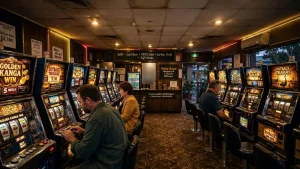
Pokies Parlour Casino in Australia: Venue Guide
The phrase points to a physical gaming setting, while online offers and casino access raise...

Safe Online Casinos in Australia: What the Law Says
Online casino games cannot lawfully be offered to people in Australia, so payment security and...

VPN-Friendly Casinos in Australia: Access and Rules
A VPN can alter the connection route and apparent IP location, but it does not...



































































































































































































