
Big Red Pokies Online in Australia: Free Play
 Available in AU
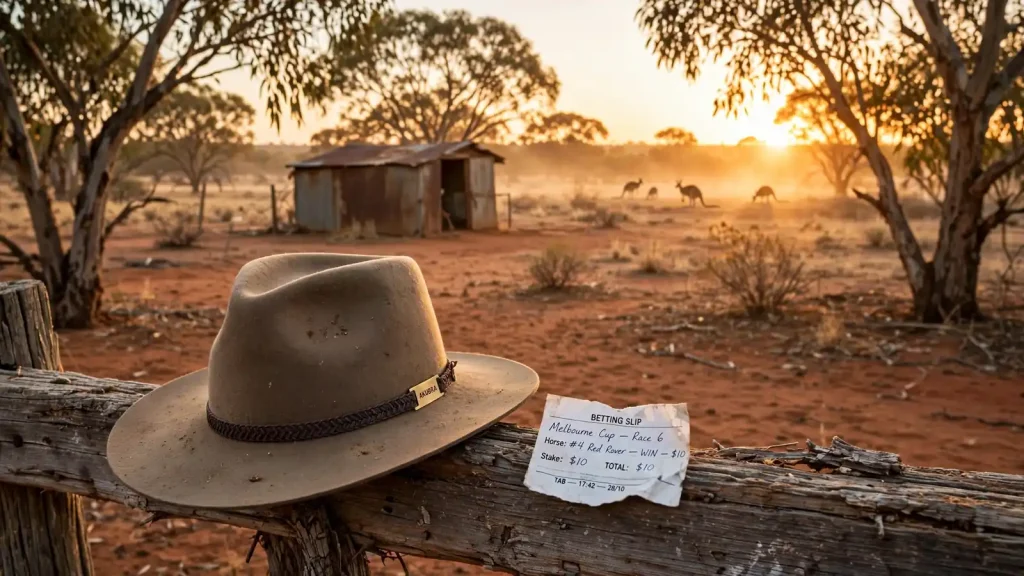
A clear look at demo play, real-money rules and why a familiar game name cannot confirm a particular version or its availability.
Table of Contents
- Free Play, Without the Cashier
- What “Big Red” Can—and Cannot—Tell Us
- The Legal Divide Around Real-Money Play
- A Spin Is Not a Signal
- Free Online Play and the Meaning of RTP
- Demo Mode Is Still Random
- Game Names, Versions and Return Settings
- A Download Search in a Blocked-Site Landscape
- The Kangaroo Name, Without an Unverified Game Claim
- Pokies by
Free Play, Without the Cashier
“Free” sounds like a simple promise: play without putting money at stake. In practice, the word describes a hoped-for cost arrangement, not a complete account of what is available. It does not, by itself, identify a particular Big Red pokie, show that a game can be opened, or establish what kind of play a site provides. The distinction matters because a familiar name and an appealing adjective can make an uncertain offer feel more definite than it is.
The interest in free play is easy to understand. Pokies are built around repeated decisions and immediate results; removing the stake changes the terms of that encounter. A person may want to see how a game looks, follow its rhythm, or simply spend time with it without risking cash. That intention is different from choosing a game in order to gamble for money. It is also different from being told that a particular free version is ready to use. An expression of interest is not an invitation or a guarantee of access.
Choosing a big red pokies site in Australia means weighing the details you can verify before you play. These short verdicts highlight the available licensing, deposit and payout information for each option.
1. Playfina Casino
License: Curacao eGaming (Hollycorn N.V., since 2017) · Min. deposit: A$20-30 (depends on the offer) Playfina Casino is listed with a Curacao eGaming license held by Hollycorn N.V. since 2017. Its minimum deposit is A$20–30, depending on the offer.
2. DragonSlots Casino
License: Curacao Gaming Authority (Jumpman Gaming Ltd) DragonSlots Casino is listed with a Curacao Gaming Authority license under Jumpman Gaming Ltd. The available details here are limited to its licensing.
3. LevelUp Casino
License: Curacao eGaming OGL/2023/174/0082 (Dama N.V.) · Min. deposit: A$15 LevelUp Casino is listed with Curacao eGaming license OGL/2023/174/0082, held by Dama N.V. Its minimum deposit is A$15.
4. Bizzo Casino
License: Curacao Gaming Control Board (TechSolutions Group N.V.) Bizzo Casino is listed with a Curacao Gaming Control Board license under TechSolutions Group N.V. Its available details here are limited to its licensing.
5. LuckyVibe
License: Curacao Gaming Control Board OGL/2023/176/0095 (Hollycorn N.V.) LuckyVibe is listed with Curacao Gaming Control Board license OGL/2023/176/0095, held by Hollycorn N.V. The supplied information focuses on its licensing.
6. Thor Casino
License: Curacao – Antillephone N.V. (Versus Odds B.V.) · Min. deposit: EUR 20 Thor Casino is listed with a Curacao license associated with Antillephone N.V. and Versus Odds B.V. Its minimum deposit is EUR 20.
7. SpinsUp
License: Curacao Gaming Control Board OGL/2023/174/0082 (Dama N.V.) SpinsUp is listed with Curacao Gaming Control Board license OGL/2023/174/0082, held by Dama N.V. The available details here are limited to its licensing.
8. SkyCrown
License: Tobique Gaming Commission · Payout speed: crypto ~10-15 minutes, fiat 1-5 days · Min. deposit: A$30 SkyCrown lists a Tobique Gaming Commission license and a minimum deposit of A$30. Its stated payout speeds are around 10–15 minutes for crypto and 1–5 days for fiat.
9. MrPacho
Payout speed: crypto 30-120 minutes, fiat 24-72 hours · Min. deposit: A$30 MrPacho lists a minimum deposit of A$30. Its stated payout speeds are 30–120 minutes for crypto and 24–72 hours for fiat.
10. Golden Pokies
License: Curacao Golden Pokies is listed with a Curacao license. No further operator-specific details were supplied.
The cashier is a useful dividing line, but not a full description. If no money is being wagered, there is no cash stake in that play. Yet the word “free” does not settle whether access requires an account, whether a site attaches conditions, or whether the game is actually offered in that form. Nor does it mean that every result can be exchanged for money. Those details depend on the specific arrangement, and the label alone cannot supply them.
There is a small linguistic sleight of hand here. “Free” can mean that a price is absent, that a charge is waived, or that something is being advertised as a no-cost version. In a search for Big Red pokies, it may also express a preference rather than describe an existing product. The same phrase can therefore point toward several different expectations: no deposit, no wager, an introductory offer, or simply a way to look at a game. They should not be treated as interchangeable.
That is why free play should not be read as proof of a particular mode. The word says something about the expected cost to the player; it says much less about the game’s configuration or the conditions around it. A free label is not a technical specification. It cannot establish whether the experience is a demonstration, a promotional arrangement, or another kind of access, and it cannot verify that any of those forms exists for a title called Big Red.
Best pokies in Perth: hours and comparison limits
Nor does “free” make a game’s underlying operation legible. A pokie’s visible symbols and sounds can create the impression of a small drama, with each spin seeming to follow the last. But the label attached to play does not change the basic mechanism: the outcome of a spin is generated at random, separately from the one before it. A no-cost setting is not evidence that results are arranged to teach a pattern, reward patience, or prepare someone for a later wager. It is only a description of cost, if the description is accurate.
There is a human reason these distinctions often blur. A free version can sound like a harmless preview, and a preview can feel like a private test: a way to decide whether a game is worth returning to. Yet a result obtained without a stake cannot demonstrate what a future money wager would produce. It may provide a sense of a game’s presentation, but it cannot turn chance into a forecast. The screen can be vivid; the information it gives remains narrow.
The phrase “free Big Red pokies” also carries a kind of assumed familiarity. It sounds as though the name points to a known game and the only remaining question is whether it costs anything to play. But the wording itself does not establish a specific product or catalogue entry. It is possible to express the wish to play a named pokie for free without having confirmed the identity of that pokie or the existence of a free version. Naming a desire is not the same as verifying its object.
Attention: A free label is not a technical specification and cannot verify the existence of a particular game or guarantee access to it.
A careful reading, then, keeps the claim modest. Free play means that the search is oriented away from staking money; it does not certify a game, promise access, reveal its settings, or make outcomes informative about later gambling. Those are separate questions, and the adjective cannot answer them all. The cashier may be absent. The uncertainty is not.
What “Big Red” Can—and Cannot—Tell Us
“Big Red” sounds like a name, but a name is not an identity card. In the phrase “Big Red pokies”, it could be read as the title of a particular game, a description attached to one, or simply the words someone uses when trying to recall a pokie. Those readings are not interchangeable. Without a confirmed title or other identifying detail, the phrase cannot settle which one is intended.
That distinction matters because online games are encountered through names, menus and promotional descriptions, all of which can make a loose label look more definite than it is. A short phrase may feel familiar while still failing to point to one identifiable game. “Big Red” has the shape of a title; shape alone is not proof. A search for Big Red online pokies therefore does not, by itself, establish a particular game, a provider or a product.
Best pokies in Geelong: what local searches can confirm
The word “red” can suggest many things in ordinary language: a colour, a nickname, a visual theme, even a remembered fragment of a longer name. “Big” adds emphasis, but no precision. Together, the words are evocative rather than diagnostic. They could describe an image or a memory as easily as they could name a product. That is a useful boundary to keep in view: what a phrase brings to mind is not the same as what it identifies.
A reliable identification would need something more specific than an impression. A complete game title, a provider name, or another clear marker could distinguish one product from another. None should be supplied by guesswork. Attaching a provider to the phrase without confirmation would turn resemblance into attribution; adding a supposed catalogue entry would make the same mistake at greater length. The result might read neatly, but neatness is not evidence.
This is also why apparent familiarity can mislead. A person may remember a red symbol, a large character, or a name heard in passing and later compress that memory into “Big Red”. Another person may use the same words to mean something entirely different. The phrase is easy to repeat and difficult to pin down. It offers a direction, not a destination.
Best Pokies in Sydney: What Location Searches Reveal
The broader label “Big Red pokies Australia” does not resolve the ambiguity. Adding a place can describe the context in which someone is looking, but it does not make the name more exact. Nor does adding “online” transform a general phrase into a confirmed product identity. These additions can make the wording more specific on the page while leaving its central uncertainty untouched.
There is a small cultural point in that habit. Names are how people carry fragments of entertainment from one setting to another: a colour, a nickname, a remembered image. The fragment can outlast the details around it. Search boxes encourage compression; memory does the same. A few words become a stand-in for a whole experience, even when the words cannot reconstruct its source.
For that reason, “Big Red” should be treated as an ambiguous label rather than as a verified title. It does not establish a distinctive feature, a provider, or a particular version of a game. Those details should not be inferred from the apparent confidence of the phrase. The wording may be memorable. Identification requires more.
The only general point that applies to pokies as a category is that outcomes are not encoded in a name: each spin is produced by a random-number generator, independently of the preceding spin. That does not identify a Big Red game or make the phrase clearer. It simply marks the limit of what a name can explain about a play result.
So the phrase can be recognised without being over-interpreted. It signals an interest in a possible pokie name, but does not, on its own, establish what that name refers to. A careful account leaves the gap open rather than filling it with a plausible-sounding title. Less tidy, more honest.
The Legal Divide Around Real-Money Play
A search for a Big Red pokie played for cash runs into a distinction Australian law draws between the person playing and the business offering the game. Under the Interactive Gambling Act 2001, companies must not provide real-money online pokies to people in Australia without a domestic licence. No licences of that kind have been issued, and there is no Australian-licensed online casino.
Online Pokies for Real Money in Australia: What to Know
That absence matters more than a familiar game name or a polished website. A service may describe itself as an online casino, but that does not make it an Australian-licensed one. The legal position concerns the operator’s conduct: the law does not make an individual player criminally liable simply for playing on an offshore site that accepts Australians. The operator, rather than the player, is the party the Act targets.
This can sound like a small distinction. It is not. It separates the question of whether a person is prosecuted from the question of whether a real-money service is lawfully offered in Australia. Those are different questions, and answering one does not settle the other.
For a player, the practical consequence is a thinner layer of protection. If an offshore casino refuses to pay winnings, there is no legal recourse in Australia against it. That is not a prediction that every such dispute will end the same way; it is a limit on the protections available through Australian law. A company outside the domestic licensing system does not become locally accountable because its games or branding are familiar.
Legal Risk
Under the Interactive Gambling Act 2001, providing real-money online pokies to people in Australia without a domestic licence is prohibited.
The difference between “can access” and “is protected” is often blurred in online gambling language. Australians may legally play on offshore sites that accept them, but that fact does not create an Australian licence, nor does it supply a local route to recover withheld winnings. The site’s willingness to take a deposit is not equivalent to an Australian authority standing behind the transaction. A cashier is not a regulator.
The law therefore leaves a lopsided arrangement: an individual is not the target of the prohibition, while the business providing the real-money game to someone in Australia may be acting unlawfully. Meanwhile, a player facing a dispute with an offshore operator lacks legal recourse at home. The distinction is precise; the protection is not symmetrical.
For a search naming Big Red, the legal issue is the same as for any other pokie offered for real money. A title or theme does not alter the licensing position. Nor does the phrase “real money” establish that a particular game is available through an Australian-licensed casino; none exists. The relevant question is not whether a game sounds familiar, but who is offering it and under what legal framework.
That is the divide: Australian law places the prohibition on operators, not individual players, yet it does not give players a domestic remedy when an offshore casino withholds winnings. The absence of player liability should not be mistaken for the presence of local protection. They are separate matters. A narrow distinction, with a wide practical gap.
A Spin Is Not a Signal
A spin has no memory. In pokies, each result is selected through a Random Number Generator (RNG), making every spin an independent random event. The practical consequence is easy to overlook: a run of results does not tell the next one what to do.
Best Pokies in Adelaide: Hours and Venue Info
People are natural pattern-makers. A sequence of similar outcomes can look like a trend; a long pause before a result can feel like suspense with a purpose. But the machine does not read a streak as a cue. Previous spins do not build pressure, repay patience or make a particular result due. A spin is not a message about the one that came before it.
That distinction matters whenever play is described as if a machine were warming up. A string of losses is not evidence that a win is approaching, just as a run of wins does not establish that another is likely to follow. The sequence may invite a story, but the RNG does not take part in it. Independence is less theatrical than a pattern. It is also the point.
The same applies to outcomes that seem unusually close to one another. A player may see a repeated symbol, a near miss or a familiar combination and feel that the machine is approaching a destination. The feeling belongs to the person watching. It does not turn the previous result into a signal that steers the next spin.
This can be difficult to accept because human attention is built for connections. In a quiet room, a small change in sound or light can feel significant; in a sequence of spins, repetition can seem like evidence. But noticing a pattern and finding a rule are different acts. Random outcomes can gather into clusters that look deliberate, without one outcome causing or predicting another.
Each result in a pokie is selected through a Random Number Generator (RNG), meaning every spin is an independent event regardless of previous outcomes.
There is no useful arithmetic in treating a past spin as a forecast. Remembering what happened may make the next decision feel more informed, yet that memory does not alter the independent process behind the next result. A machine that has produced several outcomes of one kind has not thereby announced a correction. Nor has it promised to repeat itself.
The word “random” does not mean that every possible result must appear in tidy rotation, or that a short sequence will look balanced. It means that each result is generated independently rather than being a reply to the previous one. Real sequences can be lopsided. That unevenness is not, by itself, proof of a hidden rhythm.
This is why talk of “due” outcomes deserves suspicion. It turns chance into a ledger, as though the machine were keeping accounts and could be persuaded by time spent waiting. The ledger exists in the mind, not in the spin. A past result may be remembered vividly; it still does not become leverage over the next one.
The phrase “playing Big Red pokies” can describe an interest in a particular style or name, but it does not change this basic account of a spin. No fortune-telling in the sequence.
That principle does not make a session predictable, nor does it make a pattern easier to decode. It sets a boundary around what the sequence can say. A spin may be watched, remembered and interpreted; it cannot be treated as a signal from the next.
Free Online Play and the Meaning of RTP
A free-play screen can make a pokie feel legible: the reels turn, symbols land, and a balance changes without money being staked. But that visible activity does not disclose the game’s return-to-player setting. Nor does a run of free spins reveal what a real-money version would return. The screen shows outcomes, not the configuration behind them.
RTP, or return to player, is a percentage describing the share of stakes a game is designed to return over a very large number of plays. It is a statistical measure, not a promise about an individual session. A player can see a short run of wins or losses that bears little resemblance to the stated RTP; each spin remains an independent random event determined by a Random Number Generator. The arithmetic belongs to the long view. The experience belongs to the next spin.
Best RTP Pokies in Australia: How RTP Works
There is another complication. A specialist review reports that some game providers let casinos choose between multiple RTP settings for the same pokie. On that account, one version of a game could be configured differently from another at a different casino. The title alone would not settle the question, and seeing a game in free play would not establish which setting is in use.
That distinction matters because free play can be mistaken for a transparent window. It is not. A screen may reproduce the look and mechanics of a pokie while leaving its return setting undisclosed. Even when a percentage appears somewhere in a game’s information, the relevant detail is whether it applies to that particular configuration. A familiar name or identical reels cannot answer that by itself.
The word “free” describes the absence of a stake in that moment; it does not certify the game’s mathematics. It says nothing, on its own, about an RTP value, whether a particular setting is active, or whether another version would use the same one. Free outcomes are not a sample capable of settling those points. Randomness can produce streaks in either direction, and a small cluster of spins cannot be read as a reliable estimate of a long-run percentage.
This is why a free online version of a pokie should not be treated as evidence of a specific return. The result of a session may be entertaining or frustrating, but it cannot identify an underlying setting. Nor can a high balance on a free screen establish that a real-money version has favourable terms. The two are different claims, and the first does not prove the second.
Best pokies in Brisbane: games, venues and claims
A careful description separates what is visible from what is documented. The symbols and outcomes are visible; the selected RTP setting may not be. Where a percentage is published, it needs to be tied to the particular game configuration rather than inferred from a title or a free-play session. If that connection is unclear, the honest conclusion is that the setting remains unclear.
Free play can show how a game behaves from spin to spin, but it cannot turn chance into a disclosure. The return percentage is a property of a configuration, not a mood produced by a lucky streak. A screen can be vivid; its evidence is narrower.
Demo Mode Is Still Random
A demo label can sound like a promise of a particular experience: a named pokie, presented in a specific version, with settings that remain the same wherever it appears. The label alone establishes none of that. It says little about the particular arrangement behind the screen, and it does not identify a verified Big Red demo with known settings.
One point about the underlying play is clear. A Random Number Generator determines each spin, and one result does not depend on the result before it. The sequence may look patterned to a person watching it unfold; that appearance does not turn earlier outcomes into instructions for later ones. A run of wins, losses or near misses carries no message about what the next spin will bring.
Demo play does not make that basic principle disappear. A simulated setting may change how someone encounters a game, but the word “demo” does not show that a particular version has been checked, or explain the settings used for it. Nor does it establish that a screen labelled as a demonstration corresponds in every detail to a specific real-money configuration. The distinction matters because a familiar title or visual design can create a sense of continuity that the label itself cannot prove.
Randomness Principle
Spins are random and independent; the name of a play mode is not evidence of the underlying game arrangement.
That leaves a modest, useful boundary: the spins are random and independent; the name of a mode is not evidence about the arrangement behind it. Treating a sequence as a clue is tempting because people are skilled at finding stories in chance. The machine supplies no such story.
No signal there.
Game Names, Versions and Return Settings
A name such as “Big Red” can sound like a neat label on a shelf: one title, one version, one set of rules. Pokies do not always fit that picture. A name may be used loosely, and a game’s return setting is not necessarily fixed across every casino offering it. Naming a particular Big Red title or version without a reliable identification would turn a broad phrase into a product claim.
There is a more useful distinction to make. Some game providers let casinos choose between different return-to-player settings for the same pokie. In that case, the game’s underlying identity may be unchanged while its configured RTP differs between casinos. A specialist review has reported this arrangement; it should be treated as a possibility to check, not a universal rule for every provider or title.
RTP, or return to player, describes a theoretical proportion of stakes returned across a very large number of plays. It is not a forecast for an individual session, and a setting attached to one casino’s version does not automatically describe the same game elsewhere. The label alone cannot carry that information. Details need to match the specific game and casino configuration.
Pokies in Canberra: Checking Venue and Gaming Hours
This also makes version names matter. A title displayed with a familiar label may have more than one configuration, while a casino’s game information may identify a particular RTP setting—or may leave the detail unclear. Similar artwork or wording is not enough to establish that two listings are identical in every respect. The modest discipline is to separate what a name suggests from what the game information actually states.
No catalogue follows from the phrase “Big Red pokies”. The sensible account is narrower: game names and versions need identification, and RTP can vary where providers give casinos a choice of settings. One title, different settings. A small difference on screen; a meaningful difference in what the label claims.
A Download Search in a Blocked-Site Landscape
A request for a downloadable Big Red pokie sounds like a question about software: whether a game can be saved to a phone or computer and opened directly. In practice, the more consequential issue is access. A file on a device does not, by itself, establish that the service behind it is available in Australia or that the game can be reached.
The Australian Communications and Media Authority (ACMA) blocks access to illegal offshore gambling sites. Internet service providers in Australia are required to follow ACMA’s blocklist. That makes access conditions part of the landscape, not a small technical detail to be worked around. A blocked site may not open through an ordinary connection, and the fact that a game has been described as downloadable does not alter that position.
Nor does the word “download” settle what is being offered. It might refer to a file, an app, or simply a web page presented as an installation option. Those are different things, and the label alone cannot establish what the software contains, who provides it, or what service it connects to. A familiar name in a file title is not evidence of an official release.
Fast Payout Online Casinos in Australia: What to Know
That distinction matters because a download can make access seem self-contained. It is not necessarily so: software may depend on a remote service, while a site may remain inaccessible under the same conditions whether it is reached through a browser or an app. ACMA’s blocklist concerns illegal offshore gambling sites; it is not a certification of files, games, or download sources. A narrow tool.
A blocked page is also not proof that a particular game has been removed from every device or that a file is safe to install. It indicates that access to a listed site is being restricted by Australian providers. The existence of a download link elsewhere says nothing reliable about whether it is genuine, what it will do, or whether the associated service can be reached.
The sensible reading of a download label, then, is modest. It describes a claimed delivery method, not a guarantee of availability or an assurance about the source. In Australia, access to offshore gambling sites is shaped by ACMA’s blocking system and the obligations placed on internet service providers. A software file does not make that landscape disappear.
The Kangaroo Name, Without an Unverified Game Claim
A kangaroo in a name can suggest a theme, a character or simply a memorable image. It cannot, by itself, identify a particular pokie. The phrase “Big Red” may be associated with a kangaroo in everyday Australian usage, but that association is not evidence of a distinct game title, a particular provider or a special feature.
Best Pokies in Melbourne: Finding Local Options
That distinction matters because game names are not always precise descriptions. A familiar animal can become shorthand in conversation, while the actual title, version and mechanics remain unclear. Treating the shorthand as a confirmed product would turn an appealing image into a claim it cannot support.
Nor does the name establish what happens on the reels. It says nothing reliable about symbols, bonus rounds or how a game is built. Those details belong to an identifiable game, not to an interpretation of its branding. A kangaroo motif may be easy to picture; the mechanics are another matter.
The dependable point is more general. Each pokie spin is determined by a Random Number Generator and is an independent random event. The result of one spin does not signal what the next will produce. A run of similar outcomes does not make a different result due, and a previous win does not make another one more likely.
The animal imagery can make a game feel local, familiar or even companionable. That is the work of design: it gives a machine a face, and sometimes a story. Randomness does not acquire a story in return. The kangaroo may hop across a screen, but its appearance is not a clue to the next result.
So a kangaroo reference should be read as a name or theme unless a specific game can be identified. It is not enough to infer a separate Big Red kangaroo pokie, much less to attach unconfirmed features to it. The useful boundary is simple: a name can invite recognition, while only the spin’s random determination describes the result.
No secret signal.
Can I play pokies for free?
Free play means no cash is wagered, but the label alone does not confirm that a free version of Big Red is available or explain its access conditions.
What is the legal age for online gambling in Australia?
You must be at least 18 years old to gamble online in Australia.
What does “wagering requirement” actually mean?
It is the amount you must bet before bonus winnings can be withdrawn. For example, a $500 bonus with a 40x requirement means $20,000 in bets.
Are online pokies legal for Australian players?
Australian companies cannot legally offer real-money online pokies to residents, and no Australian online casino licences have been issued. The law targets operators, not players, but Australians who use offshore sites have no Australian legal recourse if a casino withholds winnings.
Are online pokies rigged?
Each spin is an independent random event generated by an RNG. The same game can have different return percentages at different casinos if the provider offers multiple RTP settings.
Pokies by

Australian Online Pokies: Real-Money Rules and Risks
A practical guide to legal limits, offer terms and payment checks when assessing offshore real-money...
Best Aussie Online Casino: Law, Offers and Payments
Australia has no licensed online casinos; this guide examines offshore sites, offers, payments and the...

Aussie Pokies Online: Free Play and Legal Limits
A look at stake-free play, real-money conditions, payment methods and the limits of evidence around...
Australian pokies online: legality, payments and offers
The guide separates Australia’s legal position from offshore branding and examines payment methods, offer conditions,...
Adelaide Casino: Hotels, Gaming and Visitor Information
A practical overview of accommodation, gaming, access, dining and other questions around a visit to...

Brisbane Casino Guide: Hotels, Dining and Practical Checks
The guide separates casino operations from nearby accommodation and flags details such as rooms, dining,...

Casino in Canberra: What the Search Can Confirm
The search separates physical venue claims from casino-style online results and explains why local addresses...

Darwin Casino: City Role, Rooms and Facilities
An overview of the venue’s role in the city and the practical details visitors may...
Hobart Casino Guide to Poker, Stays and Dining
Poker offerings can differ by evening, so a room, a table and a scheduled tournament...

Casino in Melbourne: Hotels, Dining and Access
The guide separates on-property accommodation from nearby hotels and explains why a headline room rate...

Perth Casino Guide: Stays, Gaming and Practical Details
A practical guide distinguishes nearby accommodation from casino offerings and treats venue, gaming and online-access...

Queensland casino hotels: stays, dining and key details
Casino-linked accommodation, dining, parking and venue searches call for property-specific details rather than assumptions based...
Sydney Casino Hotels: What the Facts Establish
A practical look at what casino-related searches can show—and what still needs property-specific confirmation. A...

Best Casino in Tasmania: Stay and Visitor Guide
A practical look at accommodation, venue information and common visitor questions, with a distinction between...

Casino in Victoria: What a Stay Listing Can Verify
The available information distinguishes a casino’s location from hotel bookings, amenities, dining, hours and other...

Casino stays in Western Australia: rooms and access
A practical guide to stays, dining, parking and venue details, including the difference between on-site...

Fast Payout Online Casinos in Australia: What to Know
Legal status, verification, withdrawal limits and bonus terms all affect what a fast-payout claim can...

Instant Payout Online Casinos in Australia
A withdrawal can involve operator review, payment processing and bank handling, so an instant-payout claim...

Keno Online Casinos in Australia: Legal Context
Australia has no licensed online casinos, so legal status, offshore risks and the limits of...

Live Dealer Casinos Online in Australia: The Rules
The guide distinguishes supplier restrictions from player penalties and identifies which bonus, game and payment...

Live Casino Online in Australia: Legal Limits
Australian law places the burden on operators, while offshore sites may still be reachable without...

Best Pokies in Adelaide: Hours and Venue Info
Venue listings, gaming-room hours and machine reporting each answer different questions about Adelaide pokies. Adelaide...
Best pokies in Brisbane: games, venues and claims
The guide weighs what can be verified about local venues, opening hours and online play...
Pokies in Canberra: Checking Venue and Gaming Hours
Venue opening times and gaming-area availability can differ, so a general listing may not answer...

Best pokies in Geelong: what local searches can confirm
A careful guide to checking venue hours, interpreting payout claims, and distinguishing local facts from...

Best Pokies in Melbourne: Finding Local Options
A location-focused guide distinguishes neighbourhood searches, venue-hour claims and gaming-floor rules from assumptions broad Melbourne...
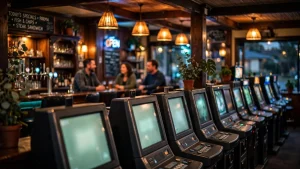
Best pokies in New South Wales (NSW): access
Venue opening status does not establish machine access; location searches and available details can leave...

Best pokies in Perth: hours and comparison limits
Venue hours, machine availability and payout comparisons require separate checks, so broad Perth listings do...
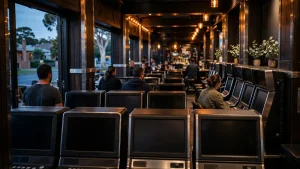
Best pokies in South Australia: venues, RTP and access
A practical guide to RTP, venue availability and the legal distinctions that shape searches for...
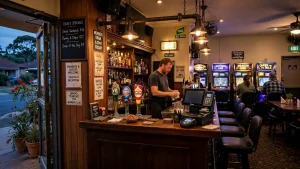
Best Pokies in Sydney: What Location Searches Reveal
Location terms can point to venues, directories, advertisements or online gambling pages, but they do...

Best Pokies in Tasmania: Venue Hours and Local Rules
Tasmanian gaming access depends on venue-specific hours, local rules and the distinction between land-based rooms...

Online Pokies for Real Money in Australia: What to Know
Australian law distinguishes offshore operators from domestic services, while deposits, payment methods and access alone...

Best RTP Pokies in Australia: How RTP Works
RTP describes a theoretical long-run return, while settings and random outcomes shape what the figure...

Most Trusted Online Casino Australia: What Trust Means
The guide separates operator claims from Australian licensing, payment methods, payout terms and what the...



































































































































































































