
Live Dealer Casinos Online in Australia: The Rules
 Available in AU

The guide distinguishes supplier restrictions from player penalties and identifies which bonus, game and payment claims require evidence.
Table of Contents
- Live Dealer Casinos in Australia: The Legal Boundary
- Bonuses, Wagering and the Price of a Headline Offer
- Live Dealer Games: What Can Be Verified
- Bitcoin and Crypto: No Verified Claims to Make
- Reviews, Providers and Free Play: Evidence Before Verdicts
- Mobile Live Roulette: An Unanswered Practical Question
- Real-Money Play and the Withdrawal Checkpoint
- Live Dealer Blackjack: No Product Claims Without Evidence
- Casino Sites, Bonuses and Software: Separate Claims from Proof
- Choosing What to Examine Before Any Play
- Pokies by
Live Dealer Casinos in Australia: The Legal Boundary
A live dealer format can make an online table feel like a room with a human presence: a dealer, a camera, a stream of decisions made in real time. That atmosphere does not alter the legal character of the service. In Australia, a real-money online casino remains an online gambling service, whether its tables are streamed or generated by software.
The governing line is drawn by the Interactive Gambling Act 2001. It makes it illegal for companies to provide real-money online casino games to people in Australia without a domestic licence. The restriction covers casino-style services, including table games as well as pokies. No Australian licence for an online casino has been issued. There is, accordingly, no locally licensed live dealer casino operating within that framework.
This is a rule aimed at suppliers, not a criminal penalty imposed on individual players. Australians do not face prosecution simply for playing at an offshore site that accepts them. That distinction matters, but it should not be mistaken for a domestic guarantee: an offshore operator is not brought under Australian licensing merely because a customer is in Australia, or because the site can be reached.
Choosing a live dealer casino is easier when you can check the available operator details before deciding. Use this list as a starting point, and confirm that the games and terms suit you.
1. Playfina Casino
License: Curacao eGaming (Hollycorn N.V., since 2017) · Min. deposit: A$20-30 (depends on the offer) Playfina Casino is listed with a Curacao eGaming license held by Hollycorn N.V. since 2017. Its minimum deposit is A$20–30, depending on the offer.
2. DragonSlots Casino
License: Curacao Gaming Authority (Jumpman Gaming Ltd) DragonSlots Casino is listed with a Curacao Gaming Authority license held by Jumpman Gaming Ltd.
3. LevelUp Casino
License: Curacao eGaming OGL/2023/174/0082 (Dama N.V.) · Min. deposit: A$15 LevelUp Casino is listed with Curacao eGaming license OGL/2023/174/0082, held by Dama N.V. Its minimum deposit is A$15.
4. Bizzo Casino
License: Curacao Gaming Control Board (TechSolutions Group N.V.) Bizzo Casino is listed with a Curacao Gaming Control Board license held by TechSolutions Group N.V.
5. LuckyVibe
License: Curacao Gaming Control Board OGL/2023/176/0095 (Hollycorn N.V.) LuckyVibe is listed with Curacao Gaming Control Board license OGL/2023/176/0095, held by Hollycorn N.V.
6. Thor Casino
License: Curacao – Antillephone N.V. (Versus Odds B.V.) · Min. deposit: EUR 20 Thor Casino is listed with a Curacao license held by Antillephone N.V. for Versus Odds B.V. Its minimum deposit is EUR 20.
7. SpinsUp
License: Curacao Gaming Control Board OGL/2023/174/0082 (Dama N.V.) SpinsUp is listed with Curacao Gaming Control Board license OGL/2023/174/0082, held by Dama N.V.
8. SkyCrown
License: Tobique Gaming Commission · Payout speed: crypto ~10-15 minutes, fiat 1-5 days · Min. deposit: A$30 SkyCrown is listed with a Tobique Gaming Commission license and a minimum deposit of A$30. Reported payout speeds are around 10–15 minutes for crypto and 1–5 days for fiat.
9. MrPacho
Payout speed: crypto 30-120 minutes, fiat 24-72 hours · Min. deposit: A$30 MrPacho lists a minimum deposit of A$30. Reported payout speeds are 30–120 minutes for crypto and 24–72 hours for fiat.
10. Golden Pokies
License: Curacao Golden Pokies is listed with a Curacao license.
What enforcement means in practice
The Australian Communications and Media Authority, or ACMA, enforces the Act. It can act against prohibited offshore gambling services, including by arranging for access to illegal sites to be blocked. Australian internet service providers are required to follow ACMA’s blocklist. The result is not that every offshore service disappears from view at once; it is that availability can be disrupted, and a site that appears accessible should not be read as evidence that it is lawful or approved here.
The law therefore has two distinct edges. Operators providing prohibited real-money casino services to Australians face the regulatory boundary. Players are not criminally liable merely for participating, but they are dealing with a service outside Australia’s domestic online-casino licensing system. A familiar interface, a streamed dealer or an offshore licence does not create Australian oversight.
That gap has a practical consequence beyond the wording of the statute. If an offshore casino refuses to pay winnings, Australian players have no legal recourse in Australia against it. The absence of a local licence is not a technical footnote; it changes where a dispute can be taken and what domestic protection is available. A polished table can look close at hand. The legal remedy may not be.
ACMA’s blocking role also makes access a poor proxy for legality. A service may be blocked, may change its web address, or may remain reachable at a particular moment. None of those conditions turns it into an Australian-licensed operator. The regulator’s job is enforcement of the national rules, not certification of whichever offshore service happens to load on a screen.
Pokies by Region: Australian Casino and Pokies Guide
BetStop is not an offshore safeguard
BetStop is Australia’s national self-exclusion register, but its reach is limited to Australian-licensed operators. Because no Australian-licensed online casino exists, the register does not bind offshore casino sites. Someone who has self-excluded through BetStop should not assume that the exclusion will prevent an offshore account from being opened or used. The boundary is important: a domestic safeguard cannot compel an overseas operator beyond its reach.
The age rule is simpler. The legal age for gambling in Australia, including online pokies, is 18. Being old enough to gamble does not change the operator’s obligations under the Interactive Gambling Act, nor does it provide a route around the absence of local casino licensing.
A discussion of the best live dealer casino online in Australia in 2026 cannot responsibly begin with a ranking as though the country had a regulated field of local providers. The legal framework does not establish such a field. Nor does the fact that an offshore service accepts Australian customers make it a domestic casino or confer Australian consumer protections. Those are different claims, often made to look interchangeable.
The country’s position is unusually stark: the law prohibits companies from supplying real-money online casino games to people in Australia, while it does not make the individual player the target of that prohibition. Enforcement can restrict access, and the absence of a local licence leaves players without Australian recourse if an offshore operator withholds winnings. Both points belong in the same account. Neither cancels the other.
Legal Risk
Offshore operators are not licensed in Australia, meaning players have no legal recourse in Australia if a casino refuses to pay winnings.
That is the boundary.
Bonuses, Wagering and the Price of a Headline Offer
A large welcome bonus can look like money added to a balance. Its wagering requirement tells a less glamorous story: how much must be staked before bonus-related winnings become withdrawable. The multiplier is applied to a stated amount, and the terms matter because that amount may be the bonus alone or the deposit plus the bonus. Those two calculations produce very different totals.
A specialist review recommends treating a wagering requirement of 35x or less as a more manageable threshold and describes anything above 40x as punishing. That is the review’s assessment, not a universal rule or a promise about any particular promotion. A headline figure has little meaning until the qualifying amount and multiplier are read together.
Consider the review’s illustration of a $500 bonus carrying a 40x requirement. If the multiplier applies to the bonus alone, the required turnover is $20,000 before any winnings can be withdrawn. The requirement is about the total amount wagered, not a demand to lose that sum. Still, turnover is not a small-print technicality: it is the work attached to the offer, and the balance shown on screen does not erase it.
The calculation changes when the terms apply the multiplier to the deposit as well as the bonus. In the review’s second illustration, a $500 deposit combined with a $500 bonus creates a $1,000 qualifying amount. At 35x, that means $35,000 in bets. The advertised bonus is still $500; the turnover obligation is measured against the combined figure. A percentage or a large bonus headline cannot substitute for checking that base.
Keno Online Casinos in Australia: Legal Context
This distinction matters when comparing a live dealer casino bonus with other promotional language. The label may suggest a welcome gift, a match on a deposit, or a no-deposit offer, but the label alone does not reveal how the wagering is calculated. Nor does the word “bonus” establish that a promotion is available for a particular type of play. The meaningful questions are embedded in the terms: what amount is multiplied, which wagers count, and what happens when the requirement is not completed.
No-deposit wording can sound especially uncomplicated because no initial payment appears in the offer’s name. Yet the name does not explain the conditions attached to any winnings. A no-deposit promotion may still be subject to wagering rules and withdrawal limits set out in its terms. For free spins, a specialist review notes that winnings may be subject to a cash-out cap. That possibility makes the cap worth distinguishing from the wagering requirement: one governs how much must be staked, while the other can restrict how much resulting value may be withdrawn.
A useful reading order is therefore not the order in which promotional figures are displayed. First identify the amount to which the multiplier applies. Then calculate the turnover, rather than treating the bonus balance as freely available cash. Finally, check whether a separate cap limits winnings from free spins. If a promotion combines several elements, each may carry its own condition; the visible headline does not settle how they interact.
Calculating Bonus Turnover
Identify the base
Determine if the wagering multiplier applies to the bonus alone or to the combined deposit and bonus amount.
Apply the multiplier
Multiply the identified base by the wagering requirement (e.g., $1,000 combined amount × 35x = $35,000).
Check for caps
Verify if separate withdrawal limits or cash-out caps apply to winnings from free spins.
There is also a difference between an attractive offer and a usable one. A generous-looking match can create a larger qualifying base when the deposit is included, while a smaller bonus can still carry a demanding multiplier. Neither the bonus amount nor the multiplier, considered alone, gives the full cost. The arithmetic does.
For a person weighing a live-dealer promotion, the cautious comparison is between written terms, not promotional labels. A “best” offer cannot be identified from its headline alone, and a welcome bonus or no-deposit claim says nothing by itself about the total turnover or any cap. The terms define the obligation; the promotional language decorates it.
That is the price of the headline.
Live Dealer Games: What Can Be Verified
“Live dealer” describes a way of presenting casino play, not a complete description of a game or a guarantee that a particular table is available. The distinction matters. A polished label can suggest a fully formed product, while leaving the practical questions unanswered: what is offered, how it operates, and under which conditions it can be accessed.
A meaningful description would identify the specific offering and explain its rules. It would also make clear whether the advertised format is genuinely live or whether “live” is being used as a broad promotional adjective. Those details are not decorative. They determine what kind of experience is being described, and whether two offerings placed under the same heading are actually comparable.
The phrase “online casino live dealer games” can therefore cover very different claims. One page might use it as a category label; another might describe a particular table, its rules and the way play is presented. The category alone supplies none of those particulars. It is a heading, not a specification.
That distinction is especially useful when a site groups live play alongside other casino games. Information about one format cannot establish what is available in another. Facts about pokies, for instance, do not confirm a live dealer catalogue, and a general statement about casino play cannot be treated as evidence of any specific table. Categories are not interchangeable just because they share a menu.
Darwin Casino: City Role, Rooms and Facilities
Nor does the name of a live dealer platform settle the matter. A platform label, on its own, does not show which games it carries, how its tables are configured or whether the same selection appears across different sites. Availability is a claim about an actual offering, not something that can be inferred from a broad category or a familiar-sounding label.
Descriptions can be read more carefully by separating the kind of claim being made. A general statement that a service has live dealer play says less than a named game with published rules and a clear account of the format. A claim about a particular table says less than evidence that the table can actually be accessed under the stated conditions. Each step asks for a different kind of substantiation; one should not be mistaken for another.
This is not scepticism for its own sake. Casino language often compresses a chain of assumptions into a few words: that a category means a selection, that a selection means access, and that access means the same experience everywhere. The wording may be tidy. The inference is not.
For anyone assessing claims about live dealer casino games, the useful question is not whether the label sounds plausible, but what precise product the description establishes. Without specific, checkable details, a broad category remains only a broad category.
A heading is not a table.
Bitcoin and Crypto: No Verified Claims to Make
Bitcoin has acquired a curious second life in gambling language: it can describe a payment method, but it can also serve as a badge of modernity, privacy or freedom from ordinary financial rails. Those meanings are not interchangeable. A live dealer casino accepting Bitcoin would be making a specific claim about how money can be deposited or withdrawn, not merely describing the atmosphere of its tables.
For Australian players, the distinction matters. A site’s use of the words “crypto casino” does not establish that Bitcoin is accepted for live-dealer play, or that any cryptocurrency can be used at all. Nor does a Bitcoin symbol in a promotional image settle the practical question. The payment conditions attached to a service can vary, and a broad label cannot stand in for an actual, current method list.
Instant Payout Online Casinos in Australia
The same restraint applies to claims about other cryptocurrencies. “Crypto” is a category, not a single payment rail. A statement about one digital currency cannot be stretched to cover another, and a mention of Bitcoin cannot be treated as proof that deposits and withdrawals both work in that currency. Each claim needs to be read for what it says, rather than what the surrounding branding invites a reader to infer.
That is particularly important where a live-dealer service is concerned. The live tables and the payment method are separate features. The presence of one does not confirm the other. A casino may describe its live offering prominently while leaving payment terms elsewhere; a cryptocurrency badge may say little about whether it applies to every part of the service. The words can sit side by side without establishing a connection.
There is also a difference between a method being advertised and the conditions under which it is available. A payment page may use general language, while the operative terms place restrictions on particular transactions or account circumstances. A clear claim should identify the currency, whether it concerns deposits, withdrawals or both, and any relevant conditions. Without that specificity, “accepts Bitcoin” is a headline, not a complete account.
This is not a reason to treat cryptocurrency as inherently safer, faster or more private. Those are qualities often attached to the technology in casual discussion, but a payment label alone demonstrates none of them about a gambling service. It says nothing, by itself, about who operates the site, how disputes are handled or whether a withdrawal will be paid.
The phrase “live dealer casinos accepting crypto” therefore needs a narrower reading than it first suggests. It combines two separate claims: that a service offers live dealer play and that it accepts a particular form of payment. Neither should be inferred from the other. Bitcoin may be the best-known example, but familiarity is not evidence of availability.
Australian pokies online: legality, payments and offers
In practical terms, the responsible answer is specific or silent. A named service should not be presented as taking Bitcoin unless its current terms clearly establish that fact and explain the scope of acceptance. General enthusiasm for crypto cannot fill that gap. Branding is not a payment receipt.
Reviews, Providers and Free Play: Evidence Before Verdicts
A review earns its conclusions through particulars, not confidence. For live dealer services, that means separating what can be observed from what is merely asserted: the identity of the service, the terms attached to an offer, and the basis for claims about the people or technology behind a table. A polished page can describe an experience; polish alone cannot establish who supplied it or whether the description still applies.
Provider names matter only when they are tied to a verifiable product. A list of familiar-sounding studios, without a clear connection to the service being discussed, says little about the tables actually available. Nor does the word “provider” settle questions of consistency, fairness or quality. Those are separate claims, and each needs evidence of its own. Branding is not proof. It is branding.
Casino in Canberra: What the Search Can Confirm
The same discipline applies to live dealer casino reviews. A useful review distinguishes firsthand observations from promotional language and makes clear which claims concern the platform, which concern a game supplier, and which concern the reviewer’s own judgement. A sweeping verdict that does not show its working may be readable, but it is difficult to test. An opinion can be sincere and still be thinly supported.
“Free play” needs particular care because the phrase can describe different arrangements. It might refer to access without a cash stake, or to promotional credit with conditions attached; the label alone does not tell which. It also does not establish that a live table is available in that format, or that any resulting balance can be withdrawn. Treating the word “free” as a complete account of the terms is a small linguistic trap with potentially expensive consequences.
A sound assessment therefore keeps three questions apart: what service is being described, what evidence supports the provider or quality claims, and what the stated free-play arrangement actually permits. If those details are not clear, a confident rating cannot supply them by implication. Neither can a long catalogue of names.
Fast Payout Online Casinos in Australia: What to Know
This restraint is not a verdict against every review, provider or free-play offer. It is a boundary around what a review can honestly establish. A claim may be plausible, widely repeated or attractively presented; none of those qualities turns it into confirmation. For an Australian audience, that distinction matters especially where promotional descriptions risk making an offshore offering sound more settled than it is. The language of certainty is easy to publish. The proof is harder.
Mobile Live Roulette: An Unanswered Practical Question
A phone-sized screen can make almost any service look mobile-friendly. That says little about whether a live roulette table can actually be used on a particular device. The distinction matters: a page may load on a handset while its controls, video or account functions remain awkward, unavailable or inaccessible. “Mobile” is not a complete description of the experience.
Roulette adds another question. The word may appear beside a live-dealer label, but that pairing alone does not establish that a live table is offered, or that it works on a phone. Product descriptions and working services are different things. Treating one as proof of the other turns a convenient phrase into an unsupported promise.
A neat-looking screen is not a test.
The distinction between access and suitability is worth keeping. Even where a service can be opened on a handset, that does not establish that every function works well, that a live video stream is stable, or that a game is available there. Those are separate claims, and each would need direct confirmation about the specific service and device. A general label cannot settle them.
Australia’s legal setting also limits what “available” can mean. Real-money online casino services are prohibited when offered to people in Australia, and offshore sites may be blocked. A mobile link or a page that loads does not alter that position. Nor does it make a service domestic, licensed or protected. Convenience and legitimacy are separate questions.
Adelaide Casino: Hotels, Gaming and Visitor Information
This is a small distinction with a large consequence. A phone is a route to a screen, not evidence of a product. And a roulette label is not evidence of a live table. Until compatibility and availability are established for a particular service, claims about mobile live roulette remain claims, not practical assurances.
The device question is therefore narrower than it first appears: not whether a handset can display a casino page, but whether a named service lawfully offers the stated feature and whether it functions on that device. Without those specifics, confident recommendations would be guesswork in a polished interface. A screen can be persuasive. It cannot certify its own contents.
Real-Money Play and the Withdrawal Checkpoint
A real-money live dealer session can feel immediate: stakes are placed, outcomes appear, and a balance changes on screen. A withdrawal is different. It depends on the operator processing a request, and for an Australian player using an offshore casino, the practical consequences of a refusal are stark: there is no legal recourse in Australia to compel payment of winnings.
That gap matters more than the polish of a cashier page. A displayed balance is not the same as money received, and a successful deposit does not establish that a later payout will be straightforward. The point at which play turns into a withdrawal is where the operator’s terms and procedures become consequential. A reassuring interface cannot replace domestic recourse.
Identity checks are another part of that checkpoint. A specialist review describes casinos requiring verification before a first withdrawal. The process can involve photographs of identity documents and proof of address; some operators may also request a selfie showing the account holder holding an identity document. Requirements vary by operator, so the documents and submission method need to be understood before money is deposited, not discovered only when a withdrawal is pending.
There is a legitimate reason for an operator to establish who holds an account. But that does not make every request automatically safe or every process predictable. Identity and address records are sensitive. The handling of those documents, the conditions for approving a cash-out, and the route for raising a dispute are all part of the risk attached to offshore real-money play.
Attention BetStop only binds Australian-licensed operators and cannot prevent an offshore casino account from being opened or used.
BetStop is a national self-exclusion service, but its reach has a boundary: it applies to Australian-licensed operators and does not bind offshore sites. It therefore cannot be treated as a safeguard against continued access to an offshore casino. That distinction is easy to overlook when a service uses familiar payment or account features. Familiarity is not protection.
The withdrawal checkpoint is not merely a form to complete after a win. It is the moment when documentation, operator discretion and the absence of Australian recourse meet. The balance may be visible. Recovery is another matter.
Live Dealer Blackjack: No Product Claims Without Evidence
Blackjack has a particular hold on the casino imagination: a small table, a dealer’s measured gestures and the impression that decisions matter more than chance. Put “live dealer” beside it and the scene seems more concrete. Yet a label is not a rule sheet. It does not establish how a table operates, which rules apply, or what a particular service provides.
That distinction matters in Australia, where online blackjack offered to people in the country falls within the category of prohibited interactive gambling services. The familiar name of a card game does not make its online commercial provision a separate or informal exception. Nor does the presence of a dealer in a broadcast alter the legal character of the service. The format may change the presentation; the boundary concerns the service being offered.
Casino stays in Western Australia: rooms and access
A responsible description of live blackjack therefore cannot turn an appealing phrase into a product verdict. Claims about table rules, betting options, limits, dealer procedures or the number of tables need specific support. Without it, such details would be invented, not helpful. The same caution applies to claims that a particular online casino offers a certain blackjack experience. A casino label alone proves no such thing.
This is not a technicality designed to drain the game of its theatre. It is a way of keeping the theatre separate from the evidence. Blackjack’s visible decisions can make a session feel more transparent than other forms of gambling, but appearance is not proof of fairness, oversight or the conditions governing play. A live image, where one is presented, would not by itself settle those questions.
The more useful point is narrower: the phrase “live dealer blackjack” describes a subject, not a guarantee of a particular product. It cannot establish the rules at a table, the reliability of an operator, or the protections available if a dispute arises. Those are different claims, and each would require its own basis.
Australia’s legal position is unusually plain in one respect: real-money online casino games, including blackjack, are prohibited when provided to customers in the country. The polished language of a table listing cannot soften that fact. A name is not a licence.
Casino Sites, Bonuses and Software: Separate Claims from Proof
A casino site, a promotion and the software behind a game are three different things, though marketing often presents them as one reassuring package. A polished website may describe bonuses and display platform labels, but those details do not establish that an operator is licensed in Australia, that a game is fair, or that its return-to-player (RTP) settings are transparent.
Most Trusted Online Casino Australia: What Trust Means
That distinction matters in Australia because no domestic online casino licences have been issued. The Interactive Gambling Act 2001 prohibits operators from providing real-money online casino games to people in Australia. A payment method or software label cannot change that legal position. Nor does a familiar name on a page prove that a particular provider supplies its games or that the games have been independently checked.
Bonuses raise a separate set of questions. Their value depends on the terms attached to them, not on the design of the site or the platform it claims to use. Wagering conditions and any withdrawal caps belong to the offer’s rules; they say nothing by themselves about software quality or the operator’s standing. Keeping those claims apart prevents an attractive promotion from doing work it cannot do.
Software claims also need precision. A specialist review has reported that some providers let operators choose between different RTP settings for a given pokie, meaning the same title can have different return percentages at different sites. That observation concerns pokies; it does not verify any live dealer software, table, or RTP figure. A provider name, even when genuine, is not a substitute for the settings and game-specific information that would substantiate a claim.
PayID deserves the same restraint. It is an alias layer on Australia’s New Payments Platform, allowing transfers using an email address, mobile number or ABN, and it is built into a system supported by major banks with end-to-end encryption. Those are properties of the payment infrastructure, not evidence about a casino’s licence, fairness or RTP disclosure. A convenient transfer mechanism proves only what it does.
BetStop is another boundary worth keeping clear: it applies to Australian-licensed operators and does not bind offshore sites. In a market with no Australian-licensed online casinos, that limit is not fine print. Labels can describe a feature; they cannot supply the protection that the law does not provide.
Best Pokies in Adelaide: Hours and Venue Info
Choosing What to Examine Before Any Play
A comparison of live-dealer services can make choice look like a matter of tables, screens and presentation. For anyone weighing whether to play, a more useful first test is less theatrical: what controls exist before money and time begin to disappear?
Deposit limits can place a ceiling on money added to an account. Loss limits address a different measure, while session time limits make time visible rather than allowing a visit to stretch unnoticed. Self-exclusion is the more decisive tool: it is intended to block access, not merely encourage moderation. These options are standard responsible-gambling tools, though their presence does not remove the risks of gambling or guarantee that every operator implements them in the same way.
The distinction between a control and a promise matters. A limit has practical value only if its terms are clear and it can be set before play; a self-exclusion option deserves scrutiny for what it actually covers. Vague language about “playing responsibly” is not a substitute for controls with defined effects. Good intentions are not infrastructure.
BetStop also has a boundary worth keeping in view. It applies to Australian-licensed operators and does not bind offshore sites. That limits its reach in a market where online casino services are not domestically licensed. A person relying on a single exclusion system may therefore have less protection than its name suggests.
No checklist can turn a live-dealer casino into a safe or suitable choice. The useful questions concern what can be controlled: whether deposits can be limited, losses monitored, sessions capped and access excluded. If those controls are hard to find, unclear or absent, that is information in itself—not a minor inconvenience to be balanced against attractive presentation.
The comparison beside this guide can describe operators, but a ranking cannot settle the personal question of whether gambling belongs in someone’s life. Limits are safeguards, not endorsements. And when the purpose of play shifts from entertainment to recovering losses or managing distress, stepping away is more meaningful than any setting in an account menu.
How do I know if an online casino is safe to play at?
There is no Australian-licensed online casino, and an offshore site’s accessibility or foreign licence does not mean it is approved in Australia. If an offshore operator withholds your winnings, you have no legal recourse against it in Australia.
What is the legal age for online gambling in Australia?
You must be at least 18 to gamble online in Australia.
What does “wagering requirement” actually mean?
It is the total amount you must bet before bonus-related winnings can be withdrawn. For example, a $500 bonus with a 40x requirement means $20,000 in turnover if the multiplier applies to the bonus alone; if it applies to a $500 deposit plus the bonus, the total is $40,000.
What’s the best strategy for playing pokies?
No spin pattern can predict a result: each spin is an independent random event. Check the game’s RTP, which can differ between casinos, and use tools such as deposit, loss and session limits to manage your play.
What is the cost-benefit calculation of casino promotions?
Compare the bonus with the required turnover and check whether the multiplier applies to the bonus alone or to the deposit plus bonus. For example, a $500 bonus at 40x requires $20,000 in bets if calculated on the bonus alone; a $500 deposit plus $500 bonus at 35x requires $35,000.
Pokies by

Australian Online Pokies: Real-Money Rules and Risks
A practical guide to legal limits, offer terms and payment checks when assessing offshore real-money...

Best Aussie Online Casino: Law, Offers and Payments
Australia has no licensed online casinos; this guide examines offshore sites, offers, payments and the...

Aussie Pokies Online: Free Play and Legal Limits
A look at stake-free play, real-money conditions, payment methods and the limits of evidence around...

Australian pokies online: legality, payments and offers
The guide separates Australia’s legal position from offshore branding and examines payment methods, offer conditions,...

Adelaide Casino: Hotels, Gaming and Visitor Information
A practical overview of accommodation, gaming, access, dining and other questions around a visit to...

Brisbane Casino Guide: Hotels, Dining and Practical Checks
The guide separates casino operations from nearby accommodation and flags details such as rooms, dining,...

Casino in Canberra: What the Search Can Confirm
The search separates physical venue claims from casino-style online results and explains why local addresses...

Darwin Casino: City Role, Rooms and Facilities
An overview of the venue’s role in the city and the practical details visitors may...

Hobart Casino Guide to Poker, Stays and Dining
Poker offerings can differ by evening, so a room, a table and a scheduled tournament...

Casino in Melbourne: Hotels, Dining and Access
The guide separates on-property accommodation from nearby hotels and explains why a headline room rate...

Perth Casino Guide: Stays, Gaming and Practical Details
A practical guide distinguishes nearby accommodation from casino offerings and treats venue, gaming and online-access...

Queensland casino hotels: stays, dining and key details
Casino-linked accommodation, dining, parking and venue searches call for property-specific details rather than assumptions based...

Sydney Casino Hotels: What the Facts Establish
A practical look at what casino-related searches can show—and what still needs property-specific confirmation. A...

Best Casino in Tasmania: Stay and Visitor Guide
A practical look at accommodation, venue information and common visitor questions, with a distinction between...

Casino in Victoria: What a Stay Listing Can Verify
The available information distinguishes a casino’s location from hotel bookings, amenities, dining, hours and other...

Casino stays in Western Australia: rooms and access
A practical guide to stays, dining, parking and venue details, including the difference between on-site...

Fast Payout Online Casinos in Australia: What to Know
Legal status, verification, withdrawal limits and bonus terms all affect what a fast-payout claim can...

Instant Payout Online Casinos in Australia
A withdrawal can involve operator review, payment processing and bank handling, so an instant-payout claim...

Keno Online Casinos in Australia: Legal Context
Australia has no licensed online casinos, so legal status, offshore risks and the limits of...

Live Casino Online in Australia: Legal Limits
Australian law places the burden on operators, while offshore sites may still be reachable without...
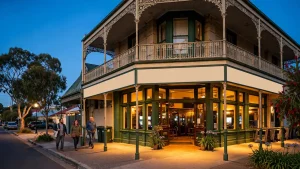
Best Pokies in Adelaide: Hours and Venue Info
Venue listings, gaming-room hours and machine reporting each answer different questions about Adelaide pokies. Adelaide...
Best pokies in Brisbane: games, venues and claims
The guide weighs what can be verified about local venues, opening hours and online play...
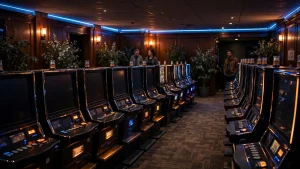
Pokies in Canberra: Checking Venue and Gaming Hours
Venue opening times and gaming-area availability can differ, so a general listing may not answer...

Best pokies in Geelong: what local searches can confirm
A careful guide to checking venue hours, interpreting payout claims, and distinguishing local facts from...

Best Pokies in Melbourne: Finding Local Options
A location-focused guide distinguishes neighbourhood searches, venue-hour claims and gaming-floor rules from assumptions broad Melbourne...

Best pokies in New South Wales (NSW): access
Venue opening status does not establish machine access; location searches and available details can leave...

Best pokies in Perth: hours and comparison limits
Venue hours, machine availability and payout comparisons require separate checks, so broad Perth listings do...
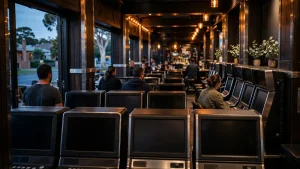
Best pokies in South Australia: venues, RTP and access
A practical guide to RTP, venue availability and the legal distinctions that shape searches for...
Best Pokies in Sydney: What Location Searches Reveal
Location terms can point to venues, directories, advertisements or online gambling pages, but they do...

Best Pokies in Tasmania: Venue Hours and Local Rules
Tasmanian gaming access depends on venue-specific hours, local rules and the distinction between land-based rooms...

Online Pokies for Real Money in Australia: What to Know
Australian law distinguishes offshore operators from domestic services, while deposits, payment methods and access alone...

Best RTP Pokies in Australia: How RTP Works
RTP describes a theoretical long-run return, while settings and random outcomes shape what the figure...

Big Red Pokies Online in Australia: Free Play
A clear look at demo play, real-money rules and why a familiar game name cannot...

Most Trusted Online Casino Australia: What Trust Means
The guide separates operator claims from Australian licensing, payment methods, payout terms and what the...



































































































































































































