
Online Pokies for Real Money in Australia: What to Know
 Available in AU

Australian law distinguishes offshore operators from domestic services, while deposits, payment methods and access alone do not establish approval.
Table of Contents
- The Legal Line Around Real-Money Pokies in Australia
- PayID Is a Payment Rail, Not a Seal of Approval
- Playing for Money, with Randomness in the Mechanism
- A Win Is Not Always a Withdrawal
- No-Deposit Offers and the Arithmetic of Bonuses
- The Australian Rules Behind the Market
- An App Does Not Change the Terms of Play
- Mobile Play Still Turns on the Spin
- New Sites, Familiar Verification Questions
- PNG Sites: What the Available Evidence Cannot Establish
- Pokies by
The Legal Line Around Real-Money Pokies in Australia
The phrase “real-money pokies in Australia” can sound like a description of a recognised domestic market. Legally, it is not. The Interactive Gambling Act 2001 draws a line between where a player is located and where an operator is based: companies cannot provide real-money online pokies to people in Australia without a domestic licence. No such licences have been issued, and there is no Australian-licensed online casino.
That distinction is easy to miss because a website may be visible, accept Australian customers or describe itself as serving the country. None of those things makes it a locally licensed service. In this market, the familiar signs of commerce do not establish a domestic legal footing. A site’s willingness to take a deposit is not the same thing as permission under Australian law.
The law’s main target is the operator. It does not make an individual player criminally liable simply for playing on an offshore site that accepts Australians. That is an important distinction, but not a stamp of approval. The absence of player liability does not turn an offshore casino into an Australian-regulated one, nor does it give the player the protections that would follow from local licensing.
Choosing an online pokies site for real-money play in Australia calls for a careful look at the available operator information. This list offers a concise reference to the details provided for each option.
1. Playfina Casino
License: Curacao eGaming (Hollycorn N.V., since 2017) · Min. deposit: A$20-30 (depends on the offer) Playfina Casino lists a Curacao eGaming license held by Hollycorn N.V. since 2017. Its minimum deposit is A$20–30, depending on the offer.
2. DragonSlots Casino
License: Curacao Gaming Authority (Jumpman Gaming Ltd) DragonSlots Casino lists a Curacao Gaming Authority license associated with Jumpman Gaming Ltd. The supplied information identifies its licensing details.
3. LevelUp Casino
License: Curacao eGaming OGL/2023/174/0082 (Dama N.V.) · Min. deposit: A$15 LevelUp Casino lists Curacao eGaming license OGL/2023/174/0082, held by Dama N.V. Its minimum deposit is A$15.
4. Bizzo Casino
License: Curacao Gaming Control Board (TechSolutions Group N.V.) Bizzo Casino lists a Curacao Gaming Control Board license associated with TechSolutions Group N.V. The supplied information identifies its licensing details.
5. LuckyVibe
License: Curacao Gaming Control Board OGL/2023/176/0095 (Hollycorn N.V.) LuckyVibe lists Curacao Gaming Control Board license OGL/2023/176/0095, held by Hollycorn N.V. These licensing details are the available specifics for this entry.
6. Thor Casino
License: Curacao – Antillephone N.V. (Versus Odds B.V.) · Min. deposit: EUR 20 Thor Casino lists a Curacao license from Antillephone N.V., associated with Versus Odds B.V. Its stated minimum deposit is EUR 20.
7. SpinsUp
License: Curacao Gaming Control Board OGL/2023/174/0082 (Dama N.V.) SpinsUp lists Curacao Gaming Control Board license OGL/2023/174/0082, held by Dama N.V. The supplied information identifies its licensing details.
8. SkyCrown
License: Tobique Gaming Commission · Payout speed: crypto ~10-15 minutes, fiat 1-5 days · Min. deposit: A$30 SkyCrown lists a Tobique Gaming Commission license and a minimum deposit of A$30. Its stated payout times are around 10–15 minutes for crypto and 1–5 days for fiat.
9. MrPacho
Payout speed: crypto 30-120 minutes, fiat 24-72 hours · Min. deposit: A$30 MrPacho lists a minimum deposit of A$30. Its stated payout times are 30–120 minutes for crypto and 24–72 hours for fiat.
10. Golden Pokies
License: Curacao Golden Pokies is listed with a Curacao license. No further operator details were provided.
There is a small but consequential gap between legality for the player and security for the player. Australians may legally play on offshore sites that accept them; the company providing the service is still operating without the domestic licence required to offer real-money pokies in Australia. The two statements can coexist. Law, like commerce, is fond of distinctions that fit neatly on paper and less neatly into a person’s plans.
The practical consequence appears most clearly when a dispute arises. If an offshore casino refuses to pay winnings, Australian players have no legal recourse in Australia. A displayed balance or a stated promise of payment does not create a domestic authority capable of compelling the operator to honour it. The prospect of a win and the ability to enforce a claim are separate matters.
That is not a question of whether a particular operator seems polished, familiar or popular. Nor is it a judgement on the outcome of any individual game. It is a question of jurisdiction: who is legally entitled to provide the service to people in Australia, and what remedy exists if the relationship breaks down. Without an Australian licence, the answer to the second question is stark.
The word “offshore” can make this arrangement sound like a simple matter of geography, as though the only difference were the location of a server or company office. In practice, it marks a difference in the legal relationship. A business based elsewhere may be available to Australians, but availability does not bring it within an Australian licensing system that does not exist for online casinos. A border crossed by a website is not necessarily a border crossed by consumer protection.
Pokies by Region: Australian Casino and Pokies Guide
This also explains why a search for the best online pokies for real money in Australia cannot be answered as if it were a conventional comparison of locally authorised services. There are no domestic online casinos to rank as licensed Australian providers. Any list presented as such would blur the central fact: real-money online pokies are not offered under an Australian casino licence. The appearance of a domestic choice does not make one.
The law is therefore neither a general prohibition on an individual’s act of playing nor a permission for companies to serve the country freely. It places the legal burden on operators, while leaving the player who chooses an offshore service in a weaker position if money is withheld. That difference matters more than the language used in a site’s advertising or the country named in its terms.
There is no local backstop. That is the line.
PayID Is a Payment Rail, Not a Seal of Approval
PayID is a way to direct a bank transfer, not a separate bank account or a judgement about the business receiving the money. It works as an alias layer on Australia’s New Payments Platform (NPP): instead of entering conventional account details, a sender can identify a recipient through an email address, mobile number or ABN. The payment still moves through the banking system. The alias makes the destination easier to specify; it does not change what the payment is for.
PayID serves as an alias layer on Australia’s New Payments Platform (NPP), allowing senders to identify recipients via email, mobile number, or ABN instead of traditional account details.
The NPP is supported by all major Australian banks and uses end-to-end encryption. Those are features of the payment infrastructure, not assurances about every merchant that may accept a transfer through it. Encryption concerns the security of information in transit. Bank participation concerns the platform’s reach. Neither establishes that an online service is fair, transparent about its terms or entitled to operate. A familiar payment option can look reassuring, but it is not a quality mark.
For a person attempting to make a real-money deposit at an Australian online casino, PayID first has to be linked to a bank account. The alias does not provide funds on its own; the linked account supplies them. In that sense, PayID is less like a wallet held apart from a bank and more like a convenient label attached to a transfer route that begins at one.
The distinction matters because payment methods can be described in language that makes them sound like endorsements. A transfer appearing in a cashier’s menu only shows that a payment route is presented there. A specialist review has reported that PayID is treated in the same way as other qualifying deposit methods at the sites it covers. That is a report about those sites and that review, not a fixed rule across the market. Payment options and operator arrangements can change.
Nor does a successful transfer settle what might happen later. PayID can make it straightforward to identify a recipient, but it cannot determine whether a merchant will accept a payment, how a bank will classify it or whether the service will meet its own obligations. Payment rails move money. They do not adjudicate disputes.
Best Pokies in Adelaide: Hours and Venue Info · Casino stays in Western Australia: rooms and access
Banks retain their own controls. A specialist review has reported that some Australian banks, including members of the Big Four, sometimes block PayID transfers to known gambling merchants. A declined transfer can therefore reflect a bank’s restriction rather than an error in the PayID alias. The same review material describes bank and card-company blocks on transactions to known gambling sites as becoming more common. These are reports of changing practices, not a guarantee that a particular payment will be accepted or rejected.
That uncertainty is part of the ordinary friction of electronic payments: the sender may enter the right details and still find that the bank will not process the transaction. A payment option shown by a merchant does not override the bank’s decision. Nor is switching methods necessarily a neutral workaround. Each route has its own terms and controls, and a different method may carry costs that are less visible at the moment of payment.
Cards deserve particular attention because a gambling deposit may be classified by a bank or card issuer as a cash advance rather than an ordinary purchase. A specialist review has described possible fees of 3–5%, with interest starting immediately. Whether that treatment applies depends on the issuer and the transaction; the fee is not an automatic feature of every card deposit. But where it does apply, the cost can begin before the deposited money has been used for anything at all.
Attention Some banks may classify gambling deposits as cash advances, potentially incurring fees of 3–5% and immediate interest.
This is why the apparent simplicity of a payment button can conceal a second set of terms. The merchant’s deposit process is only one part of the transaction. The bank or card issuer may apply its own classification, restrictions and charges. A deposit amount shown on screen is not necessarily the full cost of funding it.
PayID’s practical appeal lies in the alias system: an email address, mobile number or ABN can stand in for more cumbersome account details. Its limits are equally plain. It requires a linked bank account, remains subject to bank controls and says nothing about the recipient beyond the payment route. A transfer can be encrypted and still arrive at a service whose conduct the payment platform does not assess.
Convenience is not due diligence.
Playing for Money, with Randomness in the Mechanism
A pokie spin has no memory. Its outcome is determined by a Random Number Generator (RNG), and each spin is an independent event. A result does not become more likely because the previous spin was a loss, nor less likely because a win has just appeared. The sequence can look patterned to a person watching it; the mechanism does not take that history into account.
That distinction is easy to lose in the rhythm of play. Repeated symbols, near-misses and runs of small results invite a story: a machine is warming up, paying out, or due. But the apparent story belongs to the sequence as observed, not to a spin carrying knowledge of what came before. The next result is not a reply to the last one.
Best Pokies in Melbourne: Finding Local Options · Best pokies in New South Wales (NSW): access
Independence does not mean predictability. It means the previous outcome is not the cause of the next. A run of losses can continue; a win can arrive after one spin or after many. Neither possibility establishes a pattern that can be used to forecast the next result. In play for real money, that matters because a sense of momentum can feel like evidence, even when it is only the mind arranging random events into a plot.
RTP, or return to player, describes a different part of the mechanism. It is a theoretical return across a large volume of play, not a forecast of what one person will receive in a short session. Nor does it promise that a particular stake will come back. A percentage attached to a game can sound like a personal share waiting to be collected; it is better understood as a mathematical measure, not a repayment schedule.
There is a further complication. A specialist review reports that some game providers allow casinos to choose between multiple RTP settings for the same pokie. On that account, the game title alone may not identify the return setting in use: the same game could carry different return percentages at different casinos. That does not establish which setting applies to any particular version, and it should not be turned into a claim that every provider or every game works this way.
This is why a familiar title is not, by itself, a complete description of the game’s mathematics. Two versions may look and play alike while being configured differently. If a return percentage is stated, the relevant question is whether it applies to the version being offered, rather than to the title in the abstract. The distinction is technical, but its consequence is plain: recognition is not verification.
RTP and RNG Difference
Random Number Generators (RNG) determine the outcome of each individual spin independently. Return to Player (RTP) is a theoretical measure of return calculated across a large volume of play over the long run.
The RNG and RTP answer separate questions. The RNG concerns how an individual outcome is produced; RTP concerns the theoretical return across many outcomes. A stated return does not tell what the next spin will do, while the randomness of a spin does not erase the long-run calculation represented by an RTP setting. Confusing the two can make a general statistic seem more personal than it is.
The language of “best” games often blurs these boundaries. A high stated return, where one is shown, would not make a particular spin more predictable or guarantee a favourable session. Nor would a free-play result establish what happens when money is involved: the central point remains that each real-money spin is its own random event. The label around the play does not turn chance into a sequence with a readable direction.
There is no reliable system in which a previous loss instructs the game to compensate, or a previous win causes it to hold back. Those are human explanations laid over independent outcomes. The machine has no sense of fairness in the everyday meaning of the word; it does not notice that a player has waited, spent, or nearly reached a hoped-for result. It simply produces another event.
That is the quiet arithmetic beneath online pokies for real money: a spin is immediate and singular, while RTP is abstract and long-run. Neither tells a player what will happen next. Randomness is not a promise.
Best Pokies in Sydney: What Location Searches Reveal · Pokies in Canberra: Checking Venue and Gaming Hours
A Win Is Not Always a Withdrawal
A balance on a screen is not the same thing as money in a bank account. A win in online pokies may appear immediately in an account, while the process of turning that figure into a withdrawal can involve checks and limits that are less visible during play. The distinction matters: a displayed total records what the game has credited, not necessarily what can be transferred at once.
A specialist review of casino cash-outs reports that identity checks commonly come before a first withdrawal. The requested documents may include a photo of an identity document and proof of address; some operators also ask for a selfie with the identity document. The purpose is to connect the account to the person requesting payment. In practice, it means that someone who has not completed verification may face another step after deciding to cash out.
This is not a detail to leave until the moment a win arrives. The documents need to match the account details, and an operator may ask for them before processing a first payment. A sensible account of the cash-out process therefore begins before the withdrawal request: the terms should explain what proof is required and when it is checked. The screen can be celebratory. The paperwork is not.
There is a second possible gap: how much can be withdrawn within a set period. A specialist review reports that some casinos set weekly or monthly withdrawal caps between $5,000 and $10,000. Under a cap of that kind, a $50,000 jackpot would not necessarily arrive as one payment; the review describes such a payout as potentially stretching into a multi-year plan. The exact timetable depends on the operator’s stated cap and payment rules, so a headline win alone cannot reveal when the full amount would be received.
Withdrawal Limits
Large winnings may be subject to weekly or monthly withdrawal caps (e.g., $5,000–$10,000), meaning a large jackpot could be paid out over several years.
That changes the meaning of “winning” in a practical way. A large figure may be real within the account while remaining subject to a drawn-out release schedule. Someone assessing a casino’s withdrawal terms needs to distinguish a processing step from a payout ceiling: verification concerns whether the request can proceed, while a cap concerns how much can leave during each period. One does not resolve the other.
For people searching for a way to win real money on pokies, the cash-out conditions are part of the experience, not an administrative footnote. They do not alter the amount shown after a spin, but they can alter the route from that amount to funds received. The same caution applies to a jackpot: the size of the displayed prize says nothing by itself about whether it can be withdrawn immediately or in stages.
A useful check is therefore plain and unglamorous: find the identity documents required for a first withdrawal, then read the withdrawal cap and its time period. If the terms are unclear, the uncertainty belongs to the terms—not to the arithmetic of the win. The balance is only the beginning.
No-Deposit Offers and the Arithmetic of Bonuses
“No deposit” describes the way an offer is presented, not what can ultimately be withdrawn. A no-deposit bonus or free-spin offer may come with conditions that determine whether winnings can be cashed out and how much of them can leave the account. The headline is the least complicated part.
Best pokies in Geelong: what local searches can confirm
The central condition is often a wagering requirement: a turnover multiplier applied to the bonus, or sometimes to the deposit and bonus together. The difference changes the arithmetic substantially. A specialist review suggests treating requirements of 35x or less as a more restrained benchmark and describes anything above 40x as punishing. That is an assessment, not a universal rule; the wording of the offer determines which amount the multiplier applies to.
Consider the same specialist review’s example of a $500 bonus with a 40x requirement. If the multiplier applies to the bonus alone, the required betting turnover is $20,000 before any winnings can be withdrawn. The bonus is not a $500 cash gift. It is the starting figure in a calculation, and the calculation is the substance.
If the requirement instead applies to the deposit plus the bonus, a $500 deposit paired with a $500 bonus creates a $1,000 base. At 35x, that means $35,000 in bets before withdrawal. The offer may still display “$500 bonus”; the terms quietly change the sum that must be turned over. Same headline, different arithmetic.
Turnover is not the same as a guaranteed loss, nor does meeting a requirement guarantee a particular balance. It is the amount of betting required under the stated condition. The figures describe how much must be wagered, not how much a player will have left after doing so. That distinction tends to be printed smaller.
Free spins have their own complication. A specialist review notes that an offer may cap the winnings that can be cashed out. In that case, a run of successful spins does not necessarily translate into an equally large withdrawal: the cap, rather than the balance shown after play, sets the maximum eligible amount. The relevant detail is the specific cap in the offer’s terms; there is no single figure that can be assumed for all offers.
Bonus Arithmetic
Step 1: Identify the base
A $500 bonus is offered with a 40x wagering requirement.
Step 2: Calculate turnover
If the requirement applies to the bonus alone, $500 × 40 = $20,000 in required betting.
Step 3: Consider combined base
If it applies to deposit plus bonus ($500 + $500), the turnover becomes $1,000 × 35 (at a 35x rate) = $35,000.
For anyone comparing online pokies offers, the useful comparison is therefore not between the largest advertised bonus and the smallest. It is between the conditions: what amount the multiplier applies to, how much turnover it demands, and whether free-spin winnings face a cash-out ceiling. A no-deposit label answers only whether a deposit is required to receive the offer. It says nothing, by itself, about the route from promotional credit to withdrawable money.
The Australian Rules Behind the Market
Australia draws a clear line between who may gamble and what companies may offer online. The legal age for gambling, including online pokies, is eighteen. That threshold applies across gambling forms; it does not turn an online service into a lawful one simply because an adult can access it.
The main domestic regulator is the Australian Communications and Media Authority, or ACMA. It enforces the Interactive Gambling Act 2001, the federal law governing interactive gambling services. Under that framework, online casino-style games offered to people in Australia fall within prohibited services. Pokies sit alongside other casino games in that category.
ACMA’s role is not limited to setting out the rule. It also blocks access to illegal offshore gambling sites, and Australian internet service providers must comply with its blocklist. A site disappearing from view may therefore reflect a regulatory block, not a technical fault or a change to the rules of the game.
Blocking is a practical measure, not a conversion of offshore operators into domestic ones. Nor does an adult’s eligibility to gamble remove the restrictions placed on companies offering online casino games in Australia. The distinction can be easy to blur: age rules concern the person; the Interactive Gambling Act concerns the service. Two different questions, two different legal tests.
Best pokies in Brisbane: games, venues and claims
The framework also reflects a particular Australian choice. Rather than treating online casino access as an ordinary extension of the physical gambling venue, federal law restricts the supply of these services to people in the country. The internet may make a business appear distant and abstract; regulation still looks at whom it serves.
That is the domestic picture behind searches for Australian real-money pokies. ACMA enforces the law, and internet providers carry out site blocks when directed by the regulator. Neither an offshore address nor a screen that loads changes the underlying category of the service. A blocked site may be inaccessible, while a site that remains reachable is not thereby endorsed by Australian authorities.
For players, the age threshold is only one part of the framework. It establishes who is old enough to gamble, not which online services are authorised to provide casino-style games. The distinction is less dramatic than a flashing warning, but more consequential.
An App Does Not Change the Terms of Play
An app changes the route to a game, not the terms on which the game is played. A familiar icon, a polished menu and a saved login can make an online pokie feel like part of the phone’s ordinary furniture. None of those design choices establishes that play is safer, that controls are stronger or that an app has a different feature set from the service’s website.
Do
- Use deposit and loss limits
- Set session boundaries
- Use self-exclusion tools
Don’t
- Rely on app design for safety
- Assume apps have stronger controls
- Mistake BetStop for offshore coverage
Responsible-gambling tools are more meaningful than presentation. Deposit limits can restrict how much is put into an account; loss limits can set a boundary around losses; session limits can mark how long a session lasts; and self-exclusion can block access for a chosen period. These are standard tools, though their presence and operation should not be inferred merely from the fact that a service has an app. A menu can be elegant and still leave the important settings elsewhere.
The distinction matters because a phone keeps access close at hand. Convenience is a design quality, not a safeguard. A limit that has not been set does not constrain spending, and a reminder that can be dismissed is not the same thing as a restriction. The useful question is not whether an app looks reassuring, but what controls it actually provides and how they work.
Self-exclusion also has a boundary in Australia. BetStop applies to Australian-licensed operators; it does not bind offshore sites. There is no Australian-licensed online casino, so BetStop should not be mistaken for a way to exclude a person from every offshore pokies service. The name of a tool can sound broader than its reach. That is the awkward part.
Nor does an app itself make a service more accountable. A download, a login screen or a mobile-friendly account is not evidence of independent oversight. The interface may gather the same account functions into one place, but a neat row of settings says little about whether a user will find them before play, understand their effect or be able to maintain a chosen boundary.
Brisbane Casino Guide: Hotels, Dining and Practical Checks
The app, then, is best understood as a container for access and settings, not as a certificate. Responsible-gambling controls matter when they are visible, usable and taken seriously; the screen they sit behind cannot do that work by itself. A smaller icon is still an open door.
Mobile Play Still Turns on the Spin
On a phone, a pokie arrives compressed into a small rectangle: reels, buttons and the familiar pause before a result appears. The setting may be a train seat, a kitchen table or the quiet edge of a room. The change of place is real; a change in what determines the spin is not.
A mobile screen does not make a result follow from the previous one. Each spin is generated separately by a Random Number Generator (RNG), so a win or loss on one turn does not dictate the next. A run of results may look as though it is building towards something. The appearance belongs to the sequence; it is not a promise written into it.
That distinction matters for anyone considering real-money play on a mobile device in Australia. A thumb tap can make the action feel immediate and personal, but the mechanism does not acquire a memory of the hand that made it. Nor does a long pause, a quick succession of spins or a change of posture rewrite the random process. The phone carries the game; it does not negotiate with it.
There is a small cultural trick in the glass. Touchscreens make distant systems feel intimate. A button responds at once, and the animation fills the screen, giving the impression that the device is doing something more than displaying an outcome. Yet the visible motion is presentation. The result still comes from an independent random event, not from the size of the screen or the speed of a finger.
Mobile Randomness
Changing the device to a mobile phone does not alter the RNG mechanism; each spin remains an independent random event.
Mobile access changes the surroundings and the shape of attention. It can make a session easier to fit into fragments of the day, while also making the boundary between a game and ordinary screen time less visible. None of that changes the basic mathematics of a spin. The next result remains uncertain, even when the interface is close enough to touch.
Small screen. Same uncertainty.
New Sites, Familiar Verification Questions
A new name can make an online pokie site feel like an unknown quantity, but novelty does not answer the practical question that tends to arrive later: what must be provided before a withdrawal is processed? The answer is often found in the account rules, not in the site’s launch language.
A specialist review reports that most casinos require identity checks before a first withdrawal. These checks can include a photograph of an identity document and proof of address; some also ask for a selfie showing the account holder with the document. The point is to connect the person requesting payment with the account, rather than to reward a site for being new.
That distinction matters when interest centres on newly launched real-money pokies or on sites presenting PayID as a deposit option. Neither a recent launch nor a payment label tells anything about the documents required at cash-out. Verification terms belong to the operator’s own procedures, and should be read before an account is funded. A payment method is not a substitute for identity evidence.
The timing can shape the experience as much as the list of documents. If the first check begins only when a withdrawal is requested, a player may discover then that a document is missing, unclear or inconsistent with account details. The review’s description is a broad one, not a guarantee that every site asks for the same material. Requirements can differ, so the precise list matters more than the promise of a smooth process.
Best Pokies in Tasmania: Venue Hours and Local Rules
New does not mean exempt. Nor does a polished sign-up screen make verification disappear. In online gambling, the account may be opened in moments; proving who owns it can wait until the moment money is due. A familiar delay, in a fresh wrapper.
PNG Sites: What the Available Evidence Cannot Establish
“PNG-based” can describe a claimed location, but it does not explain who operates a site, where its customers are served from, or which rules govern a particular account. The label is not a licence, a test of fairness or a promise about payment. A name on a page is easy to print; its significance is another matter.
For Australians considering real-money pokies, that distinction matters. A site’s association with Papua New Guinea does not alter the Australian position: the Interactive Gambling Act 2001 prohibits operators from providing online casino games to people in Australia without a domestic licence, and no such licences have been issued. Nor does a claimed overseas location establish that an operator is authorised to serve Australians. Geography is not a credential.
Sydney Casino Hotels: What the Facts Establish
There is also no sound basis for treating every service described as a PNG online casino as if it shared one set of games, account rules or withdrawal conditions. Those details belong to individual operators and would need to be established individually. Without them, a catalogue of names would suggest more certainty than the label can bear.
The same restraint applies to claims about safeguards. A place name alone cannot show what checks a site performs, how it handles a disputed balance, or what recourse exists if a payout is refused. Offshore operators fall outside Australian licensing, and Australian players cannot pursue winnings through Australian legal channels when an offshore casino withholds them.
That is a narrow conclusion, not a verdict on a country or its people. “PNG” may be a useful description of a location when properly substantiated; by itself, it settles none of the questions that matter in real-money play. A label is not evidence.
Are online pokies legal for Australian players?
Yes, Australians can legally play on offshore sites that accept them, but no online casino holds an Australian licence. The law targets operators offering real-money pokies without a domestic licence, and players have no legal recourse in Australia if an offshore casino refuses to pay.
Can casinos change the RTP of their games?
Yes. Some game providers let casinos choose from multiple RTP settings, so the same pokie can have different return percentages at different casinos.
What is the cost-benefit calculation of casino promotions?
Check the wagering requirement and calculate the total bets it demands: a $500 bonus at 40x requires $20,000 in bets, while a 35x requirement on a $500 deposit plus a $500 bonus requires $35,000. Free-spin winnings may also have a cashout cap.
Pokies by

Australian Online Pokies: Real-Money Rules and Risks
A practical guide to legal limits, offer terms and payment checks when assessing offshore real-money...

Best Aussie Online Casino: Law, Offers and Payments
Australia has no licensed online casinos; this guide examines offshore sites, offers, payments and the...

Aussie Pokies Online: Free Play and Legal Limits
A look at stake-free play, real-money conditions, payment methods and the limits of evidence around...

Australian pokies online: legality, payments and offers
The guide separates Australia’s legal position from offshore branding and examines payment methods, offer conditions,...

Adelaide Casino: Hotels, Gaming and Visitor Information
A practical overview of accommodation, gaming, access, dining and other questions around a visit to...

Brisbane Casino Guide: Hotels, Dining and Practical Checks
The guide separates casino operations from nearby accommodation and flags details such as rooms, dining,...

Casino in Canberra: What the Search Can Confirm
The search separates physical venue claims from casino-style online results and explains why local addresses...

Darwin Casino: City Role, Rooms and Facilities
An overview of the venue’s role in the city and the practical details visitors may...

Hobart Casino Guide to Poker, Stays and Dining
Poker offerings can differ by evening, so a room, a table and a scheduled tournament...

Casino in Melbourne: Hotels, Dining and Access
The guide separates on-property accommodation from nearby hotels and explains why a headline room rate...

Perth Casino Guide: Stays, Gaming and Practical Details
A practical guide distinguishes nearby accommodation from casino offerings and treats venue, gaming and online-access...

Queensland casino hotels: stays, dining and key details
Casino-linked accommodation, dining, parking and venue searches call for property-specific details rather than assumptions based...

Sydney Casino Hotels: What the Facts Establish
A practical look at what casino-related searches can show—and what still needs property-specific confirmation. A...

Best Casino in Tasmania: Stay and Visitor Guide
A practical look at accommodation, venue information and common visitor questions, with a distinction between...

Casino in Victoria: What a Stay Listing Can Verify
The available information distinguishes a casino’s location from hotel bookings, amenities, dining, hours and other...

Casino stays in Western Australia: rooms and access
A practical guide to stays, dining, parking and venue details, including the difference between on-site...

Fast Payout Online Casinos in Australia: What to Know
Legal status, verification, withdrawal limits and bonus terms all affect what a fast-payout claim can...

Instant Payout Online Casinos in Australia
A withdrawal can involve operator review, payment processing and bank handling, so an instant-payout claim...

Keno Online Casinos in Australia: Legal Context
Australia has no licensed online casinos, so legal status, offshore risks and the limits of...

Live Dealer Casinos Online in Australia: The Rules
The guide distinguishes supplier restrictions from player penalties and identifies which bonus, game and payment...

Live Casino Online in Australia: Legal Limits
Australian law places the burden on operators, while offshore sites may still be reachable without...

Best Pokies in Adelaide: Hours and Venue Info
Venue listings, gaming-room hours and machine reporting each answer different questions about Adelaide pokies. Adelaide...

Best pokies in Brisbane: games, venues and claims
The guide weighs what can be verified about local venues, opening hours and online play...

Pokies in Canberra: Checking Venue and Gaming Hours
Venue opening times and gaming-area availability can differ, so a general listing may not answer...

Best pokies in Geelong: what local searches can confirm
A careful guide to checking venue hours, interpreting payout claims, and distinguishing local facts from...

Best Pokies in Melbourne: Finding Local Options
A location-focused guide distinguishes neighbourhood searches, venue-hour claims and gaming-floor rules from assumptions broad Melbourne...

Best pokies in New South Wales (NSW): access
Venue opening status does not establish machine access; location searches and available details can leave...

Best pokies in Perth: hours and comparison limits
Venue hours, machine availability and payout comparisons require separate checks, so broad Perth listings do...

Best pokies in South Australia: venues, RTP and access
A practical guide to RTP, venue availability and the legal distinctions that shape searches for...
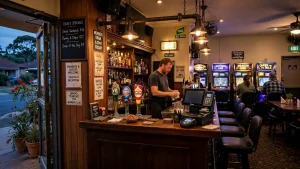
Best Pokies in Sydney: What Location Searches Reveal
Location terms can point to venues, directories, advertisements or online gambling pages, but they do...

Best Pokies in Tasmania: Venue Hours and Local Rules
Tasmanian gaming access depends on venue-specific hours, local rules and the distinction between land-based rooms...

Best RTP Pokies in Australia: How RTP Works
RTP describes a theoretical long-run return, while settings and random outcomes shape what the figure...

Big Red Pokies Online in Australia: Free Play
A clear look at demo play, real-money rules and why a familiar game name cannot...

Most Trusted Online Casino Australia: What Trust Means
The guide separates operator claims from Australian licensing, payment methods, payout terms and what the...



































































































































































































