
Lightning Link Online Pokies in Australia: How It Works
 Available in AU
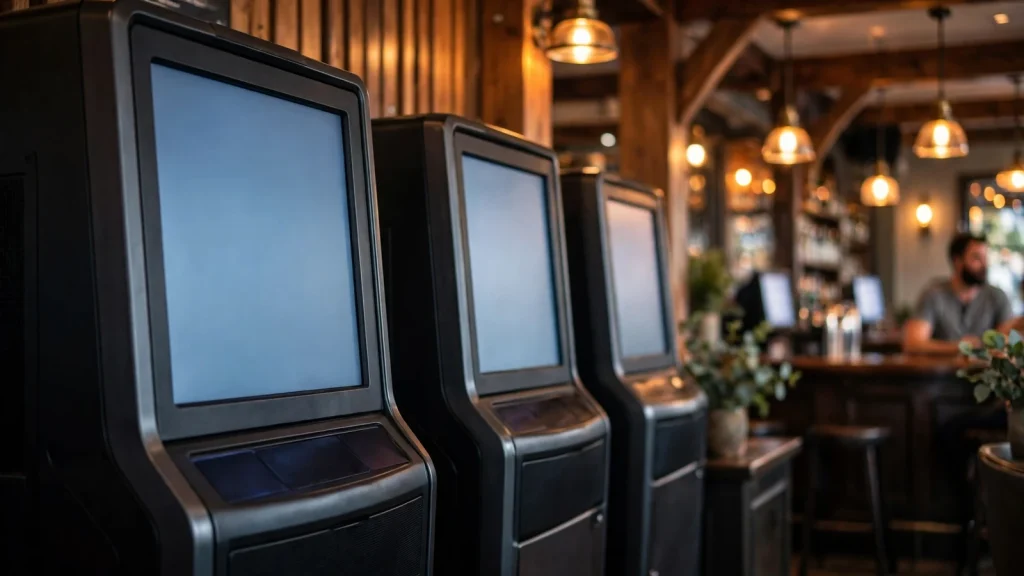
A clear guide to the venue-based game, its linked machines and features, and the difference between machine play and online access.
Table of Contents
- Lightning Link and the Australian Venue
- The Hold and Spin Feature, Without the Mystique
- Linked Machines and the Rising Jackpots
- Variants, Paytables and the Shape of a Session
- Free Play and the Line Between Play and Gambling
- Real-Money Access and Australia’s Regulatory Boundary
- Why an Online Casino Search Does Not Lead to Lightning Link
- Mobile Access and Similar Hold and Spin Games
- Playing the Machine: What the Mechanics Can—and Cannot—Tell Us
- Downloads, Dollars and the Limits of What Is Available
- Pokies
Lightning Link and the Australian Venue
Lightning Link is a game series created by Aristocrat, an Australian developer, and its familiar setting in Australia is not a browser window or a phone screen. It is a machine on a venue floor. That distinction matters because the name can travel easily across formats in conversation, while the game itself remains tied to a particular place: the public room where a machine is installed and played.
A venue machine is part of a social landscape, even when the play is solitary. It sits among other machines, under the same roof as people meeting, eating or spending an evening out. The room gives the game its context. A Lightning Link machine is not simply an image on a screen; it is a physical object within a managed venue, with a seat, a display and the sounds and lights of the surrounding floor. The setting is ordinary enough to fade into the background. That is part of its design.
The name also belongs to a recognisable Australian tradition: locally developed games occupying local venues. Aristocrat’s Australian identity is not incidental to Lightning Link’s place in that setting. The game series was made by an Australian company, and in Australia its real-money form is encountered on venue machines rather than offered online to Australian players. The distinction is less glamorous than the language of digital access, but more useful. A title’s presence on a screen somewhere does not tell much about where its actual market availability lies.
For Australian players looking into Lightning Link online pokies in 2026, checking an operator’s stated licensing and practical account details can help inform where to look. These short verdicts stick to the available information for each operator.
1. Playfina Casino
License: Curacao eGaming (Hollycorn N.V., since 2017) · Min. deposit: A$20-30 (depends on the offer) Playfina Casino is listed with a Curacao eGaming license held by Hollycorn N.V. since 2017. Its minimum deposit is A$20–30, depending on the offer.
2. DragonSlots Casino
License: Curacao Gaming Authority (Jumpman Gaming Ltd) DragonSlots Casino is listed with a Curacao Gaming Authority license, with Jumpman Gaming Ltd named as the operator.
3. LevelUp Casino
License: Curacao eGaming OGL/2023/174/0082 (Dama N.V.) · Min. deposit: A$15 LevelUp Casino is listed with Curacao eGaming license OGL/2023/174/0082, under Dama N.V. The stated minimum deposit is A$15.
4. Bizzo Casino
License: Curacao Gaming Control Board (TechSolutions Group N.V.) Bizzo Casino is listed with a Curacao Gaming Control Board license, with TechSolutions Group N.V. named as the operator.
5. LuckyVibe
License: Curacao Gaming Control Board OGL/2023/176/0095 (Hollycorn N.V.) LuckyVibe is listed with Curacao Gaming Control Board license OGL/2023/176/0095, under Hollycorn N.V.
6. Thor Casino
License: Curacao – Antillephone N.V. (Versus Odds B.V.) · Min. deposit: EUR 20 Thor Casino is listed with a Curacao license associated with Antillephone N.V. and Versus Odds B.V. Its stated minimum deposit is EUR 20.
7. SpinsUp
License: Curacao Gaming Control Board OGL/2023/174/0082 (Dama N.V.) SpinsUp is listed with Curacao Gaming Control Board license OGL/2023/174/0082, under Dama N.V.
8. SkyCrown
License: Tobique Gaming Commission · Payout speed: crypto ~10-15 minutes, fiat 1-5 days · Min. deposit: A$30 SkyCrown lists a Tobique Gaming Commission license and a minimum deposit of A$30. Its stated payout estimates are around 10–15 minutes for crypto and 1–5 days for fiat.
9. MrPacho
Payout speed: crypto 30-120 minutes, fiat 24-72 hours · Min. deposit: A$30 MrPacho lists a minimum deposit of A$30. Its stated payout estimates are 30–120 minutes for crypto and 24–72 hours for fiat.
10. Golden Pokies
License: Curacao Golden Pokies is listed with a Curacao license. No further operator details are provided here.
That helps explain why references to Lightning Link online can be misleading. The words may describe someone’s interest in the game, or an image that resembles it, without establishing that the original game is available as an online real-money product in Australia. Here, the recognised format is land-based. The venue is not a decorative detail added to the game after the fact; it is the setting in which the Australian player encounters it.
The machine, in turn, is one small piece of a larger venue economy. Such rooms organise play into a visible, repeatable activity: select a machine, take a seat, watch the display, decide whether to continue. The surrounding environment lends the activity a sense of routine. There is no need for a grand mythology. A game can become familiar through repetition and recognition, through its name on a cabinet and the distinctive look of its screen. Familiarity is not the same thing as a promise.
This is why “Lightning Link pokies” is best understood as a reference to a named Aristocrat series played on machines in Australian venues, not as a general label for every online game with a similar appearance. The series has a specific maker and a specific local setting. The online phrasing may be common, but it does not change that distinction. Nor does a similar title, theme or feature automatically make another product Lightning Link itself.
Dragon Link Online Pokies in Australia: What Is Verified
The venue format also shapes how the game is encountered. A player meets it as part of a place, rather than as an app that follows them from room to room. That difference says something about the way gambling has been arranged: not only through software and rules, but through buildings, machine floors and the businesses that host them. The machinery can be modern; the social arrangement remains physical.
Lightning Link therefore has two identities that should not be confused. It is an Australian-developed game series, and it is a venue-based experience for Australian players. Online references may blur those categories, especially when the same visual language appears across different products. The name itself is not proof of availability in every format.
The plain version is the most dependable: Lightning Link is played on venue machines in Australia, while real-money online play is not offered to Australian players. No digital shortcut changes the location of the game. The room still matters.
This article is affiliate-linked and may include sponsored recommendations.
The Hold and Spin Feature, Without the Mystique
The name sounds more theatrical than the mechanism. In descriptions of the Lightning Link slot game, Hold and Spin is presented as a sequence in which special symbols stay fixed while the positions without them spin independently. Each part of the display has a separate fate: a symbol that has landed is held in place; the other positions continue to change.
Hold and Spin Mechanism
Special symbols are held in fixed positions while the remaining spaces on the display continue to spin independently.
That division is the feature’s central idea. It turns a single spin into a small changing arrangement, with fixed points and moving spaces sharing the screen. The held symbols do not move along with the rest of the positions, and the open positions do not have to produce matching results. The visual tension comes from watching what remains and what changes, not from any hidden rule that makes a particular outcome due.
A specialist game review describes the mechanic this way; the exact presentation can depend on the version being played. The plain account is enough to take the mystery out of it. Hold and Spin is a bonus sequence built around locked symbol positions and separate spins in the remaining positions. It does not, by itself, explain what a player will receive or when the feature will appear.
That distinction matters because animations can make a simple process feel like a promise. They are not one. The symbols stop; the rest keep turning. That is the mechanism, not a forecast.
Linked Machines and the Rising Jackpots
The Major and Grand jackpots are tied to linked Lightning Link machines rather than being described as prizes generated by one isolated cabinet. A specialist review describes both amounts as rising over time as players wager across the linked machines. The network matters: activity at one machine can contribute to a jackpot structure shared beyond that single position, giving the displayed prize a life separate from the spin taking place in front of any one player.
New Australian Online Pokies: Rules and Risks
That shared structure can make the figures on a machine seem like a running public tally. They reflect wagers made across linked play, not a forecast of what the next spin will return. A rising total is a record of accumulation, not evidence that a win is due. The distinction is plain, though the theatre of a growing number is designed to make it feel less so.
Major and Grand are the two jackpot labels in this structure. Their names mark separate prizes, but they do not, by themselves, tell a player how either prize is triggered, whether the same conditions apply to both, or how a particular machine is connected to the network. Those details belong to the rules attached to the specific game and venue. A title on a display is not a complete set of terms.
A specialist review also notes that eligibility for a jackpot may depend on wagering at the maximum bet. That condition should not be mistaken for a universal rule applying identically to every Lightning Link machine. It does, however, change the practical meaning of a jackpot headline: a prize may be visible while access to it depends on the stake selected for play. The distinction between seeing a prize and qualifying for it is consequential.
The maximum-bet condition is worth separating from the way the jackpots grow. One concerns eligibility at the machine; the other concerns the movement of the linked prize over time. A player can understand that linked wagers feed a rising Major or Grand figure without assuming that every wager qualifies for every jackpot. The game’s own rules determine the connection between the selected stake and the prize.
Jackpot Eligibility
Access to certain jackpots may depend on wagering at the maximum bet; seeing a prize on the display does not guarantee qualification for it.
This is why jackpot figures can be easy to notice and harder to interpret. The display offers a number, while the underlying structure involves linked machines, ongoing wagering and conditions that may affect eligibility. Neither the size of a displayed prize nor its continued rise establishes how likely a particular spin is to win it. A jackpot total is not a timetable.
The label “Grand” can invite assumptions about rank or scale, and “Major” can sound like a lesser rung in a tidy ladder. The names distinguish the jackpot categories, but the available description does not make them a promise about the odds or the route to a win. Their significance is structural: they identify separate prizes within the linked-machine arrangement. The rest must be read from the game’s stated rules, rather than inferred from the naming.
For anyone assessing a Lightning Link machine, the useful questions are therefore narrow: which jackpot is being shown, which machines contribute to it, and whether the relevant prize has a maximum-bet condition. These are questions about the prize system, not clues to a winning method. The linked format explains why a total can rise beyond the activity at one cabinet; it cannot turn that total into a prediction.
A rising jackpot is a shared counter with conditions attached. Nothing more certain than that.
Variants, Paytables and the Shape of a Session
Lightning Link is a series rather than a single fixed arrangement. A specialist review names Happy Lantern, Magic Pearl, Sahara Gold and High Stakes among its variants, and notes differences in their paytables and bonus features. The titles suggest distinct themes; the practical distinction lies in how each version sets out its payouts and bonus play.
A paytable is the machine’s account of what combinations may pay and under what conditions. It is useful for comparing versions, but it does not say which one will produce a favourable session. Nor does a bonus feature make a particular outcome predictable. The same branded series can therefore offer different presentations without changing the basic uncertainty of gambling.
Best paying online pokies in Australia: payout guide
The names alone tell little. Happy Lantern and Sahara Gold may sound like different worlds, but the relevant comparison is the information displayed for each version: its paytable and the terms attached to its bonus features. Those details matter more than a title’s promise of atmosphere. A colourful cabinet can make a game feel singular; the paytable is less theatrical.
A specialist review reports minimum bets from $0.20 to $1.00 per spin, with the amount depending on the venue or platform offering the variant. That range should be read as a reported snapshot, not a permanent setting across every machine. Available stakes can vary with the version and where it is installed. A lower starting bet changes the cost of a spin, not the likelihood of a return.
Questions about how to win on Lightning Link often presume that choosing a particular variant or stake can reveal a reliable method. The differences between paytables and bonus features do not establish such a method. They describe the rules and possible outcomes, not a route to control them. In that respect, a careful comparison is more useful than a confident prediction.
Happy Lantern
A variant of the Lightning Link series with its own specific paytable and bonus features.
Magic Pearl
A themed version of the series featuring distinct payout structures.
Sahara Gold
A variant with a unique theme and specific rules for its bonus play.
High Stakes
A version of the game characterized by its own paytable and bonus mechanics.
The catalogue offers variation, not certainty. Small distinction. This article is affiliate-linked and may contain sponsored recommendations.
Free Play and the Line Between Play and Gambling
“Free play” sounds like a simple description of price: no money goes in, so nothing much is at stake. In social casino settings, however, the important distinction is not merely whether a session costs money. It is what the game pays out. Platforms that offer pokies-style games using virtual currency, with no way to win real money, are not considered gambling under the Interactive Gambling Act 2001.
That boundary separates a simulated game from wagering for money. The screen may borrow the familiar language and imagery of a pokie, and the play may be organised around spins and bonus rounds. Yet virtual credits are not cash winnings. They remain part of the platform’s play environment rather than becoming money that can be withdrawn or spent elsewhere.
The distinction can be easy to overlook because the experience is designed to feel recognisable. A balance appears on screen; it rises or falls as play continues; a result is announced with the same theatrical emphasis whether the reward is virtual or financial. The interface borrows the old grammar of the machine. The legal meaning does not follow automatically.
This is why the phrase “free Lightning Link” needs care. It can refer loosely to a no-cost simulation, but the name alone does not establish what a particular product offers, whether it uses virtual currency, or whether it is actually available in a given setting. A game’s appearance is not a reliable guide to its legal or financial character. The decisive feature in the social-casino distinction is that players cannot win real money.
Bitcoin Pokies in Australia: Payments and Play
Nor does “free” necessarily mean that a platform has no commercial purpose. A social game can be offered without charging for each play while still being part of a business model. Virtual currency may be provided within the service, and the surrounding interface may encourage continued engagement. That commercial design does not turn virtual credits into money, but it does make the word “free” less complete than it first appears. It describes one aspect of access, not the whole arrangement.
The older venue machine and its digital imitation belong to different settings, even when they share a name or visual style. The social version is not made equivalent to a cash game simply by resembling one. Conversely, calling something a social game does not make it so if the arrangement allows real-money winnings. Labels can be convenient; the actual exchange is what matters.
There is also a cultural reason the distinction deserves more than a footnote. Gambling has long been organised around a bargain between chance and money. Social play borrows the spectacle while removing that central exchange. It can preserve the anticipation, the sounds and the ritual of a result without offering cash winnings. The performance remains; the wager does not.
That does not make the two experiences identical, nor does it make virtual play financially consequential in the same way as real-money gambling. It does explain why lawmakers draw a line based on winnings rather than on visual resemblance. A digital screen can imitate a machine closely. The law asks a plainer question: can the player win real money?
Legal Distinction
Social casino games using virtual currency are not considered gambling under the Interactive Gambling Act 2001 because players cannot win real money.
For people encountering Lightning Link in a free-play context, the distinction is therefore narrower than the label may suggest. A social platform using virtual currency may fall outside the IGA’s definition of gambling because there is no real-money prize. That statement describes the category, not every product that uses the Lightning Link name. The name cannot settle the question on its own.
The language of play has always been good at disguising its boundaries. “Credits” sound like a balance, “rewards” like winnings, and a free session can look much like a paid one. But virtual currency has no cash value merely because it is displayed in a familiar format. Where no real money can be won, the legal classification differs from gambling for money. A small difference on screen; a substantial one in law.
This page is affiliate-linked and may contain sponsored recommendations. That disclosure does not change the distinction between virtual play and gambling for real money, or imply that any particular social game is available.
Real-Money Access and Australia’s Regulatory Boundary
Lightning Link is not offered online for real-money play to people in Australia. Its presence on a screen bearing the same name, or on a page using familiar imagery, does not change that boundary. The game is available on machines in venues; a real-money online version is not an option for Australian players.
High-Volatility Slots in Australia: Payouts and Risk
That distinction sits within the Interactive Gambling Act 2001, which prohibits operators from providing certain online gambling services to people in Australia. The prohibited services include online poker and casino-style games. A game does not escape the rule because it is presented as a familiar pokies title, or because the service is hosted beyond Australia’s borders. The law concerns the service offered to people in the country, not the mood music around it.
The federal regulator responsible for enforcing the Act is the Australian Communications and Media Authority (ACMA). It monitors compliance with the nation’s interactive gambling laws and can ask Australian internet service providers to block websites that provide prohibited services or advertise them. Blocking is one part of enforcement: it makes access harder, though it does not turn the underlying legal boundary into a mere technical inconvenience.
ACMA’s enforcement record gives that boundary a physical shape. Since November 2019, the regulator has blocked more than 1,455 illegal gambling and affiliate websites after enforcement action. The number of illegal services that have left the Australian market since enforcement began in 2017 is reported inconsistently: one figure is more than 210, while another is over 190. The totals differ, but both describe withdrawals following regulatory pressure. A blocked address is not a change in the law; it is evidence that the law is being applied.
For Lightning Link, the practical result is plain. Searching for a real-money online version does not make such play lawful or make the title available through an Australian online casino. The distinction matters because a familiar game name can lend an air of local legitimacy to a service that sits outside the permitted market. A recognisable title is not a regulatory pass.
Regulatory Enforcement
The ACMA monitors compliance with interactive gambling laws and can request that ISPs block websites providing prohibited services.
Real-money gambling content is for people aged 18 and over. That age threshold does not make prohibited online casino services lawful, and it should not be confused with the separate question of whether a particular game is available in a venue. Availability and legality are not interchangeable labels.
This page is affiliate-linked and may contain sponsored recommendations. That commercial relationship does not alter the status of Lightning Link online: it is not offered for real money to Australian players. Nor does a recommendation change what the Interactive Gambling Act prohibits. The boundary is set by law, not by the placement of a link.
Why an Online Casino Search Does Not Lead to Lightning Link
The phrase “Lightning Link online casino” joins two things that do not meet in the Australian market. Lightning Link is an Aristocrat game series encountered on machines in venues; it is not offered online for real-money play to Australian players. A website describing an online version, or placing the game’s name beside an online casino, does not change that distinction.
The confusion is understandable. The familiar language of venue play has migrated onto screens, while online listings often group games by theme or mechanic. A page may use “Lightning Link” in a heading, image caption or description even when it is discussing something else, such as a social game or another product with a similar feature. A name on a page is not proof that the named game is available there, still less that it can be played for money in Australia.
Best RTP Slots in Australia: Understanding RTP
That difference matters because the online market is not simply a digital extension of the local venue floor. The Interactive Gambling Act 2001 prohibits operators from providing certain real-money gambling services to people in Australia. Online casino-style games fall within that boundary. The law’s focus is the businesses supplying the services, rather than the individual who might encounter them. There are no known prosecutions of Australian players for gambling on offshore sites; that history is context, not a permission slip or a recommendation.
The distinction between operator and player can be easily misread. It does not make offshore services lawful to provide in Australia, nor does it mean that a site’s availability in a browser amounts to local approval. The Australian Communications and Media Authority enforces the federal rules, and enforcement can include asking internet service providers to block sites associated with prohibited services. A link that appears in a result or remains visible elsewhere is not a dependable guide to what is lawful or accessible.
There is also a practical reason the search often ends in a muddle: online descriptions are not always careful about product identity. Some use broad labels for games that share a visual style or a feature, while others repeat a well-known title to attract attention. In either case, the wording can suggest a direct digital edition where none is available for real-money play to Australians. The similarity may be real; the identity is not.
A player looking for the venue game may therefore find pages that mention it without providing it. Search results, promotional language and game catalogues are commercial surfaces, not neutral inventories. Their descriptions can blur the line between a specific Aristocrat product and the wider family of games built around related ideas. That blur serves the page better than it serves the reader.
Do
- Verify the product identity
- Check the game’s stated rules
- Distinguish between social and real-money play
Don’t
- Trust name-only listings online
- Assume a title proves availability
- Confuse visual similarity with identity
The same caution applies to claims that a particular online casino “has” Lightning Link. The claim may refer to a name used loosely, a non-gambling version, or a game that resembles the venue product rather than being that product. It should not be taken as evidence that real-money Lightning Link is available to Australian players.
The legal arrangement is notable for what it chooses to regulate. It places the principal burden on operators, whose services may be investigated or blocked, while the player is not the usual enforcement target. That distinction is meaningful, but it is not an endorsement of offshore gambling. A person can face no known pattern of prosecution and still encounter an unregulated, restricted or misleading service. Those are different questions, too often folded into one.
The result is a gap between the words people use and the product they can actually find. “Lightning Link casino” may describe an intention to locate the familiar venue game online, but in Australia the real-money version remains tied to venue machines. A listing that promises more should be treated as a claim about that listing, not as a change in the game’s local availability.
This page is affiliate-linked and may contain sponsored recommendations. That disclosure does not turn an unavailable real-money product into an available one, or make a listing an official source. Commercial language has its uses. Precision is one of them.
Low-Volatility Slots in Australia: What to Know
Mobile Access and Similar Hold and Spin Games
A phone changes the size of the screen, not the history of a game. Lightning Link was designed for land-based venues, where it is played on a machine; a mobile app carrying a similar feature is not, on that account, Lightning Link itself. The distinction can get blurred when the same broad mechanic appears under different titles and from different developers.
A specialist review describes online platforms as offering Hold and Spin-style play from Aristocrat and other providers. That is a limited comparison, not evidence that the venue game has been released as a real-money Australian app. The shared feature is a design idea; the product and the place where it is offered are separate matters.
On a phone, the familiar pattern may be present: special symbols stay in position while other spaces continue to spin independently. That resemblance can make two games feel related, but it does not establish that they share the same paytable, bonus rules or overall design. A small screen is an efficient disguise for differences. It does not erase them.
The language of “tips” often suggests that a particular device, timing or sequence can improve results. Mobile access offers no such shortcut. A touch screen is simply another way to operate a game, and visual similarity between Hold and Spin titles does not supply a reliable strategy. The mechanics can be described; they do not turn into a prediction because they fit in a pocket.
This is also why a title associated with Lightning Link should not be treated as proof of a downloadable version. A mobile listing may refer to a different game, a social product or a lookalike mechanic. The name and the actual product matter more than the device icon.
Mobile Format
A mobile app with similar features is a different product from the venue-based Lightning Link machine.
trublucasinoau’s content is affiliate-linked and may include sponsored recommendations. That commercial relationship does not change the distinction between a venue-based game and online titles that borrow a similar feature. A phone is a format, not a licence to rename one game as another.
Playing the Machine: What the Mechanics Can—and Cannot—Tell Us
A specialist game review describes Hold and Spin as a sequence in which special-symbol positions remain fixed while the other positions spin independently. That is the useful mechanical detail: some parts of the display are held in place, and the rest continue to change. It explains what happens on screen, not what will happen next.
For someone trying to understand how Lightning Link is played, that distinction matters. A visible pattern can make a round feel as though it is building towards a particular outcome. But the locked positions do not reveal what the spinning positions will show, and a previous result does not establish what a later one will be. The feature is a rule for arranging a round, not a readable signal about its ending.
Nor does the sequence supply a strategy for winning. Knowing which positions are held explains the animation and the structure of the feature; it does not make the result predictable. A machine can make chance look unusually legible. That is part of its design, not evidence that the next spin has been disclosed in advance.
The distinction also helps separate the original game from online imitations. Other games may use a similar Hold and Spin idea, but resemblance in a feature does not establish that the game itself is Lightning Link or that it is available for real-money online play in Australia. The mechanics can be compared; the product and its setting cannot be assumed to be the same.
A careful description therefore stays close to what the feature actually does: special-symbol positions lock, while other positions spin on their own. Beyond that, claims about a reliable way to play or a predictable result go further than the mechanic allows. The animation is specific. The promise is not.
Safe Online Pokies in Australia: Legal and Safety Risks
This page is affiliate-linked and may contain sponsored recommendations.
Downloads, Dollars and the Limits of What Is Available
A request to download Lightning Link can sound like a simple matter of finding the right file. In Australia, however, the game’s established format is a machine in a venue, not a real-money download for home play. A file or webpage using the name does not change that distinction, and a similar-looking game is not proof that the original Lightning Link has become available online.
The word “dollar” can muddy the picture further. It may appear in a title, a game description or material about a machine, but it does not establish that an Australian player can access Lightning Link for real-money play online. The title alone is not a receipt for availability.
Specialist reviews describe online games from Aristocrat and other developers that use Hold and Spin mechanics resembling those associated with Lightning Link. That resemblance is useful for identifying a style of play, not a basis for treating every such game as Lightning Link. Names, artwork and features can travel across formats; the product itself does not necessarily travel with them.
This is where downloadable alternatives need careful naming. A free-play version, a game with related mechanics and the venue machine are different things, even when a screen makes them look like members of one family. The distinction matters particularly when money enters the description: an online imitation or relative should not be mistaken for the Australian venue game, nor presented as a route to real-money Lightning Link.
Real-money gambling content is for people aged 18 and over. This page is affiliate-linked and may contain sponsored recommendations; that commercial disclosure does not alter what is available. In Australia, Lightning Link remains a venue-based experience. The download label cannot make it otherwise.
Is it legal to play online pokies in Australia?
The Interactive Gambling Act prohibits operators from providing casino-style online gambling services to Australian residents. The law targets operators, not individual players, and there are no known cases of Australian players being prosecuted for using offshore sites.
What is the minimum bet for Lightning Link online pokies?
For online versions, minimum bets typically range from $0.20 to $1.00 per spin, depending on the game variant and casino. Lightning Link itself is not offered for real-money online play to Australian players.
Are Aristocrat online pokies the same as the pub machines?
No. Lightning Link is a venue-machine game in Australia; online games may use similar Hold and Spin mechanics, but that does not make them the same game.
Pokies
Aristocrat Online Pokies Australia: What Can Be Established
The page distinguishes brand wording from evidence about specific games, free play, real-money access and...
Best 3-Reel Slots in Australia: What “Best” Means
A closer look at what reel count, RTP, bonus rules and Australia’s offshore boundary can—and...
5-Reel Slots in Australia: RTP, Rules and Play
Learn how reel layout, independently generated outcomes and theoretical RTP differ, and what those distinctions...

7-Reel Slots in Australia: How RTP and Spins Work
This guide separates individual random spins from long-run RTP while examining game features, free play...

Bonus-Buy Slots in Australia: How Features Work
A practical look at feature settings, free-play limits, RTP builds and Australia’s offshore gambling boundary....
High-Volatility Slots in Australia: Payouts and Risk
The guide separates payout patterns from predictions and explains how long dry spells fit within...

Low-Volatility Slots in Australia: What to Know
Low volatility points to more frequent, generally smaller wins, but it does not replace the...

New Australian Online Pokies: Rules and Risks
How Australian law, offshore licences, payment access and bonus conditions shape claims about new real-money...

Best paying online pokies in Australia: payout guide
A practical explanation of offshore play, Bitcoin balances, slot returns, bonus conditions and the steps...

Pokie Machines in Australia: Games, Odds and Rules
A practical look at legality, game displays, RTP, volatility and why free-play results do not...

Best Progressive Jackpot Slots: How the Pools Work
Progressive jackpots build from wagers, but pool rules, bet conditions and bonus costs shape how...
Best RTP Slots in Australia: Understanding RTP
RTP describes theoretical performance across immense samples, while RNG-driven spins remain independent and cannot predict...

Video Slots in Australia: How Online Play Works
A practical guide to screen formats, free-play limits, RTP, game features and regulatory distinctions around...
Bitcoin Pokies in Australia: Payments and Play
Bitcoin can fund play, but game credits are specific to each title and do not...
Dragon Link Online Pokies in Australia: What Is Verified
The available wording can identify a search topic, but it does not verify a product,...

Pokies Tips and Tricks: What Actually Affects Play
Understand what random spins, RTP and game rules can tell you—and why no tip can...

Real Cash Online Pokies in Australia: What It Means
The phrase “real cash” describes money being involved in play, while Bitcoin payment claims and...

Safe Online Pokies in Australia: Legal and Safety Risks
This guide separates Australian legal restrictions from payment, verification and bonus risks that can affect...



































































































































































































