
Safe Online Casinos in Australia: What the Law Says
 Available in AU

Online casino games cannot lawfully be offered to people in Australia, so payment security and game fairness do not resolve the question of legality.
Table of Contents
- What “safe” can mean in a market where online casinos are prohibited
- PayID moves money quickly; legality is another matter
- Real-money play and the limits of the Australian framework
- “Best” is not a substitute for legal authorisation
- What ACMA’s blocked-site record says about casino websites
- Deposits, identity checks and the long road to a withdrawal
- Game fairness has numbers, but not a guarantee
- Mobile access does not make gambling safer
- When a casino is not safe: the protections that may be missing
- Australian dollars, wallets and the limits of a payment label
- Casino Access
What “safe” can mean in a market where online casinos are prohibited
The phrase “safe online casino in Australia” carries a contradiction that a polished website cannot resolve. Safety might mean that a game works as advertised, that a payment is handled securely, or that a player has somewhere to turn when a dispute arises. But before any of those questions, there is a more basic one: whether the service is lawful to offer to people in Australia.
The Interactive Gambling Act 2001 draws a firm line around online casino games. Operators cannot lawfully provide these games to people physically in Australia. Online slots and casino games such as blackjack fall on the prohibited side of that line. The rule concerns the service being offered, not the language on its homepage or the location of a server. A foreign address, an offshore licence or an Australian-facing welcome does not itself confer permission to operate here.
That distinction matters because “safe” is often made to sound like a quality of presentation. A site may look orderly, display familiar payment symbols and use the vocabulary of responsible play. Those details can describe how a business presents itself; they do not change what the law allows it to provide. A carefully designed doorway is still a doorway into a prohibited service.
Pokies Parlour Casino in Australia: Venue Guide
The Australian Communications and Media Authority, known as ACMA, is the country’s primary online gambling regulator. Its role places online gambling within a public framework rather than leaving legality to the claims of individual operators. For casino games, the central point is not whether a site says it is trustworthy, but whether the kind of service it offers is permitted in Australia. Under the Act, online casino gaming is not a product that domestic operators may lawfully offer to Australian residents.
The law’s attention to operators should not be casually transferred to players. The Interactive Gambling Act does not explicitly criminalise an individual merely for using an offshore casino site. That is a narrower statement than saying that offshore casino play is lawful, approved or protected. It means the legal position of the person using a service is distinct from the operator’s obligation not to provide prohibited gambling to people in Australia.
$1 Minimum Deposit Pokies in Australia: Payment Limits
The distinction is easy to lose in everyday talk. A site may describe itself as “licensed” without making clear that an offshore licence is not Australian authorisation. A player may also infer that, if personal use is not explicitly criminalised, the service must be acceptable. Neither inference follows. The law can place its prohibition on the supplier while leaving the individual user outside the same explicit criminal rule. Different positions; same transaction.
That asymmetry says something about the way Australia has chosen to regulate online gambling. The state does not treat every person at the far end of a screen as the same legal actor as the company arranging the game. It draws its strongest boundary around the provision of the service. The result is an awkward gap between what a person may not be explicitly punished for doing and what a business may not lawfully offer.
So “safe casino” cannot simply mean a casino that appears reputable, nor can “safe online casino Australia” be treated as a promise that a lawful domestic casino market exists. The legal frame is unusually important here: an attractive presentation cannot supply the authorisation that the market does not provide for online casino games. Other questions about a site’s operations may matter to an individual’s exposure, but they do not erase that first distinction.
In this setting, safety begins as a question about the boundary between user and operator. The operator’s right to offer casino games to people in Australia is not established by the player’s lack of explicit criminal liability. Nor does the player’s position turn a prohibited service into a lawful one. The words sound similar. Their legal meanings do not.
PayID moves money quickly; legality is another matter
PayID can make a transfer feel almost frictionless. A payment instruction moves through the New Payments Platform, and a specialist gambling-payment review describes transfers as capable of clearing within minutes once released. That is a statement about the movement of money, not a certificate about the business receiving it. A fast arrival proves only that a payment has travelled quickly.
PayID allows transfers to clear within minutes once released, but this speed refers to the movement of money and not the legality of the receiving business.
The distinction matters in Australia, where online casino games are not lawfully offered to residents by domestic operators. The Interactive Gambling Act 2001 prohibits operators from providing those services to people in Australia. PayID does not create an exception, and using it cannot turn an offshore casino into a service licensed in Australia. The payment method and the gambling service belong to different parts of the transaction, even when a website presents them as one seamless process.
PayID’s convenience is therefore a narrow convenience. It may shorten the wait between releasing a transfer and seeing it credited, but it cannot establish who controls the receiving account, what rules govern the casino, or what recourse exists if a dispute follows. Those questions are not answered by the speed of a bank notification. Money can move efficiently toward a service whose legal position remains unchanged.
This is an old commercial trick in a new interface: let the smoothness of the checkout stand in for trust. In a shop, a polished counter says little about the goods behind it. Online, a familiar payment logo can perform a similar piece of theatre. It may indicate that a payment route is available; it does not amount to an endorsement of the site.
Descriptions of payment timing also need to be read as descriptions, not promises. The specialist review that discusses PayID’s speed is reporting a payment experience, not setting a binding timetable for every transfer. A payment may not be released immediately, and the point at which it appears can depend on the steps taken by the service and the financial institutions involved. Speed is possible, not a guarantee.
Pokies Open Near Me in Australia: Hours and Access
Comparisons with other methods should be treated with the same restraint. Specialist payment reviews describe PayID and some e-wallets as potentially quick after approval, while bank transfers and card payments may take several business days. The wording is conditional for a reason: approval and processing are part of the journey, and a method’s general reputation cannot settle what will happen in a particular transaction. Nor does a slower route necessarily mean a safer destination.
The word “safe” compresses several different questions into one. Is the payment instruction handled through a recognised system? Does the recipient have authority to offer the gambling service in Australia? Is there meaningful protection if money is accepted but a promised credit does not appear? PayID’s speed can speak to the first question only in a limited way. It cannot answer the others.
That is why a safe-sounding payment option should not be confused with a safe online casino. A no-deposit offer, a quick deposit, or a polished cashier page changes none of the legal position. These labels describe the pitch or the payment experience; they do not establish lawful authorisation. The screen may be reassuring. The underlying status is not transformed.
PayID remains a way to transfer money, not a regulator, licence, or dispute-resolution system. Its quickness can make a transaction feel settled before the more important questions have been considered. A few moments saved at checkout are not evidence that the service itself is lawful or safe. The transfer may be swift. The judgement cannot be outsourced to it.
Real-money play and the limits of the Australian framework
Real-money online casino play sits on the wrong side of a clear legal boundary in Australia. The Interactive Gambling Act 2001 prohibits operators from offering online casino games to Australian residents. That includes familiar formats such as slots and table games: the form of the game does not turn a prohibited service into a lawful domestic one.
Legal Prohibition
The Interactive Gambling Act 2001 prohibits operators from providing online casino games, such as slots and table games, to people physically in Australia.
The distinction matters because “available” and “legally offered” are not the same thing. A website may load, display games and accept payments without having permission to provide those games to people in Australia. Nor does the presence of Australian dollars, a mobile interface or a polished account page change the service’s legal character. These are features of a transaction, not a grant of authority.
In this market, the phrase “real-money casino” describes a practical arrangement—money goes in, games are played, and a balance may be shown—but it does not identify a lawful Australian product. An online casino is not made safe in the legal sense simply because the games function as intended. A smooth experience can obscure the more basic question of whether the operator is entitled to offer it here. It is not.
The law is directed at operators. That point should not be blurred into a claim that an individual player is committing a crime merely by using an offshore casino site. The Interactive Gambling Act does not explicitly criminalise individual players for that use. This is a narrower statement than an endorsement: the absence of an explicit player offence does not make the service lawful, locally authorised or protected as an Australian consumer product.
That separation reflects a familiar feature of regulation. Governments often place the duty on the party supplying a service, rather than treating every customer as its counterpart in enforcement. Here, the framework bars operators from supplying online casino games to people in Australia; it does not convert the player’s position into a licence for the business. Two different questions, with two different answers.
Casino sites not on BetStop in Australia explained
A safe Australian real-money casino, if “safe” means legally permitted to provide online casino games to people in Australia, is therefore not something a domestic operator can offer under this framework. The language of reviews can make the issue sound like a matter of comparing service, interface or reputation. Those may describe how a website presents itself, but none can resolve the legal limit. A favourable review cannot confer permission.
The line is also not about whether the game is played on a computer or a phone, or whether a player calls it entertainment rather than gambling. When real money is involved, the central point remains the operator’s provision of an online casino service to someone in Australia. A mobile screen is merely a smaller window onto the same arrangement. Small window, same boundary.
This is why questions about whether online casino games are safe need more than a technical answer. A site might use familiar payment language or explain its games clearly, yet the Australian framework still prohibits operators from offering those casino games to residents. Safety cannot be inferred from the appearance of normality, and personal exposure to risk is not the same thing as the operator’s legal status.
The practical tension is plain: a player may encounter a service that appears open for business, while Australian law says the operator may not provide that kind of online casino service here. The player’s position under the Act and the operator’s authority are separate matters. Confusing them makes the market look more settled than it is.
“Best” is not a substitute for legal authorisation
Choosing a safe online casino in Australia means checking the available information about licensing, deposits and payouts before deciding where to play. Use these details as a starting point and verify that the terms suit you.
1. Playfina Casino
License: Curacao eGaming (Hollycorn N.V., since 2017) · Min. deposit: A$20-30 (depends on the offer) Playfina Casino lists a Curacao eGaming license held by Hollycorn N.V. since 2017. Its minimum deposit varies by offer, at A$20–30.
2. DragonSlots Casino
License: Curacao Gaming Authority (Jumpman Gaming Ltd) DragonSlots Casino lists a Curacao Gaming Authority license held by Jumpman Gaming Ltd.
3. LevelUp Casino
License: Curacao eGaming OGL/2023/174/0082 (Dama N.V.) · Min. deposit: A$15 LevelUp Casino lists Curacao eGaming license OGL/2023/174/0082, held by Dama N.V. Its minimum deposit is A$15.
4. Bizzo Casino
License: Curacao Gaming Control Board (TechSolutions Group N.V.) Bizzo Casino lists a Curacao Gaming Control Board license held by TechSolutions Group N.V.
5. LuckyVibe
License: Curacao Gaming Control Board OGL/2023/176/0095 (Hollycorn N.V.) LuckyVibe lists Curacao Gaming Control Board license OGL/2023/176/0095, held by Hollycorn N.V.
6. Thor Casino
License: Curacao – Antillephone N.V. (Versus Odds B.V.) · Min. deposit: EUR 20 Thor Casino lists a Curacao license held by Antillephone N.V. for Versus Odds B.V. Its minimum deposit is EUR 20.
7. SpinsUp
License: Curacao Gaming Control Board OGL/2023/174/0082 (Dama N.V.) SpinsUp lists Curacao Gaming Control Board license OGL/2023/174/0082, held by Dama N.V.
8. SkyCrown
License: Tobique Gaming Commission · Payout speed: crypto ~10-15 minutes, fiat 1-5 days · Min. deposit: A$30 SkyCrown lists a Tobique Gaming Commission license and a minimum deposit of A$30. Its stated payout times are around 10–15 minutes for crypto and 1–5 days for fiat.
9. MrPacho
Payout speed: crypto 30-120 minutes, fiat 24-72 hours · Min. deposit: A$30 MrPacho lists a minimum deposit of A$30. Its stated payout times are 30–120 minutes for crypto and 24–72 hours for fiat.
10. Golden Pokies
License: Curacao Golden Pokies lists a Curacao license.
A polished page can call a casino safe, reliable or the best choice in Australia. Those words describe the page’s sales pitch, not the service’s legal standing. A logo, a list of games and confident promises about payments may make a site look orderly; none establishes that it is authorised to offer casino games to people in Australia.
That distinction matters because online casino games are not legally offered here by domestic operators. The Interactive Gambling Act 2001 prohibits operators from providing real-money online casino games to people physically in Australia. A claim that an offshore casino is safe, or that it accepts Australian customers, cannot turn that service into a lawful local casino. “Best” is a ranking word, not a licence.
The public register has a narrower, more useful purpose. ACMA encourages Australians to consult its website and the national register to find legal gambling products and check whether a wagering service holds a valid Australian licence. That offers a way to test a specific licensing claim against a public record, rather than treating a badge on a website as proof.
Attention: Being listed as a licensed wagering operator on the public register does not grant an operator permission to provide prohibited online casino games.
But the register must be read for what it records. A service appearing there as a licensed wagering operator is not thereby authorised to provide prohibited online casino games. Nor does a foreign licence amount to a licence in Australia. The type of service matters: authorisation for a legal wagering product does not create permission to offer slots or table games to Australians.
This is where the language of “safe betting” can blur unlike things. A site may use familiar payment labels, display a responsible-gambling statement or describe its games as fair. Those claims concern different features; they do not answer the legal question. Even a convincing presentation cannot substitute for the relevant Australian authorisation, and an offshore licence should not be mistaken for one.
Searches for a safe online casino in Australia often combine two hopes: that the site will behave responsibly and that the activity is legally recognised. The first is a claim about conduct; the second is a question of law. Conflating them allows attractive design to do the work of evidence. It is a small trick of language, and a consequential one.
$1 Minimum Deposit Casinos in Australia Explained
The register is therefore a verification route for legal gambling products and Australian licences, not a seal of approval for every product a company might advertise. If a page describes an operator as licensed in Australia, the claim should be checked against ACMA’s public register and against the kind of service the licence covers. A name in a register is not a blank cheque.
The same caution applies to claims that a casino is “safe” simply because it is popular, well presented or described as reputable. Such labels may tell something about how a service wants to be perceived. They do not establish that Australian law permits it to provide online casino games here. The distinction is not a technicality. It is the difference between a persuasive label and legal authority.
What ACMA’s blocked-site record says about casino websites
A casino website can disappear from an Australian connection without disappearing from the internet. That distinction matters in a market where ACMA’s enforcement reaches through local internet providers: the regulator can ask providers to block access to sites offering prohibited interactive gambling services to Australians, as well as services operating without the required Australian licence. The block affects access from Australia; it does not, by itself, erase a site or settle what it may do elsewhere.
Since November 2019, ACMA has restricted access to 1,369 illegal gambling and affiliate websites through blocking requests to internet providers.
ACMA also has power to fine operators that breach the Interactive Gambling Act 2001. Blocking and penalties are different tools, aimed at different parts of the problem. A website may be made harder to reach locally, while action against an operator addresses the business behind the service. Neither measure turns a casino site into a lawful Australian service.
The record gives a sense of how much the landscape has shifted. Since ACMA made its first blocking request in November 2019, it has restricted access to 1,369 illegal gambling and affiliate websites. That figure covers a changing field of sites, not a permanent catalogue of every address Australians might encounter. Domains can move, close or be replaced; an old link may fail while a new one appears in its place.
This is not the tidy geography of a shopfront changing its sign. Online services can be assembled across borders, and the name visible on a page may not reveal who runs it or where its business is based. A block is therefore a practical intervention in access, not a guarantee that every unlawful service has been found or that every blocked address tells the same story.
There has also been an exit from the market by operators themselves. Around 220 illegal services have left Australia voluntarily since stricter online gambling rules were enforced in 2017. That withdrawal sits alongside later blocking work: one reflects services choosing to stop operating for Australians, the other reflects ACMA seeking to cut off access where prohibited services remain available. The two measures describe a market being narrowed by both compliance decisions and enforcement.
$2 Minimum Deposit Casinos in Australia: What to Know
For anyone trying to assess a site’s presence, a working page is weak evidence. A site that loads today may be blocked later; a page that fails to load may reflect a block rather than a temporary technical fault. And a site’s absence from a blocked-site record would not amount to official approval. The record is an enforcement trail, not a safety certificate.
There is an unglamorous logic to this work. Regulation becomes visible not only in statutes and penalties but in the ordinary friction of a page that no longer opens. That friction can change quickly, while the branding and promises on the other side of a link remain polished and familiar.
A moving boundary.
Deposits, identity checks and the long road to a withdrawal
A deposit is the visible part of a transaction. The withdrawal is where a gambling platform may ask who supplied the money, whether the account belongs to that person, and whether the payment route can send funds back. That distinction matters when assessing claims that a site is safe to play on: a familiar deposit button says little about what will happen when a payout is requested.
Casinos conduct know-your-customer checks and require identity verification before withdrawals. The documents commonly requested are photo identification, proof of address and evidence that the payment method belongs to the account holder. These checks connect an account to a person and a payment source; they are not merely a final administrative hurdle.
Withdrawal Verification
Identity Documentation
The platform requests photo identification and proof of address to connect an account to a person.
Payment Verification
Evidence is required to prove that the chosen payment method belongs to the account holder.
Document Review
The platform reviews the submitted information for consistency before the funds are released.
The timing can therefore depend on more than the chosen method. A withdrawal may wait while documents are reviewed, or while the platform checks that the payment details match. If information is unclear or inconsistent, the process can become slower. A promise of rapid payment at the deposit stage does not describe this later sequence.
The payment route itself also matters. A specialist review describes POLi chiefly as a deposit method, so its availability for adding funds should not be taken as evidence that it can also receive withdrawals. A specialist review likewise notes that card withdrawals may be slower or unavailable, depending on the processor. These are method-specific cautions, not universal timetables: the route offered and the service’s procedures can differ.
That leaves a practical question beyond whether a card, bank transfer or other method appears on a payment page: what conditions apply when money is sent back? The withdrawal rules should be read alongside the identity requirements, including whether the account holder must use a payment method in their own name and what documents may be requested. A service that explains the deposit step prominently but leaves the return process vague offers an incomplete picture.
This is where the everyday meaning of “pay safe” becomes less tidy. The payment may be processed securely, yet the customer can still face checks, delays or a method that cannot be used for withdrawals. Payment convenience and a predictable payout are not the same thing.
For an Australian assessing an online gambling service, those details are useful evidence about its process, but they do not turn the process into a guarantee. Identity checks can establish who is asking for a withdrawal; they cannot, by themselves, establish that the service will release it promptly. Deposit first, questions later.
$5 Minimum Deposit Casinos in Australia: What to Check
Game fairness has numbers, but not a guarantee
A pokie’s return-to-player figure, or RTP, is a mathematical description of the share of stakes a game is designed to return over extended play. It is not a forecast for an individual session, and it cannot promise that a particular player will recover a particular amount. The figure describes a model, not a bill the machine must settle.
Game information is often tucked behind an “i” symbol or a menu in the help screen. That is where the listed RTP can be checked. The detail matters: a familiar title is not necessarily running with the same settings everywhere. Some providers make several RTP versions of one game, leaving the operator to select which version to offer. The artwork and name can remain unchanged while the underlying return figure differs.
That makes a game’s reputation a poor substitute for reading its own information. A description elsewhere may refer to another version, and a remembered figure may not match the version in front of someone. RTP is useful for comparing stated game settings, but it cannot show what will happen next, or make a gambling product safe by itself.
Nor does a generous-sounding figure turn an online game into a safe option in Australia. Online slots and table games, including blackjack, are prohibited when offered to people in Australia. Game mathematics is a separate question from whether the service may lawfully provide the game here.
The distinction can sound fussy, but it is not. Fairness in a narrow technical sense concerns whether a game follows its stated rules and settings. Safety also involves the conditions around play and the protections available to customers. One number cannot answer both questions.
RTP
A mathematical description of the share of stakes a game is designed to return over extended play, rather than a guarantee for an individual session.
Even free versions need to be read carefully. A demonstration may show how a game behaves, but it does not establish that a real-money service is lawful or that the same settings apply to another version. A game can be transparent about its RTP and still leave the larger questions untouched.
Numbers lend games an air of candour. They are useful, but modest. An RTP can clarify the design of a particular version; it cannot guarantee an outcome, and it cannot certify the service hosting it. Quite a small promise.
Mobile access does not make gambling safer
A phone can make a gambling service feel private and self-contained. The screen is small; the consequences are not. A login page, a polished app-like interface and a padlock symbol can suggest care, but each signals something narrower than safety.
Casinos use SSL encryption to protect transactions and sensitive information as it moves between a device and a service. That is a security measure, not a certificate of fair treatment or responsible conduct. It cannot establish that a service is authorised to operate in Australia, nor does it decide what happens when a dispute arises. A secure connection protects the route. It does not vouch for the destination.
The same distinction applies to a safe casino login. Encryption can make it harder for outsiders to read information in transit, but it does not make every device secure or prevent a person from sharing account details, reusing a password or leaving a session open. Mobile access changes where gambling happens; it does not remove ordinary risks around personal information. The interface may be tidy. The underlying questions remain.
$10 Minimum Deposit Casinos in Australia: What to Know
Harm reduction is a separate kind of safeguard. Reputable gambling platforms provide information about gambling-related harm and point people towards professional support services across Australia. Such information matters because gambling harm is not always announced by a dramatic event. It can develop through repeated decisions made in private, where a convenient screen leaves little social friction between one wager and the next.
Responsible-gambling rules also have a legal setting. Operators licensed to provide lawful gambling products are required to meet strict responsible-gambling obligations under the Interactive Gambling Act. That requirement should not be mistaken for a general approval of online casino play: online casino games are not lawfully offered by domestic operators to Australian residents. A page displaying responsible-gambling language does not, by itself, change that position.
This is why labels such as “safe mobile casino” or “safe online gambling” are too broad to carry much weight. A platform may encrypt data and publish support information while still leaving essential questions unanswered. Technical safeguards concern information security; harm-reduction measures concern how gambling affects people; legal authorisation concerns whether the service may be offered at all. None substitutes for the others.
The phone is merely the setting. It can put account access, payment prompts and gambling activity within easy reach, but convenience is not protection. Nor does a reassuring design turn an unsafe arrangement into a safe one. In this market, the word “safe” needs more than a lock icon and a link to help. Just a start.
Mobile Gambling Risks
- SSL encryption protects data in transit but does not vouch for the destination’s legality.
- Responsible-gambling information is a safeguard, not a substitute for legal authorisation.
- Convenience of mobile access does not remove ordinary risks associated with personal information.
When a casino is not safe: the protections that may be missing
Safety is often presented as a property of a website: a padlock symbol, a polished interface, a promise of fair treatment. But those signs cannot supply the protection that comes from a service being authorised to operate in Australia. An unlicensed gambling service is not a protected option simply because it looks orderly or accepts Australian customers.
That distinction becomes sharp when a dispute concerns money. If winnings are withheld, Australian laws may be unable to help resolve the matter or secure payment. The service may be beyond the practical reach of local protections, while its own terms determine how it handles complaints and accounts. A confident claim on a homepage is not the same thing as enforceable recourse.
ACMA can seek a blocking order as a last resort when it considers customer safety to be at risk. A block is a regulatory measure, not a guarantee that every unsafe service has been identified or that a blocked site cannot change its address. Nor does a site’s continued availability amount to approval. The internet has never been especially good at making visibility mean legitimacy.
There is a separate risk in trying to reach a casino through a VPN. A service may treat the concealed or altered location as a breach of its terms. Using a VPN to access a casino may therefore lead to winnings being voided, the account being closed, and the deposit being lost. That is not a technical workaround with a tidy legal edge; it adds another reason the service may refuse to honour a claim.
The central question behind “is this casino safe?” cannot be answered by appearance alone. If a service is not licensed in Australia, the protections available through Australian law may not extend to a customer’s dispute. An offshore licence does not change that local status, and a payment accepted by the site does not create a remedy if the site later refuses to pay.
Understanding $20 Minimum Deposits at Australian Casinos
The gap matters most when something goes wrong. Before any money is sent, the absence of local authorisation should be treated as an absence of dependable local protection—not as a small administrative footnote. Uncertainty is not protection.
Australian dollars, wallets and the limits of a payment label
An Australian-dollar balance can make a gambling site look locally minded. A wallet logo can make the route from account to account seem familiar. Neither detail answers the more important question: whether the service is lawful to offer in Australia. The Interactive Gambling Act 2001 prohibits operators from providing real-money online casino games to people in the country. Currency choice does not alter that boundary.
The distinction is easy to blur because payment interfaces speak a practical language: dollars, deposits, balances, transfers. They say little about the legal character of the business on the other side. A service displaying Australian dollars is not thereby licensed in Australia, and a wallet option does not confer local authorisation. A payment label describes how money is presented or moved, not what protections attach to the recipient.
There is one narrow security point worth separating from that larger question. Casinos use SSL encryption to protect transactions and sensitive information. Encryption concerns the handling of data in transit; it is not a certificate that a gambling service may legally operate here. Nor does it settle what happens when a dispute arises. Secure transmission and lawful provision are different matters.
That difference can be obscured by the polish of an app or checkout page. A familiar currency symbol and a recognisable wallet mark can lend an operation the air of ordinary commerce. But visual familiarity is not a consumer safeguard. The Australian legal framework does not turn a prohibited online casino into an authorised one because its prices are shown in dollars or its cashier offers a digital wallet.
For the same reason, descriptions of a “safe” Australian casino app cannot be judged by payment options alone. A wallet may be a convenient instrument in other settings; here, its presence says nothing decisive about the service receiving the funds. The label is real. The reassurance often inferred from it is not.
How long should a withdrawal take from a secure casino?
PayID and some e-wallet transfers can be quick after approval, while bank transfers and card withdrawals can take several business days. Identity checks may be required before a withdrawal is processed.
What are the legal consequences for Australian players using offshore casinos?
The Interactive Gambling Act does not explicitly criminalise an individual merely for using an offshore casino. That does not make the service lawful or mean the player is protected; the Act prohibits operators from offering online casino games to people in Australia.
Which banking methods are available for deposits and withdrawals?
Methods can include PayID, e-wallets, bank transfers and cards. POLi is mainly used for deposits, and card withdrawals may be slow or unavailable depending on the processor.
What responsible gambling tools and support services are available?
Licensed operators provide deposit limits that can be set daily, weekly or monthly, and reputable platforms share information about gambling-related harm and direct people to professional support services in Australia. Online casino games are not lawfully offered to Australian residents by domestic operators.
Casino Access

$1 Minimum Deposit Casinos in Australia Explained
The advertised threshold may reflect the casino’s cashier settings, while payment processors can impose a...

$1 Minimum Deposit Pokies in Australia: Payment Limits
An operator’s stated minimum may not match the amount a bank, wallet or processor can...

$10 Minimum Deposit Casinos in Australia: What to Know
The casino’s stated minimum may differ from a payment provider’s floor, while withdrawal rules and...

$10 Minimum Deposit Pokies in Australia
A site's stated minimum can differ from the amount a payment method will process, so...

$2 Minimum Deposit Casinos in Australia: What to Know
The advertised casino minimum is only one part of the transaction; payment limits, bonus terms...

Understanding $20 Minimum Deposits at Australian Casinos
The amount accepted depends on both the casino’s deposit settings and the minimum imposed by...

$20 Minimum Deposit Pokies in Australia
The usable minimum can depend on both the operator’s limit and the payment route, while...

$5 Minimum Deposit Casinos in Australia: What to Check
A casino’s stated minimum can differ from the payment method’s floor, so the amount needed...

$5 Minimum Deposit Pokies in Australia: What to Know
The operator’s stated minimum can differ from the amount a payment route accepts, shaping whether...

Casino sites not on BetStop in Australia explained
BetStop status, Australian licensing rules and offshore access are separate issues, and account availability does...

Curaçao Casino Licences for Australian Players
The guide separates operator obligations under Australian law from the legal position of individuals using...

Highest-Payout Online Casinos in Australia: RTP Explained
Slot RTP describes a game’s theoretical return over extended play, not an individual result or...

Low Deposit Online Casinos in Australia: What to Know
Payment limits, bonus conditions and withdrawal thresholds can affect how useful a small starting balance...

Online Casino Security in Australia: What It Means
Technical safeguards, operator legality and payment routes are separate questions when assessing offshore real-money casino...

No-minimum-deposit casinos in Australia: what it means
An operator may set no deposit floor, while a bank or payment service still limits...

Pokies Open Near Me in Australia: Hours and Access
Australian casino hours vary by venue and holiday, and a listed opening time does not...
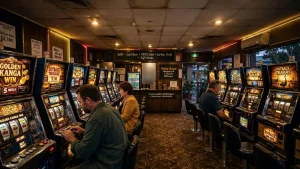
Pokies Parlour Casino in Australia: Venue Guide
The phrase points to a physical gaming setting, while online offers and casino access raise...

VPN-Friendly Casinos in Australia: Access and Rules
A VPN can alter the connection route and apparent IP location, but it does not...



































































































































































































