
VPN-Friendly Casinos in Australia: Access and Rules
 Available in AU

A VPN can alter the connection route and apparent IP location, but it does not change the destination or settle whether access is permitted.
Table of Contents
- What a VPN Changes—and What It Leaves Untouched
- Licences Still Matter When a Casino Is VPN-Friendly
- The Australian Context Behind the 2026 Search
- Crypto Payments Do Not Make the Route Safer
- Using a VPN to Play: Access Is Not Permission
- Bitcoin Compatibility Meets Australian Payment Restrictions
- ACMA’s Blocking Powers and the Offshore Market
- A Casino’s VPN Policy Is Not the Same as Australian Law
- What Can Be Verified About Shuffle and VPN Access
- VPN Slots Still Depend on the Casino Behind Them
- Casino Access
What a VPN Changes—and What It Leaves Untouched
A VPN changes the route a connection takes and the view of that connection available to an internet service provider. It does not change the nature of the destination. That distinction matters in Australia, where a blocked casino domain may prompt interest in a VPN for online casino access, but the network effect is narrower than the phrase can suggest.
When a device connects directly to a website, it asks a DNS service to translate the site’s domain name into an address computers can reach. ISP-level DNS blocking interferes with that translation: the domain name does not resolve through the provider’s system, so the expected route to the site is interrupted. The block operates at the naming stage, not by turning the underlying website into something different.
A VPN encrypts the connection between the device and a VPN server. To the ISP, the traffic appears as encrypted data travelling to that server rather than as a request to a particular casino domain. If the VPN server is outside Australia, it can also make the connection appear to come from an IP address outside the country, masking the Australian address. In this way, a VPN can circumvent DNS restrictions imposed at the ISP level.
VPN access does not establish that a casino is available or lawful to use in Australia; check the relevant local rules and each operator’s terms before signing up. This list highlights only the operator details provided, so it can help you identify what is known—and what remains unspecified.
1. Playfina Casino
License: Curacao eGaming (Hollycorn N.V., since 2017) · Min. deposit: A$20-30 (depends on the offer) Playfina is listed with a Curacao eGaming license held by Hollycorn N.V. since 2017. Its minimum deposit is A$20–30, depending on the offer.
2. DragonSlots Casino
License: Curacao Gaming Authority (Jumpman Gaming Ltd) DragonSlots is listed with a Curacao Gaming Authority license held by Jumpman Gaming Ltd. No deposit or payout details are provided.
3. LevelUp Casino
License: Curacao eGaming OGL/2023/174/0082 (Dama N.V.) · Min. deposit: A$15 LevelUp is listed with Curacao eGaming license OGL/2023/174/0082, held by Dama N.V. Its minimum deposit is A$15.
4. Bizzo Casino
License: Curacao Gaming Control Board (TechSolutions Group N.V.) Bizzo is listed with a Curacao Gaming Control Board license held by TechSolutions Group N.V. No deposit or payout details are provided.
5. LuckyVibe
License: Curacao Gaming Control Board OGL/2023/176/0095 (Hollycorn N.V.) LuckyVibe is listed with Curacao Gaming Control Board license OGL/2023/176/0095, held by Hollycorn N.V. No deposit or payout details are provided.
6. Thor Casino
License: Curacao – Antillephone N.V. (Versus Odds B.V.) · Min. deposit: EUR 20 Thor Casino is listed with a Curacao license from Antillephone N.V., with Versus Odds B.V. identified. Its minimum deposit is EUR 20.
7. SpinsUp
License: Curacao Gaming Control Board OGL/2023/174/0082 (Dama N.V.) SpinsUp is listed with Curacao Gaming Control Board license OGL/2023/174/0082, held by Dama N.V. No deposit or payout details are provided.
8. SkyCrown
License: Tobique Gaming Commission · Payout speed: crypto ~10-15 minutes, fiat 1-5 days · Min. deposit: A$30 SkyCrown is listed with a Tobique Gaming Commission license and a minimum deposit of A$30. The stated payout times are around 10–15 minutes for crypto and 1–5 days for fiat.
9. MrPacho
Payout speed: crypto 30-120 minutes, fiat 24-72 hours · Min. deposit: A$30 MrPacho has stated payout times of 30–120 minutes for crypto and 24–72 hours for fiat, with a minimum deposit of A$30. No license detail is provided.
10. Golden Pokies
License: Curacao Golden Pokies is listed with a Curacao license. No deposit or payout details are provided.
That is a change in visibility and routing. It is not a certificate of character.
The distinction can get lost in the language of “VPN-friendly” sites. A casino may load through a VPN, or a page may be reachable after the network route changes, but neither outcome establishes that the operator is safe, lawful or trustworthy. A VPN does not inspect the operator’s business practices. Nor does encryption of the connection endorse what happens at its destination. It protects the traffic on one part of the route; it does not transform the service being reached.
The same applies to searches for a VPN slot game or an online casino that can be accessed through a VPN. Slot software and casino pages may appear on a screen after a connection has taken a different path. That appearance says only that the requested material has been delivered through that route. It does not settle who operates the site, what protections apply, or whether the operator is entitled to serve people in Australia. Those are separate questions, not technical properties of the VPN.
Highest-Payout Online Casinos in Australia: RTP Explained · $1 Minimum Deposit Pokies in Australia: Payment Limits
It is useful to picture the process as a change of address label rather than a change of destination. The ISP sees encrypted traffic going to the VPN server, and the destination sees the connection arriving through that server. The casino domain is less visible to the ISP along that leg. The service itself remains the service it was before the VPN was switched on. Encryption is not absolution.
Nor does a masked IP address mean the connection has become anonymous in every sense. The specific effect described here is that the Australian IP address is concealed from the destination by the VPN server’s address, while the ISP sees encrypted traffic to that server instead of a casino domain. Those facts should not be stretched into a promise that no party can identify a user, or that all information about a session disappears. A VPN changes what is visible at a particular point in the route; it does not make visibility an all-or-nothing condition.
This is why “VPN casino online” is an imprecise idea. There is no separate kind of casino created by the VPN. There is a casino service and a network connection routed through an intermediary. Whether the site accepts that connection, and what rules govern its service, are matters beyond the basic technical function. Even a page that opens successfully cannot answer them.
The network block and the operator are different subjects. DNS blocking can prevent a domain from resolving through an ISP’s system; a VPN can route traffic so that this restriction no longer operates in the same way. But getting past that obstacle is not evidence about the site’s quality, nor a guarantee that access will continue. A VPN is a tool for changing the connection’s route and the information exposed along it. It is not a seal of approval.
Attention: The ability to load a site via VPN does not establish that the operator is safe, lawful, or trustworthy.
Licences Still Matter When a Casino Is VPN-Friendly
“Offshore” has a particular meaning for Australian players: an online casino without an Australian licence. It describes the operator’s position in relation to Australia, not the quality of its website, the country where its servers sit or the route a connection takes to reach it. A VPN may change how a network connection appears. It does not change the operator’s licensing status.
That distinction can get lost in the phrase “VPN-friendly”. The phrase sounds like a quality mark, as though a casino had passed some independent test of reliability. In practice, it describes an aspect of access: a site may be reachable through a VPN, or may not block every VPN connection. Neither outcome establishes who operates the service, which regulator oversees it, or what protections a licence provides. Access is a technical fact, not a credential.
A licence is not a decorative seal beside a website’s footer. It identifies a regulatory framework against which an operator’s claims can be assessed. That does not make every licensed service equivalent, nor does the presence of a foreign licence turn an offshore casino into an Australian-licensed one. For an Australian player, the basic classification remains unchanged: without an Australian licence, the casino is offshore.
The relative weight of foreign licensing jurisdictions also matters. Licences from the Malta Gaming Authority, Gibraltar, the Isle of Man and Alderney carry more weight than licences from Curaçao. That comparison is a useful distinction, but not a shortcut to certainty. It does not mean every operator with a licence from one of the former jurisdictions is automatically sound, or that a Curaçao licence proves misconduct. It means the jurisdictions do not carry equal standing in this assessment.
Pokies Parlour Casino in Australia: Venue Guide · Casino sites not on BetStop in Australia explained
A badge alone is not enough to settle the question. A meaningful check connects the claimed licence to a specific regulator and licence number, then confirms that the details are current and relate to the operator in question. The name on a casino site may differ from the corporate entity behind it; the important point is whether the claimed authorisation can be tied to the service being assessed. A polished page can make a claim. Verification is a separate act.
The same caution applies to comparisons that place a “best VPN-friendly casino” at the top of a list. Such a label combines two different questions: whether a site permits or tolerates VPN connections, and whether the operator has a credible licensing basis. The first cannot answer the second. A casino that remains accessible through a masked connection may still have an unclear or weaker licensing claim; a site with a more substantial foreign licence may still restrict VPN use under its own rules. Those are separate attributes, not a single measure of trust.
This is why searches for a casino that works with a VPN, or a VPN-compatible slots site, can produce an impression of neat consumer choice where the underlying facts are less tidy. The access condition is visible immediately: a page loads or it does not. The licensing position takes more care to assess and cannot be inferred from the loading screen. Convenience announces itself. Oversight requires evidence.
Nor does a foreign licence resolve the Australian question by itself. “Offshore” is a geographical-sounding word, but here it is a regulatory description: the operator does not hold an Australian licence. A foreign regulator’s involvement may be relevant to how the operator is supervised elsewhere; it does not create Australian authorisation. Confusing those two ideas gives a foreign credential a local meaning it does not have.
High Standing
Licences from the Malta Gaming Authority, Gibraltar, the Isle of Man and Alderney carry more weight.
Lower Standing
Licences from Curaçao are considered to carry less weight in comparison.
Verification
A meaningful check connects the claimed licence to a specific regulator and licence number to confirm current details.
The licence comparison should therefore be read proportionately. Malta, Gibraltar, the Isle of Man and Alderney carry more weight than Curaçao, but the jurisdiction name is only the start of an assessment. The particular licence must be specific, verifiable and current. A VPN connection contributes nothing to that verification. It cannot confirm the operator’s identity, strengthen a licence or substitute for regulatory oversight.
The appeal of a VPN-friendly label is understandable: it promises fewer obstacles at the point of access. But a low-friction route says little about the institution at the other end. Licensing is the less glamorous question, and the more consequential one. A connection can be hidden. A licence must be substantiated.
The Australian Context Behind the 2026 Search
Australia’s online casino landscape begins with a prohibition, not a local licensing system. The Interactive Gambling Act 2001 makes it unlawful for operators to offer online casino games to people living in Australia. The rule covers familiar casino-style formats, including slots and table games. For residents, there is no domestic online casino sector operating under an Australian casino licence.
That absence matters because “licensed” can sound like a simple quality label when it is, first, a statement about jurisdiction. Australia has no online casino licence for an operator to obtain. A foreign authorisation, whatever its standing where it was issued, does not become an Australian one by being displayed on a website. Nor does an Australian player’s ability to reach a site alter the legal position of the service being offered.
$10 Minimum Deposit Pokies in Australia
The law is directed primarily at operators. It does not explicitly criminalise Australian citizens for playing on offshore sites. That distinction is important, but it is not a declaration that offshore casino play has been approved, endorsed or brought within a local licensing framework. The law’s focus and the player’s position are not the same question. A quiet distinction, with real consequences for how the market should be described.
For Australian purposes, an offshore casino is simply a casino without an Australian licence. Since no such online casino licence exists, the term describes the distance between the service and Australia’s domestic regulatory system; it does not, by itself, tell whether the operator is dependable, whether its conduct is lawful in its own jurisdiction or what recourse a customer might have. Those are separate matters. Geography is not a quality mark.
This is the background against which interest in casinos that accept VPN connections takes shape. The wording can suggest a technical puzzle: whether a site will load, or whether its systems will accept a connection. But that is not the central feature of Australia’s framework. The central fact is that operators may not provide online casino games to people living in Australia. A change in the route taken to a website does not create a local licence or rewrite the rule governing the service.
The distinction also helps explain why phrases such as “Australian-licensed online casino” can be misleading when applied to real-money casino play. There is no Australian online casino licence to verify. Foreign licensing claims belong to a different jurisdiction and cannot be treated as domestic approval. The language of international gambling sites may blur that boundary, presenting a licence as if it were a universal passport. It is not.
Federal law under the Interactive Gambling Act 2001 bars operators from supplying online casino games to residents, focusing the legal burden on businesses rather than criminalising the individual player.
There is a wider social choice embedded in this arrangement. Australia has not built a regulated domestic online casino market in which operators can apply for local permission and compete under an Australian casino licence. Instead, federal law bars operators from supplying these games to residents. That approach places the legal burden primarily on the businesses making the offer, rather than explicitly criminalising the individual player. It is a particular way of drawing the line: restrict the supply, without turning every person on the other side of a screen into the principal target.
The line can be difficult to see in ordinary browsing. A site may use Australian-facing language, accept visitors from many places or describe itself as licensed abroad. None of those details changes the basic domestic position. The law concerns the service provided to people in Australia, while a foreign licence concerns the operator’s status elsewhere. Similar words, different authorities.
The year in a search phrase does not make this framework a new one. The governing backdrop remains the Interactive Gambling Act 2001 and the absence of an Australian online casino licence. That is why the term “VPN-friendly” should not be mistaken for a legal category. It says something about a site’s approach to connections, not about permission to offer casino games to Australian residents. A door that opens is still only a door.
This page is affiliate-based and includes sponsored links. That commercial disclosure does not change the legal distinction: an offshore casino’s willingness to receive traffic from Australia is not Australian authorisation. Nor does describing the market as offshore imply that a local licensed alternative exists. There is none.
$5 Minimum Deposit Pokies in Australia: What to Know
Australia’s arrangement can feel counterintuitive because the internet presents access as a practical fact: a page appears, a service responds, and the screen gives the impression of ordinary availability. Law works at a different level. It asks what service is being supplied, to whom, and under which framework. In this case, the operator-facing prohibition and the absence of local licensing are the essential context. The interface is not the statute.
Crypto Payments Do Not Make the Route Safer
A casino presented as friendly to both VPN connections and cryptocurrency can sound like a neat solution to two separate obstacles. The pairing is less reassuring than it appears. A payment method and a network connection do not change the Australian rule on gambling with cryptocurrency: cryptocurrency is not an allowed payment method for gambling in Australia.
That point is easy to lose beneath the language of digital convenience. Crypto is often described as borderless, while a VPN can make a connection appear to come from elsewhere. But neither description changes the place where the gambling is taking place. A technical route that obscures a location does not turn a restricted gambling payment into an acceptable one.
The same distinction matters when an offshore casino advertises itself as VPN-friendly. That label concerns access, not whether a payment method is permitted in Australia. A site’s willingness to accept a particular transaction cannot settle the legal question. Nor does it make the operator safer, more accountable or more reliable.
No-KYC offers add another layer of apparent convenience. “No KYC” refers to an offer of reduced or absent identity checks; it is not a certification. Less verification does not establish that a casino is legitimate, that its claims are accurate, or that its practices protect the people using it. It simply describes a claim about verification. The claim itself deserves scrutiny, not trust by association.
Legal Restriction
Cryptocurrency is not an allowed payment method for gambling in Australia, regardless of the use of a VPN.
There is a broader cultural appeal here. Digital money is often sold as freedom from institutions, and a VPN as freedom from borders. Yet gambling rules are not dissolved by the vocabulary of frictionless technology. In Australia, cryptocurrency gambling remains disallowed. The polished image of a payment channel cannot alter that position.
It is also worth separating three ideas that promotional language often bundles together: a site may accept cryptocurrency, may allow a connection made through a VPN, and may advertise little or no identity checking. Each is a separate claim. None confirms the others, and none establishes that using the service is safe or lawful for someone in Australia.
This is not a reason to treat every online claim as false; it is a reason not to treat ease of access as evidence. A smooth deposit screen can tell little about the operator behind it. A promise of reduced checks says nothing, by itself, about how disputes are handled or whether an account will remain accessible. No reassurance should be inferred from the absence of a barrier.
Low Deposit Online Casinos in Australia: What to Know
The distinction is plain, even if the advertising makes it seem otherwise: cryptocurrency does not make gambling permissible in Australia, and reduced verification does not make an offshore casino trustworthy. A VPN-friendly label does not bridge that gap. Convenience is not a credential.
This page is affiliate-based and may include sponsored links.
Using a VPN to Play: Access Is Not Permission
A connection that reaches an offshore casino is not the same thing as permission to use it. The distinction can disappear in the moment: a page loads, a login screen appears, and the obstacle seems to have been merely technical. But a route through the internet does not alter the rules that govern the service at either end.
For Australian players, the Interactive Gambling Act 2001 is directed primarily at operators. It prohibits operators from providing online casino games to people in Australia, while the Act does not explicitly make it a crime for an Australian citizen to play on an offshore site. Those points are not interchangeable. The absence of an explicit player offence does not turn an offshore casino into an authorised service, nor does it give a VPN user legal protection.
$1 Minimum Deposit Casinos in Australia Explained
That distinction matters because “can it be reached?” and “is it entitled to serve Australian customers?” are different questions. A VPN may get past a network-level block. It cannot settle the operator’s legal position, make a service safe, or guarantee what will happen if a dispute arises. Access is a technical fact. Permission is a legal one.
The appeal of a VPN is easy to understand: when a site is unavailable through an ordinary connection, an alternate route can make it appear reachable. But the word “use” can carry a misleading promise. A VPN does not grant a player a special exemption from the law, and it does not confer the protections associated with a service lawfully offered in Australia. The screen may look unchanged; the underlying position is not.
Nor does the lack of an explicitly stated offence for the player amount to an endorsement. The law’s primary focus on operators describes where its provisions are aimed, not a government recommendation to seek out offshore gambling. Treating that distinction as a loophole would confuse the limits of a statute with an assurance of safety. A narrow legal point is not a safety net.
Technical Access
Reachability via a VPN is a technical fact, not a legal permission or a guarantee of safety.
There is also a practical limit to what a VPN can establish. A successful connection says nothing by itself about an operator’s reliability or the treatment of a player’s funds and account. Those questions cannot be answered by the fact that a site opened. A masked location is not a credential. A working route is not due diligence.
This is why the question of whether a VPN can be used to play online casino games has no useful one-word answer. It may make a blocked service reachable, but reachability is not entitlement, and neither is a guarantee of a safe experience. The law’s focus on operators should be read precisely, without inflating it into permission for players or protection from the consequences of dealing with an offshore service.
This page is affiliate-based and includes sponsored links. That commercial relationship does not change the distinction: technical access remains separate from legal status and from trustworthiness. A connection can open a door. It cannot certify what lies behind it.
Bitcoin Compatibility Meets Australian Payment Restrictions
Bitcoin can appear to solve a practical problem for an offshore casino: a deposit need not pass through a card network in the same way as a credit-card payment. That is a payment distinction, not a change in the rules governing gambling in Australia. Cryptocurrency is not an allowed payment method for gambling in Australia, so a casino’s ability to accept bitcoin does not make the transaction permissible.
$10 Minimum Deposit Casinos in Australia: What to Know · $2 Minimum Deposit Casinos in Australia: What to Know · $5 Minimum Deposit Casinos in Australia: What to Check
A VPN does not alter that position. It changes the network route and may conceal an Australian IP address, but it does not turn a cryptocurrency deposit into an allowed one. Pairing a VPN with bitcoin therefore combines two separate mechanisms; neither grants the other a legal effect. A payment method advertised as compatible with a VPN is still a payment method used in the Australian gambling context.
There is a social logic to the appeal. Digital currency is often presented as detached from banks and borders, while a VPN is described as a way to cross a digital boundary. The language suggests a private corridor around public rules. But the payment still concerns gambling, and the Australian restriction does not disappear because the transaction is made through a different channel. Convenience, where it exists, is not permission.
Credit cards offer no simple alternative. A specialist gambling review reports that Australian banks may decline credit-card deposits connected with online gambling under the Interactive Gambling Act. The wording matters: a bank may refuse a transaction; that is not a promise that every payment will be stopped, nor a reliable test of whether a casino or its payment route is lawful. A successful card payment would not settle that question either.
The practical distinction is plain. Bitcoin availability describes what a particular payment system may accept; VPN compatibility describes how a connection is routed. Neither statement establishes that an Australian resident may use the service. And an unsuccessful card deposit is not evidence that another route is acceptable.
Payment labels can make an offshore service look frictionless: a digital coin, a masked connection, fewer visible intermediaries. Yet the rules are not a technical obstacle waiting for a more inventive tool. They define the setting in which the transaction takes place. The interface may make the border feel remote. It remains there.
Do
- Verify the operator’s specific licence number
- Check the current status with the regulator
Don’t
- Assume a VPN connection makes a site legal
- Trust a licence badge without independent verification
ACMA’s Blocking Powers and the Offshore Market
The Australian Communications and Media Authority sits between federal gambling law and the practical reach of offshore websites. It enforces the Interactive Gambling Act 2001 and monitors whether services comply with the country’s interactive-gambling rules. That role is administrative as well as legal: the regulator can investigate operators, identify services it considers prohibited and seek to restrict their availability in Australia.
One of its tools is a request to internet service providers to block access to websites that offer prohibited interactive gambling services or advertise them locally. Blocking is directed at the site’s availability through Australian networks; it is not a licence decision, nor does it turn an offshore operator into a lawful domestic business. The distinction matters because a website’s visibility, disappearance or return says little by itself about the legal status of the service behind it.
The enforcement record has grown over time. Following enforcement action, ACMA has blocked more than 1,455 illegal gambling and affiliate websites since November 2019. The scale is striking, but the count describes sites blocked, not necessarily distinct operators: affiliate pages and gambling services are different parts of the same online ecosystem, and a site count should not be mistaken for a census of companies.
Figures for services withdrawing from Australia are not consistent across public accounts. One reports that more than 210 illegal services have left since ACMA began enforcing the rules in 2017; another puts the total above 190 for the period since 2017. Both describe withdrawals, not blocked websites, and the discrepancy should remain visible rather than being smoothed into a single total.
$20 Minimum Deposit Pokies in Australia
A withdrawal is also different from a block. In the first case, a service ceases offering itself to the Australian market; in the second, ACMA has acted to restrict access through local internet providers. Together, the figures show enforcement operating through more than one route, while also showing the difficulty of turning a changing offshore market into a neat statistic.
For people looking up casino access through a VPN, these actions provide the wider setting: Australian access is subject to active regulatory intervention, not merely a technical inconvenience. The authority’s work concerns prohibited services and their reach, not whether a connection method can make an operator acceptable. A blocked page is a regulatory signal. Not an endorsement in reverse.
A Casino’s VPN Policy Is Not the Same as Australian Law
A casino’s rules about virtual private networks are its own terms of service. They do not determine the Australian legal position, and a site loading successfully does not show that the operator permits VPN access. Nor does it establish that the service is safe or lawful.
The distinction matters because access can be mistaken for permission. A connection may reach a site while still conflicting with the operator’s conditions. Casinos may use IP geolocation services that recognise known VPN server addresses. That means a VPN connection can be detected even when the displayed IP address is not Australian. A site’s checks may also affect whether access continues, but the fact that a page opens is not proof that those checks have cleared or that the operator accepts the connection.
How VPN detection works
Casinos may use IP geolocation services that recognise addresses associated with known VPN servers, meaning a connection can be detected even if the IP address is not Australian.
The reverse is also true: a site that blocks a VPN address is applying its own access rules, not announcing a change in Australian law. Technical systems and legal frameworks answer different questions. One concerns whether a particular connection is accepted by a website; the other concerns the rules governing online casino services in Australia.
This is why broad claims about casinos that permit VPN use are unreliable without a current, operator-specific policy. Terms can differ between services and may set out restrictions on location masking or account access. A general statement about VPN compatibility cannot confirm what a particular casino allows. Apparent access is a thin kind of evidence.
For Australian residents, the wider regulatory context remains separate from the site’s settings. A VPN may get past a network-level block, but it does not make an operator safe or legal, and it does not grant permission under that operator’s terms. The two questions should not be collapsed into one. Access is not approval.
This page is affiliate-based and includes sponsored links.
What Can Be Verified About Shuffle and VPN Access
A VPN-related claim about Shuffle cannot be inferred from the fact that some casino sites remain reachable through a VPN. Casinos may use IP geolocation services that recognise addresses associated with known VPN servers. A connection that works at one point, or from one network, therefore says little about whether the operator permits VPN use or whether access will continue.
Online Casino Security in Australia: What It Means
That distinction matters because “VPN-friendly” can describe several different things: a site loading, an account being accepted, or the operator’s terms allowing the connection. These are not interchangeable. A page appearing in a browser does not establish the policy attached to an account, and a policy cannot be deduced from the behaviour of other casinos.
Shuffle’s name can invite a neat answer, as though compatibility were a feature that could be read from a switch marked on or off. In practice, VPN detection depends on the address being used and on the site’s own checks. A general statement about those checks cannot settle Shuffle’s position.
Nor does technical access confirm anything beyond access itself. It does not verify an operator’s licence, make it trustworthy, or alter the Australian rules governing online casino services. The narrow, defensible point is that VPN access may be detected, and a broad description of casino technology is not evidence of Shuffle’s specific policy.
No shortcut follows.
VPN Slots Still Depend on the Casino Behind Them
A slot reached through a VPN is still being supplied by a casino. The VPN changes the route between a device and a website; it does not supply the game, settle a balance or decide whether an account can use the casino’s services. Those remain matters for the operator and its own systems.
Pokies Open Near Me in Australia: Hours and Access
A VPN server outside Australia can mask an Australian IP address and get around DNS restrictions that prevent a casino’s domain from resolving. That may make a page reachable when it was not reachable through the usual connection. Reachability is a narrow technical result, not a verdict on what sits at the other end.
The distinction matters because a familiar slot interface can lend a site an air of routine. A game may load, buttons may respond, and the screen may look much like any other digital product. None of that establishes that the casino is safe or legal. The VPN cannot verify an operator, validate its claims or make a disputed service trustworthy.
Nor does a working connection mean that the casino’s own services will remain available. Access depends on the operator’s systems and policies, not simply on whether a network block has been bypassed. The masked address changes what the network can see about the connection; it does not change the identity or conduct of the business behind the screen.
The word “slots” makes the search sound as though the game were the whole transaction. It is only the visible part. The casino remains the counterparty, with all the significance that entails. A connection can open a door. It cannot certify the room.
This page is affiliate-based and includes sponsored links.
Can I use a VPN to access offshore casinos?
Yes, a VPN can route around ISP-level DNS blocking and mask your Australian IP address. It does not change the operator’s licensing status or guarantee that the casino is safe or legal.
Which casino licence is best for Australian players?
There is no Australian online casino licence. Malta, Gibraltar, the Isle of Man and Alderney licences carry more weight than Curaçao licences, but none makes an offshore casino Australian-licensed.
What forms of gambling are illegal in Australia?
The Interactive Gambling Act 2001 prohibits operators from offering online casino games to people in Australia. Cryptocurrency is also not allowed as a payment method for gambling.
What is ACMA?
ACMA is the Australian Communications and Media Authority, the federal body responsible for enforcing the Interactive Gambling Act 2001 and monitoring compliance with federal interactive gambling laws. It can ask internet service providers to block sites offering prohibited gambling services or advertising them in Australia.
How long do Royal Reels mirrors last before blocking?
Mirrors typically last 3–6 months before they are blocked.
Can a casino detect that I am using a VPN?
Yes. Many casinos use IP geolocation services that can identify known VPN server addresses.
Casino Access

$1 Minimum Deposit Casinos in Australia Explained
The advertised threshold may reflect the casino’s cashier settings, while payment processors can impose a...

$1 Minimum Deposit Pokies in Australia: Payment Limits
An operator’s stated minimum may not match the amount a bank, wallet or processor can...

$10 Minimum Deposit Casinos in Australia: What to Know
The casino’s stated minimum may differ from a payment provider’s floor, while withdrawal rules and...

$10 Minimum Deposit Pokies in Australia
A site's stated minimum can differ from the amount a payment method will process, so...

$2 Minimum Deposit Casinos in Australia: What to Know
The advertised casino minimum is only one part of the transaction; payment limits, bonus terms...

Understanding $20 Minimum Deposits at Australian Casinos
The amount accepted depends on both the casino’s deposit settings and the minimum imposed by...

$20 Minimum Deposit Pokies in Australia
The usable minimum can depend on both the operator’s limit and the payment route, while...

$5 Minimum Deposit Casinos in Australia: What to Check
A casino’s stated minimum can differ from the payment method’s floor, so the amount needed...

$5 Minimum Deposit Pokies in Australia: What to Know
The operator’s stated minimum can differ from the amount a payment route accepts, shaping whether...

Casino sites not on BetStop in Australia explained
BetStop status, Australian licensing rules and offshore access are separate issues, and account availability does...

Curaçao Casino Licences for Australian Players
The guide separates operator obligations under Australian law from the legal position of individuals using...

Highest-Payout Online Casinos in Australia: RTP Explained
Slot RTP describes a game’s theoretical return over extended play, not an individual result or...

Low Deposit Online Casinos in Australia: What to Know
Payment limits, bonus conditions and withdrawal thresholds can affect how useful a small starting balance...

Online Casino Security in Australia: What It Means
Technical safeguards, operator legality and payment routes are separate questions when assessing offshore real-money casino...

No-minimum-deposit casinos in Australia: what it means
An operator may set no deposit floor, while a bank or payment service still limits...

Pokies Open Near Me in Australia: Hours and Access
Australian casino hours vary by venue and holiday, and a listed opening time does not...
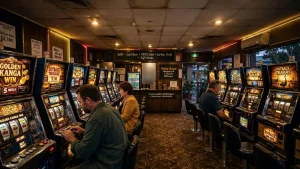
Pokies Parlour Casino in Australia: Venue Guide
The phrase points to a physical gaming setting, while online offers and casino access raise...

Safe Online Casinos in Australia: What the Law Says
Online casino games cannot lawfully be offered to people in Australia, so payment security and...



































































































































































































