
Mines Casino Game in Australia: Search Guide
 Available in AU
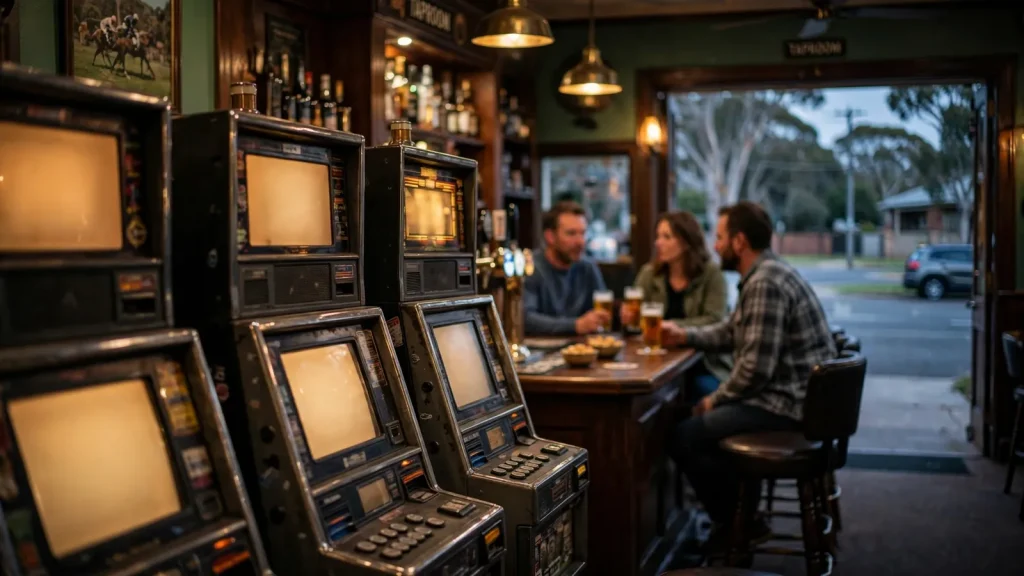
A guide to demos, bonuses, withdrawals and strategy claims in Australia’s distinct pokies and online-gambling context.
Table of Contents
- Pokies, Providers and the Australian Setting
- Mines Online and the Limits of the Australian Market
- What the Mines Casino Game Search Actually Refers To
- Free Play: A Way to Explore, Not a Promise of Cash
- Demo Searches and What They Can—and Cannot—Establish
- Bonus Codes and the Arithmetic Behind the Offer
- Real-Money Searches, Withdrawals and Verification
- Where “Play Mines” Leads in an Australian Search
- Strategy Searches and the Limits of Game-Specific Advice
- What “Casino Guru Mines” Can—and Cannot—Tell a Searcher
- Games &
Pokies, Providers and the Australian Setting
A game name containing “Mines” belongs to a very different cultural landscape when it is encountered in Australia. Here, gambling machines are not an abstract category tucked inside a casino catalogue. Pokies have long occupied visible places in pubs and clubs, woven into local routines and arguments about who profits, who bears the cost and how much control a machine should allow.
That history gives even a brief reference to a casino game a wider resonance. Australians have debated electronic gambling through the familiar physical machine: its place in hospitality venues, the revenue it brings in, and the losses concentrated around it. A search for an online title may be private and solitary; the public argument around pokies is not. It has involved communities, venue operators, regulators and politicians, each looking at the same machines through a different ledger.
The scale can be difficult to hold in mind until it is attached to a place. A report by gamble.com.au put Victorian poker-machine losses at $2.6 billion over the year it examined, an increase of more than $44.7 million compared with 2015. The same site reported that the Epping Plaza Hotel in Melbourne’s north generated over $21 million from 100 machines during the period it covered. Those figures describe particular reporting periods, not timeless averages. They also show why machines are discussed as more than entertainment: a venue’s takings and players’ losses are two sides of the same transaction.
Choosing a Mines casino for Australia in 2026 calls for checking the available operator details before deciding where to play. This list highlights the specific licensing, deposit, and payout information provided for each operator.
1. Playfina Casino
License: Curacao eGaming (Hollycorn N.V., since 2017) · Min. deposit: A$20-30 (depends on the offer) Playfina Casino is licensed by Curacao eGaming under Hollycorn N.V., a licence held since 2017. Its minimum deposit is A$20–30, depending on the offer.
2. DragonSlots Casino
License: Curacao Gaming Authority (Jumpman Gaming Ltd) DragonSlots Casino is licensed by the Curacao Gaming Authority, with Jumpman Gaming Ltd as the named operator.
3. LevelUp Casino
License: Curacao eGaming OGL/2023/174/0082 (Dama N.V.) · Min. deposit: A$15 LevelUp Casino holds Curacao eGaming licence OGL/2023/174/0082 under Dama N.V. Its minimum deposit is A$15.
4. Bizzo Casino
License: Curacao Gaming Control Board (TechSolutions Group N.V.) Bizzo Casino is licensed by the Curacao Gaming Control Board, with TechSolutions Group N.V. named in its licensing details.
5. LuckyVibe
License: Curacao Gaming Control Board OGL/2023/176/0095 (Hollycorn N.V.) LuckyVibe is licensed by the Curacao Gaming Control Board under licence OGL/2023/176/0095, with Hollycorn N.V. named in the details.
6. Thor Casino
License: Curacao – Antillephone N.V. (Versus Odds B.V.) · Min. deposit: EUR 20 Thor Casino is licensed in Curacao through Antillephone N.V., with Versus Odds B.V. named in its licensing details. Its minimum deposit is EUR 20.
7. SpinsUp
License: Curacao Gaming Control Board OGL/2023/174/0082 (Dama N.V.) SpinsUp holds Curacao Gaming Control Board licence OGL/2023/174/0082 under Dama N.V.
8. SkyCrown
License: Tobique Gaming Commission · Payout speed: crypto ~10-15 minutes, fiat 1-5 days · Min. deposit: A$30 SkyCrown is licensed by the Tobique Gaming Commission and has a stated minimum deposit of A$30. Its listed payout times are around 10–15 minutes for crypto and 1–5 days for fiat.
9. MrPacho
Payout speed: crypto 30-120 minutes, fiat 24-72 hours · Min. deposit: A$30 MrPacho has a stated minimum deposit of A$30. Its listed payout times are 30–120 minutes for crypto and 24–72 hours for fiat.
10. Golden Pokies
License: Curacao Golden Pokies is identified as a Curacao-licensed casino.
The language of the debate often turns on the machinery of play. A pokie is designed to hold attention through repeated rounds and the possibility of a return; its commercial value depends on people continuing to use it. That does not make every player’s experience identical, nor does it make every venue interchangeable. It does explain why questions about speed, spending and access have become part of a broader social conversation rather than mere technical details.
Reform efforts have repeatedly tried to place a boundary around that experience. Senator Nick Xenophon and MP Andrew Wilkie put forward a proposal to cap poker-machine bets at $1. The proposal belongs to a history of political attempts to make the machines less financially forceful; it should not be mistaken for a description of a rule now in effect. The very fact that such a limit was proposed indicates the kind of concern that has shaped the debate: whether the structure of a machine can make losses accumulate too quickly for a person to keep pace with them.
A proposal is not a settlement. Australian pokies culture has been shaped by competing claims about personal choice, venue income and the harms associated with gambling. The machine sits in a social setting, but its outcomes are experienced one person at a time. That contrast helps explain why reform arguments can become so heated: the commercial benefits are visible in venue accounts, while distress may be private and difficult to measure.
Game providers form another part of this landscape, but their presence should not be confused with a claim about any particular title. The Australian market includes familiar provider and product names, and the machines themselves have become part of a national vocabulary. That background does not establish who made a game called Mines, how it works, or whether its name connects it to any established pokie. Similar words are not evidence of a shared product or technology.
Casino Dice Games in Australia: Online Rules
The distinction matters because the word “casino” can make different kinds of gambling appear to belong to one seamless world. In everyday use, it may suggest a venue, a machine, a brand or a digital game. Yet the social history attached to a pokie in a local club is not automatically the history of a game with a similar label on a screen. One is embedded in Australian arguments about venues, losses and reform; the other must be understood on its own terms.
Even the most ordinary search for a game name therefore brushes against an unusually public debate. Pokies are familiar, but familiarity has never made their effects simple. For some, they are part of an evening out; for others, they are a source of serious harm. A responsible account of Australian gambling culture has to keep both realities in view, without turning a popular machine into a harmless fixture or treating every player as a statistic.
The machines remain familiar. Their consequences do not.
Mines Online and the Limits of the Australian Market
A game name can cross a border in a moment. The service behind it cannot be understood so simply. In Australia, interest in an online casino game and the legal position of an online casino are separate matters: a game’s appearance in search results does not make its provision lawful, locally available or endorsed.
The governing law is the Interactive Gambling Act 2001. It restricts operators from offering online casino services to people in Australia. Casino-style games supplied online—including slots, poker and table games—fall within the prohibited-services framework when offered to Australian customers. The boundary concerns the service being provided, not merely the words used to describe a game.
That distinction matters for searches about Mines. Looking for the game online is not itself the same as an operator providing an online casino service in Australia. Nor does a page appearing in results establish that Australians may lawfully be served by the site behind it. Search visibility is a technical fact, not a legal ruling.
Crash Casino Games in Australia: How They Work
Who enforces the boundary
The Australian Communications and Media Authority, or ACMA, is the federal regulator responsible for enforcing the Interactive Gambling Act and monitoring compliance with federal interactive gambling rules. Its role is not confined to publishing a rule and leaving the internet to interpret it. ACMA can ask Australian internet service providers to block websites that provide prohibited interactive gambling services or advertise them in Australia.
Blocking is therefore part of the practical landscape. ACMA reports that, following enforcement action, it has blocked more than 1,455 illegal gambling and affiliate websites since November 2019. A blocked address may disappear from ordinary access while similar pages, replacement domains or references continue to circulate. That does not change the status of the service; it illustrates the uneasy contest between a national law and a network that has no particular respect for national borders.
There is also a discrepancy in published counts of services that have left the Australian market after enforcement began. One account puts the number above 210; another gives a figure above 190 since 2017. Those figures should not be blended into a false precision. Both describe withdrawals after ACMA enforcement began, but they do not agree on the total.
A withdrawal is not the same thing as a block. In one case, a service ceases operating for the Australian market; in another, access to a website is restricted by internet service providers following an ACMA request. Neither measure turns offshore online casinos into locally authorised services. The distinction is plain, even when the digital trail is not.
Offshore operation, Australian audience
Some offshore casinos accept Australian payments while operating under licences issued elsewhere. Payment acceptance can make a service seem locally fitted: familiar currency, familiar transaction routes, and an address that opens on a screen. But those signs say little about whether the service may be offered to people in Australia. A foreign licence does not displace the Australian law governing offers made to Australians.
This is why the phrase “online casino” can describe two different things in the same sentence: a website’s own account of what it is, and the legal category applied to what it offers. The first may be printed on a page; the second comes from the law. The difference is consequential.
Legal Restriction
Real-money online casino services are prohibited from being offered to people in Australia under the Interactive Gambling Act 2001.
Australia’s framework places responsibility for compliance on operators, while ACMA monitors and enforces the rules. The player’s act of using an offshore site is not criminalised under this framework. That does not make the service lawful for the operator to provide in Australia, or guarantee that a particular website will remain accessible. Access, legality and endorsement are three different questions.
A blocked site may still be mentioned elsewhere online. An offshore licence may still be displayed. Australian payment options may still appear in a cashier. None of these details, separately or together, alters the central limit: real-money online casino services are restricted from being offered to people located in Australia. The internet is good at making availability look like permission. It is not the same thing.
What the Mines Casino Game Search Actually Refers To
“Mines” can look like a complete game title when it appears beside the word “casino”. In practice, the phrase by itself identifies an area of interest, not a particular edition with established rules. A person looking for a casino game called Mines may be trying to identify something encountered elsewhere, compare a title they have heard about, or work out whether different pages refer to the same thing. The name alone cannot settle those questions.
That distinction matters because casino pages often place a short game name in several different contexts: a catalogue entry, a promotional headline, a review, or a search result assembled from fragments. Those contexts are not interchangeable. A matching title does not prove that two listings describe the same game, nor that either listing provides a complete account of it. Labels are easy to repeat; the details behind them are harder to establish.
Casino Apps in Australia: What “App” Really Means
The phrase “Mines casino game” therefore points to a subject, but leaves its identity open. It does not, on its own, say who made the game, which version is meant, or what rules apply. Nor does adding “casino” resolve the uncertainty. That word describes the setting in which someone expects to encounter the title; it is not evidence of a provider, a particular product, or a shared set of mechanics.
There is a small but important difference between recognising a name and knowing a game. A recognisable label may be enough to begin an investigation, but not enough to explain what happens on screen or how an outcome is determined. Specific descriptions need specific support. Without it, a confident account of the rules would be decoration presented as information.
This is especially relevant when several expressions point toward the same broad subject. “Casino Mines” and “Mines casino games” may look like different categories, but word order alone does not establish that they are. One page may use a title as a heading; another may use similar words to describe a general type of entertainment. Search snippets can also place unrelated pieces of text next to one another. The resulting impression of a single, settled product can be stronger than the evidence behind it.
The year attached to a title is no guarantee of a new edition, either. “Mines casino game Australia 2026” can simply be a way of framing an interest in the present day. A date in a heading does not show that the game itself changed in that year, that a particular version is current, or that a page has been recently checked. A date is a label, not a change log.
Do
- Identify the exact game or listing being discussed
- Look for a provider name and clear rules explanation
Don’t
- Treat descriptions from different pages as interchangeable
- Infer game features from a broad label like “Mines”
The useful starting point is modest: identify which exact game or listing is being discussed before treating descriptions as interchangeable. A provider name, an identifiable product page and a clear rules explanation would each help distinguish one reference from another. If those details are not visible, the name “Mines” remains a signpost rather than a full description. That is less satisfying than a neat answer, but more accurate.
The title also invites assumptions because it is a familiar ordinary word. Familiarity can make a name seem self-explanatory, as though the subject must be obvious from the label. Yet ordinary words are used across products and categories, and a title does not explain its own design. A description should not be inferred from the word alone, still less expanded into a guide to features that have not been identified.
For anyone encountering the phrase in a page title or listing, the central question is not whether the wording sounds plausible. It is whether the page identifies a particular product and gives enough detail to support what it says about that product. A broad label may point in the right direction while still leaving the essential particulars unresolved. Precision begins there.
So the most accurate reading of the Mines casino game is also the least theatrical: it is a name people associate with casino entertainment, but the name alone cannot establish which product is meant or explain its rules. That boundary keeps recognition separate from knowledge. A title is only a title.
Free Play: A Way to Explore, Not a Promise of Cash
The appeal of free play is easy to understand. It offers the shape of a gambling game without asking for a cash stake: no money is put at risk in each round, and any displayed balance may be only a counter on a screen. That difference matters. A number that rises in a game window is not the same thing as money held for a player, and it does not become withdrawable merely because it looks like a balance.
The phrase “free Mines game” can point to several different things: a game that costs nothing to open, a practice mode attached to a gambling service, or a copy made to resemble a casino game. Those labels are not interchangeable. “Free” describes a price or stake only if the terms make that clear; it says nothing by itself about who operates the page, whether it asks for personal information, or whether a displayed result can ever be converted to cash.
Real-Money Pokies in Australia: Apps and Browser Play
Nor does a familiar title settle the question. A page presented as a free casino Mines game may use the name to attract interest without establishing that it is an official version, a genuine practice mode, or connected to any particular provider. A “fake casino” label is equally inconclusive: it might mean a simulation with no real-money gambling, or simply a copy whose relationship to the named game is unclear. The appearance of a game is not its provenance.
This is where free play can be useful, in principle: as a way to see how an interface behaves or to become familiar with its presentation, without treating the experience as a source of income. But that usefulness depends on the activity truly involving no cash stake and no claim that virtual winnings can be withdrawn. A “free” entry point can also lead elsewhere, with registration prompts, payment instructions or promotional language. Free at the doorway is not necessarily free in every sense.
The Australian setting makes that distinction more than a matter of wording. Real-money online casino games are prohibited from being provided to people in Australia under the Interactive Gambling Act 2001. A no-stake simulation is not the same thing as placing money on an online casino game, but a free label should not be treated as proof that a service is harmless, official or available on suitable terms. The label is a beginning, not a verdict.
There is also a psychological difference between a practice balance and a cash balance. When nothing can be lost, a player may make choices with a lightness that would disappear once money is involved. That can make a simulation entertaining, but it cannot establish what a real-money session would feel like or produce. A virtual result carries no promise forward. It is a record inside a screen.
Promotional balances deserve separate caution. Bonus funds are not cash, and they can come with wagering conditions before any bonus-derived winnings may be withdrawn. A balance that combines a bonus with other figures can therefore look more spendable than it is. The conditions, rather than the headline amount, determine what the balance represents. That is less glamorous arithmetic.
International Casinos for Australian Players: 2026 Guide
For anyone considering gambling, the age threshold is 18 or older. Gambling can cause serious harm, particularly for people who are vulnerable to it; calling a product free does not remove that possibility if the experience encourages repeated play or a move to staking money. Free access should not be mistaken for a safeguard.
The careful reading of “free Mines” is therefore modest. It may describe an experience without a cash stake, but it does not prove that a particular version exists, that it is connected to an original game, or that its displayed outcomes have cash value. A screen can imitate a casino with very little effort. What it cannot do, by appearance alone, is turn play into a promise.
Demo Searches and What They Can—and Cannot—Establish
A “demo” label sounds precise, but it is only a description until the page behind it shows what is being offered. In a Mines-related result, the word might refer to a playable simulation, a preview, a review, or simply a title chosen to attract attention. Those are not interchangeable. The label alone establishes none of them.
A genuine demonstration would let someone inspect the game in some form without treating the page’s wording as proof of how it works. Even then, a demonstration would show only the version and conditions presented there. It would not establish who made the game, whether the same version appears elsewhere, or whether any real-money version is available. A page can look authoritative and still leave those questions unanswered.
Inclave Casinos in Australia: What Login Proves
That distinction matters because the name “Mines” is not, by itself, a unique identifier. A result may use the term in a headline without documenting a particular product or provider. Screenshots, descriptions and claims of authenticity can help explain what a page says it contains; they do not independently verify the identity or provenance of the game. Presentation is evidence of presentation.
The word “demo” also should not be taken to mean that outcomes predict anything beyond the demonstration. A simulated session cannot establish what a separate version would do, nor can it substantiate claims about fairness or expected results. If a page makes such claims, the label does not supply the supporting material.
So a Mines casino demo is best understood as a claim about format, not a guarantee of access, completeness or trustworthiness. The relevant question is what the page actually permits someone to inspect and what evidence accompanies its claims. A result that offers only a name and a button provides little basis for conclusions. A result that explains its source and the limits of its presentation gives a clearer account, though clarity is not the same as independent verification.
There is a small but important difference between seeing a demo advertised and establishing that a specific, authentic demonstration exists. The former is a statement on a page. The latter requires evidence beyond the label. Search wording cannot do that work on its own.
Bonus Codes and the Arithmetic Behind the Offer
A code attached to a Mines-themed casino promotion may look like a small key: enter it, receive a bonus, begin playing. The arithmetic is less decorative. A bonus is not the same thing as cash already available for withdrawal. Its value can be conditional, and the condition is often expressed as a wagering requirement: a stated amount of betting that must take place before bonus-derived winnings become eligible to withdraw.
Real Money Pokies on Android in Australia: Legal Guide
The multiplier matters more than the headline. A specialist review gave a clear illustration: a $100 bonus with a 40x wagering requirement means $4,000 in bets must be placed before winnings linked to that bonus can be withdrawn. That is a calculation from one review, not a universal offer or a promise that any particular promotion is available. The neatness of the multiplication should not be mistaken for simplicity.
Specialist reviews also report wagering requirements in the range of 30–50x, but those terms vary between promotions and can change. The relevant figure is the one in the offer’s own conditions, not a familiar-looking number carried over from another promotion. Conditions may also specify which games count, how much they contribute, when the requirement expires, and whether winnings are capped. Without those details, the bonus headline is only the front of the arrangement.
A no-deposit label changes the way a promotion is funded; it does not turn bonus funds into withdrawable cash. The attached rules still determine what can be played with, what winnings may result and what must be completed before a withdrawal is permitted. A code, meanwhile, is a route for applying an offer, not evidence that the offer is suitable, current or available to someone in Australia.
There is a social habit behind the attraction: a large number in bold type is easier to notice than a sequence of conditions set beneath it. The conditions are where the offer becomes arithmetic. A bonus that cannot be withdrawn immediately should be assessed as restricted promotional value, not as money in a player’s account.
Terms first. Headline second.
Bonus Calculation
Step 1: Identify the bonus amount
Determine the headline value, such as a $100 bonus.
Step 2: Note the wagering requirement
Find the multiplier, for example, 40x.
Step 3: Calculate total bets required
Multiply the bonus by the requirement ($100 × 40) to find the total betting volume needed ($4,000) before winnings can be withdrawn.
Real-Money Searches, Withdrawals and Verification
A request for a cash version of Mines shifts attention from the game name to the point where a balance is supposed to leave an account. Offshore sites commonly set minimum withdrawal thresholds between A$75 and A$150. A displayed balance below a site’s threshold may therefore not be enough to request a payout. The figure is a condition imposed by the operator, not a promise that a withdrawal will be approved or completed.
The first cashout can involve a separate identity check. KYC documents commonly requested include a passport or driver’s licence, alongside a utility bill. These papers connect an account to a real person and address; they are not a minor formality when the account holder is trying to move money out. A name or address mismatch can become a practical obstacle, though the exact process depends on the site.
That distinction matters when a Mines game is being considered for real-money play. A game label says little about the withdrawal threshold, the documents required, or whether a particular payment request will be accepted. Those conditions sit in the operator’s terms, where deposit instructions often receive more attention than exit conditions. The exit is where the fine print earns its keep.
This is general information about procedures reported for offshore gambling sites, not an endorsement or an assurance that any particular service is available. In Australia, real-money online casino services are prohibited, and access to offshore gambling sites is subject to ACMA enforcement. Search visibility does not alter that setting. Players are not criminalised for using offshore sites, but that does not make the services lawful for operators to provide to people in Australia.
iPad Casinos in Australia: Legal and Practical Guide
Cash access also does not make gambling income. For people aged eighteen or older, gambling can still cause serious harm, particularly when losses are treated as money that must be recovered. A withdrawal threshold and an identity check describe administrative hurdles; neither changes the financial risk of staking money. The paperwork is only one part of the cost.
Where “Play Mines” Leads in an Australian Search
A request to play Mines, or to find a place offering a lucky version of it, can produce a page that looks like an answer before it has established anything useful. Search visibility is not a licence, a guarantee that a service is available in Australia, or an endorsement of the site behind the result. A prominent listing is simply prominent.
That distinction matters in a market where online casino services offered to people in Australia are prohibited under the Interactive Gambling Act 2001. The law addresses operators, not players: Australians are not criminalised for using offshore sites. But offshore services can be blocked, and ACMA can ask internet providers to restrict access to sites offering prohibited gambling or advertising it. A page that appears today may not remain accessible tomorrow.
Nor does a familiar name settle the question of what lies behind a result. A listing may be an advertisement, an affiliate page, a review, or an operator’s own material. Those formats have different purposes, though their layouts can make them look equally authoritative. “Lucky” is a description, not evidence of better odds, fairer terms or a dependable outcome.
The wider setting is not abstract. Gambling can cause serious harm, particularly for people already vulnerable to it. In Australia, the public argument around gambling has long included the costs borne by individuals, families and communities; online presentation does not remove those costs. Any gambling activity is for adults aged eighteen or older, and it should not be treated as income or a way to recover losses.
Casino apps for Android in Australia: browser access
The practical meaning of a result, then, is limited: it shows that a page has been made visible, not that an Australian service is lawful, accessible or suitable. A search result is a signpost, not a safeguard.
Strategy Searches and the Limits of Game-Specific Advice
A request for a Mines strategy belongs to a different category from a question about where a game appears. It asks whether decisions can be arranged to produce a better result. That is a reasonable distinction, but it does not make generic advice game-specific.
Without confirmed rules and mechanics, there is no sound basis for recommending a sequence of moves, a stopping point or a pattern of choices. Such instructions may look precise while resting on assumptions about how the game works. Precision is not evidence.
The same caution applies to claims that a particular system reduces risk or improves returns. A strategy can describe a player’s chosen approach; it cannot, by itself, establish that the approach changes the game’s underlying outcomes. A string of past results is not proof that the next result will follow a pattern. Nor does confident language turn a guess into an edge.
The provider question is separate again. Adding Spribe to a Mines-related search signals an attempt to identify a connection, not proof that Spribe made, supplies or operates the game. A provider name should be attached only when supported by reliable information about the specific title. Similar names, copied descriptions and repeated claims can circulate without resolving that question.
This matters because a strategy article can borrow authority from a familiar provider label, even when the connection remains unclear. The reader is left with two uncertainties dressed as one answer: what rules the game uses, and who is responsible for it.
Game-specific advice needs game-specific grounding. In its absence, the responsible account stops short of prescribing tactics or attributing the title to a provider. There is little glamour in that. Better than invented certainty.
Plinko Casino in Australia: Games and Risks
What “Casino Guru Mines” Can—and Cannot—Tell a Searcher
A reference to Casino Guru alongside Mines points towards a third-party information source, not a feature of the game itself. The name may lead to pages that discuss casinos, games or complaints, but its appearance beside a title does not establish that a particular review exists, remains current or covers the exact game being sought.
That distinction matters because search labels compress several questions into a few words. A person may be looking for an assessment of a casino, an explanation of Mines, or a report about how a game is presented on a particular site. Those are different subjects. A page about an operator cannot automatically settle questions about a game, just as a game listing cannot stand in for an assessment of an operator.
Nor does a rating, where one appears, carry a universal meaning. Its value depends on what was assessed, when the assessment was made and which criteria were used. Without those details, a score is a number detached from its method. A polished page can still leave the essential distinction blurred.
Third-party material is best read as a record of what its publisher says it examined, rather than as a guarantee of accuracy or availability. Names can be reused, listings can change, and a familiar label can point to more than one result. The label itself proves little.
The useful question is not whether Casino Guru and Mines appear together, but what the specific page actually substantiates. Does it identify the game clearly? Does it explain the scope and date of its assessment? Does it separate an operator’s claims from independently checked information? Those details determine whether the page informs or merely lends a borrowed air of authority.
A name is not a verdict.
Games &

Australian Mobile Casinos: Sites, Apps and Offers
A practical look at browser access, app shortcuts, payments, bonus conditions and the limits of...

Casino apps for Android in Australia: browser access
Learn how browser-based access, home-screen shortcuts and bonus terms shape casino use on Android. The...

Best Casino App for iPhone in Australia: A Guide
See how browser access, app listings, real-money play and free pokies differ on an iPhone...

Casino Apps in Australia: What “App” Really Means
The guide distinguishes browser sites, home-screen PWAs and downloads, then examines payments, bonuses, withdrawals and...

Instant Withdrawal Casinos in Australia: What to Check
“Instant” can describe only part of a payout: payment choice, verification and operator processing all...

International Casinos for Australian Players: 2026 Guide
A practical look at Australia’s legal line, mobile access, bonus conditions and the costs and...

Offshore Casinos for Australian Players: Assessing Claims
Browser-based play, legal limits, bonus conditions and payment routes affect what an offshore casino offers—and...

Casino Dice Games in Australia: Online Rules
The guide separates the mechanics and atmosphere of dice play from the legal limits on...

Crash Casino Games in Australia: How They Work
Crash games turn a rising multiplier into a cashout decision, but the visible pace of...

Inclave Casinos in Australia: What Login Proves
An Inclave sign-in may provide a route into an account, but it does not establish...

iPad Casinos in Australia: Legal and Practical Guide
The device does not change the rules: Australia prohibits operators from supplying online casino games...

Live Baccarat Online in Australia: Rules and Risks
Australia has no locally licensed online casinos, while international platforms may accept Australian players; this...

Live Blackjack at Online Casinos in Australia: Legal Limits
Australia’s rules distinguish familiar casino play from real-money online services, shaping what can be offered...

Live Roulette in Australia: Dealers and Legal Limits
The article explains Australia’s legal boundary and what the available evidence does—and does not—establish about...

Online Pokies with E-Wallets in Australia
E-wallets handle deposits and withdrawals, while mobile casino play usually runs through a browser rather...

Plinko Casino in Australia: Games and Risks
A guide to how Plinko games are presented, what reviews can establish, and how payments,...

Real-Money Casino Table Games in Australia: Legal Guide
The guide distinguishes Australia's online casino restrictions from payment choices, odds evidence and the rules...

Online pokies Australia: real-money no-deposit offers
No-deposit labels do not establish legality or safety, and bonus play can come with wagering...

Real Money Pokies on Android in Australia: Legal Guide
Australian rules focus on the operator’s offer, while individual play is treated differently under the...

Real-Money Pokies in Australia: Apps and Browser Play
Many mobile casinos work through a browser, so understanding the difference between a website and...



































































































































































































