
Casinos That Accept CashtoCode in Australia: Key Checks
 Available in AU
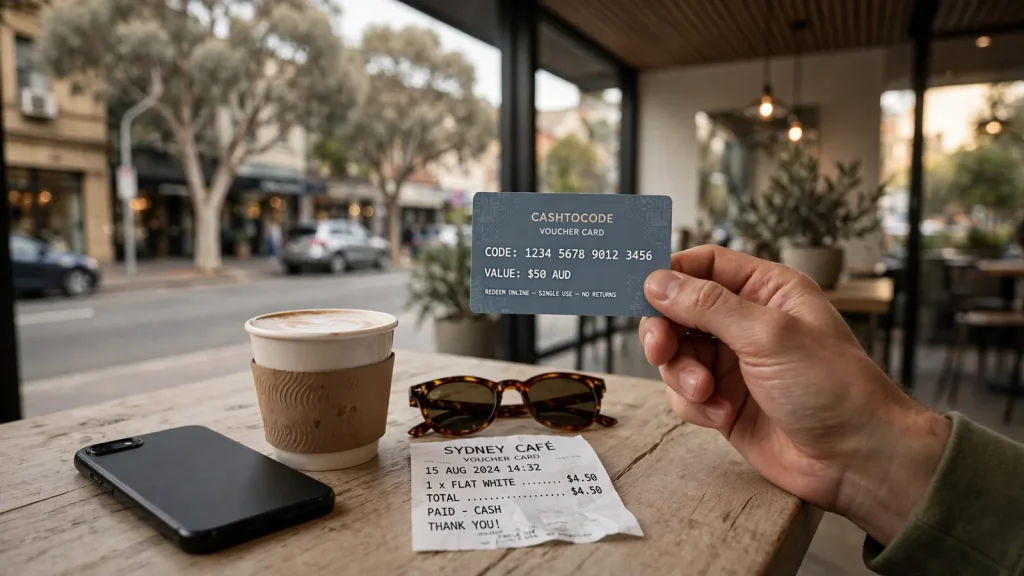
CashtoCode availability alone cannot establish an operator’s status, withdrawal support or bonus eligibility in Australia.
Table of Contents
- Online Casino Payments in Australia: A Legally Uneasy Setting
- What a CashtoCode Deposit Would Need to Establish
- Assessing Casino Payment Claims Without a Verified Operator List
- Withdrawals: The Missing CashtoCode Details
- The 2026 Search and the Limits of What Can Be Confirmed
- Casino Games and the Payment Question
- Why a Deposit Method Does Not Settle the Withdrawal Question
- Australian Payment Habits, and What They Do Not Prove
- Paying with CashtoCode: Acceptance Must Be Verified
- Bonuses and Payment Terms Should Not Be Assumed
- True Blue Casino Payments in AUD: Deposits, Cards and Bitcoin
Online Casino Payments in Australia: A Legally Uneasy Setting
A payment method can appear to be a small technical detail: a way to move money into an account. In Australia, that framing misses the larger question. Real-money online casino games sit within a legal regime that restricts what operators may provide to people in the country. The status of an offshore casino therefore cannot be settled by the presence of a familiar payment option, including CashtoCode.
The Interactive Gambling Act 2001 makes it illegal for operators to offer real-money online casino games to people physically located in Australia. The prohibition covers casino-style services such as poker, table games and pokies. It is directed at the provider, not written as a blanket criminal offence for a person who uses an offshore site. That distinction matters, though it does not turn access into a consumer service protected by Australian law.
The Australian Communications and Media Authority, or ACMA, is responsible for enforcing the Act. Offshore operators may be based elsewhere, but distance does not make the Australian rules disappear. The regulatory approach includes active blocking and enforcement against offshore online casino services. A website appearing on a screen is not proof that its service is lawful in Australia, stable, or available to residents on the terms it advertises. The internet has always been good at making geography look optional. Law is less impressed.
Choosing a casino that accepts CashToCode in Australia calls for checking the details that matter to your play, such as licensing, deposit minimums and payout information. Use these operator notes as a starting point and confirm CashToCode availability directly with each casino.
1. Playfina Casino
License: Curacao eGaming (Hollycorn N.V., since 2017) · Min. deposit: A$20-30 (depends on the offer) Playfina Casino is licensed by Curacao eGaming under Hollycorn N.V., which has held the license since 2017. Its minimum deposit is A$20–30, depending on the offer.
2. DragonSlots Casino
License: Curacao Gaming Authority (Jumpman Gaming Ltd) DragonSlots Casino is licensed by the Curacao Gaming Authority under Jumpman Gaming Ltd.
3. LevelUp Casino
License: Curacao eGaming OGL/2023/174/0082 (Dama N.V.) · Min. deposit: A$15 LevelUp Casino is licensed by Curacao eGaming under OGL/2023/174/0082, held by Dama N.V. Its minimum deposit is A$15.
4. Bizzo Casino
License: Curacao Gaming Control Board (TechSolutions Group N.V.) Bizzo Casino is licensed by the Curacao Gaming Control Board under TechSolutions Group N.V.
5. LuckyVibe
License: Curacao Gaming Control Board OGL/2023/176/0095 (Hollycorn N.V.) LuckyVibe holds Curacao Gaming Control Board license OGL/2023/176/0095 under Hollycorn N.V.
6. Thor Casino
License: Curacao – Antillephone N.V. (Versus Odds B.V.) · Min. deposit: EUR 20 Thor Casino is licensed in Curacao through Antillephone N.V., with Versus Odds B.V. listed. Its minimum deposit is EUR 20.
7. SpinsUp
License: Curacao Gaming Control Board OGL/2023/174/0082 (Dama N.V.) SpinsUp holds Curacao Gaming Control Board license OGL/2023/174/0082 under Dama N.V.
8. SkyCrown
License: Tobique Gaming Commission · Payout speed: crypto ~10-15 minutes, fiat 1-5 days · Min. deposit: A$30 SkyCrown is licensed by the Tobique Gaming Commission. Its stated minimum deposit is A$30, with crypto payouts taking around 10–15 minutes and fiat payouts 1–5 days.
9. MrPacho
Payout speed: crypto 30-120 minutes, fiat 24-72 hours · Min. deposit: A$30 MrPacho lists a minimum deposit of A$30. Its stated payout times are 30–120 minutes for crypto and 24–72 hours for fiat.
10. Golden Pokies
License: Curacao Golden Pokies is listed as holding a Curacao license.
This context changes the meaning of claims about an Australian online casino accepting CashtoCode. Such a claim can sound like a simple statement about a cashier. Yet payment access is only one layer: it does not establish that the underlying casino service may lawfully be offered to Australians, nor does it create local regulatory oversight. A payment label cannot confer a legal status on the operator.
There is also a practical difference between a site being technically reachable and a service being lawfully available. Offshore casino websites and related services may be subject to blocking and enforcement. Access can therefore be disrupted, and a page that loads at one point is not a reliable indication of what will remain accessible. This is not the same as a local system of licensed real-money online casinos, where a consumer could rely on domestic authorisation and protections.
That absence has consequences beyond the question of whether a deposit can be made. Australian consumer law does not protect players who use offshore casinos. If a dispute arises over an account, a transaction, or access to a service, the ordinary protections associated with a domestic consumer relationship may not apply. The operator’s location and the legal status of the service can make a complaint difficult to pursue. A logo, a polished website, or a payment option familiar from other settings does not change that position.
Ethereum Casinos in Australia: Understanding ETH Acceptance · Casino Sites That Accept Amex in Australia
For people searching for Australian online pokies that accept CashtoCode, the legal distinction should come first, not last. The wording may describe the intended audience, but it does not mean the service is an Australian-authorised casino. Nor does it imply that CashtoCode itself has any special standing under the Interactive Gambling Act. The Act addresses the provision of prohibited gambling services; it does not make a payment method a substitute for authorisation.
This is why the language of “acceptance” can be misleading when detached from the regulatory setting. A cashier might display a method, or an offshore site might describe itself as available to Australians. Those statements concern the site’s own payment arrangements or marketing. They do not establish that the service is lawful to offer in Australia, that it is protected by Australian consumer law, or that access will continue.
The legal position also resists a familiar shortcut: treating the player’s lack of explicit criminal liability as an endorsement of the service. The Act’s focus on operators does not amount to approval of offshore play. It is a difference in where the law places its prohibition, not a promise of safety or redress for customers. That is a narrow distinction, not a welcome mat.
A discussion of CashtoCode in this market therefore begins with a boundary. The question is not merely whether a payment route is advertised for an Australian audience. The surrounding service is subject to a prohibition on operators providing real-money online casino games to people in Australia, and ACMA enforces that framework. Offshore access is actively restricted, while Australian consumer law does not protect those who use such casinos.
Legal Status
Under the Interactive Gambling Act 2001, it is illegal for operators to offer real-money online casino games to people in Australia, and Australian consumer law does not protect players using offshore sites.
Payment details belong downstream of that reality. Whatever a site says about its cashier, a method cannot make a prohibited service locally authorised or supply protections that are absent. In Australia, the law arrives before the payment screen.
What a CashtoCode Deposit Would Need to Establish
A deposit claim has a narrower meaning than it may first appear to have. It says that a particular casino account can be funded through CashtoCode, not merely that the payment brand appears somewhere on a site or in a description of its services. For an Australian reader, the claim would need to be tied to the cashier of the specific operator and to the account conditions that apply there. Without that connection, a mention of CashtoCode is only a mention.
The distinction matters because payment names travel easily. They may appear in an old review, a general list of methods, or promotional material that does not reflect the options currently shown to a customer. A statement that a casino accepts CashtoCode deposits would need to describe the deposit function itself, rather than infer acceptance from a logo, a reference to prepaid payments, or the fact that a service is available elsewhere. Familiarity is not confirmation.
Nor does a method’s existence establish that it can be used for a casino deposit in Australia. A payment service may operate in many settings while a particular merchant, account type, or location is not supported. The relevant claim is not whether CashtoCode exists as a payment brand, but whether the casino’s own cashier makes it available for the intended transaction. That is a small distinction with a large practical consequence.
PayID Casinos in Australia: What Is Verified · Casino sites that accept Osko in Australia: key facts
A reliable account of the process would need to identify what the cashier actually presents, and what happens when a deposit is initiated. The method’s name, any instructions shown at that point, and the outcome reported by the account would need to agree. If a description promises one route but the cashier offers another, the description has not established a CashtoCode deposit. If the payment appears to begin but no corresponding account credit is shown, successful funding has not been demonstrated either.
Those details cannot be safely borrowed from another payment method or assumed to be common across casinos. The amount, timing, and instructions would have to come from the particular cashier and be current when the transaction is considered. A neat set of generic steps would sound useful, but it would be fiction dressed as customer service.
Account verification also belongs in the picture. Online casinos commonly ask customers to complete identity checks before allowing financial activity. That means a payment option appearing in a cashier would not, by itself, settle whether a specific account can proceed with a deposit: account verification requirements may still apply. The payment route and the account’s status are separate parts of the transaction.
This is not an argument for treating the cashier as a promise of uncomplicated access. The operator’s displayed conditions, the account’s eligibility, and the transaction’s eventual status are distinct matters. A deposit option can be visible while further checks remain necessary; conversely, a general description of a method cannot prove that the option is available to every customer. The language of payment pages often compresses these differences. Money does not.
Do
- Verify that the specific operator’s cashier shows CashtoCode as an option
- Check for transaction-specific instructions
- Confirm the account meets all verification requirements
Don’t
- Assume acceptance based on a logo or general mention
- Rely on generic payment steps or imagined processes
- Infer availability from a method’s presence in other markets
For Australian residents, this question also sits within a market where real-money online casino services are prohibited under Australian law when offered to people in the country. The possibility of encountering an offshore service does not make it locally lawful. Australian consumer law does not protect players who use offshore casinos. That qualification is not a payment detail, but it changes the significance of every claim about depositing.
So the meaningful standard for a CashtoCode deposit claim is modest and exacting: the particular cashier would need to show CashtoCode as a deposit option, provide transaction-specific instructions, and report a completed deposit to the account, subject to the account’s verification requirements. None of those points should be replaced with an assumed amount, an imagined process, or a broad claim about what casinos accept. A method name alone is not a funded balance.
Assessing Casino Payment Claims Without a Verified Operator List
A ranking of casinos that accept CashtoCode would require more than a row of logos or a payment-method badge. It would need to establish that each named operator currently accepts the method for customers in Australia, and that the claim applies to the relevant transaction. Without confirmed operators, labels such as “best CashtoCode casino” or “top sites” suggest a comparison that cannot be substantiated.
That distinction matters because a payment logo can be easy to publish and harder to interpret. It may refer to a service available in another country, to a different product, or to an older version of a cashier. A general claim that a site supports a payment method does not, by itself, establish that an Australian account can use it. Nor does repetition across several pages turn a claim into independent confirmation.
Casinos That Accept Litecoin in Australia: Legal Context · Casinos That Accept Neosurf in Australia: What to Check
What a meaningful comparison would require
A defensible assessment would need evidence tied to the operator and the Australian market, rather than a generic list assembled from mentions elsewhere. The claim would also need to be current: payment arrangements can change, and a page that once reflected an available option may remain online after circumstances have shifted.
The wording matters as well. “Accepts CashtoCode” can be read as a broad promise, while the evidence may only support a narrower statement. A responsible comparison would identify what has actually been confirmed and avoid extending that finding to other services, account types or transactions. If the available evidence cannot establish those boundaries, a “best” label is not a useful shortcut. It is decoration.
There is also a difference between an operator’s own statement and independent corroboration. A cashier or published terms may show what the operator says it supports; a separate, current confirmation could help establish whether the claim applies in practice to Australian customers. Neither kind of evidence should be silently substituted for the other. A ranking that does not explain its basis leaves readers unable to tell whether it measures confirmed availability, editorial preference or little more than repetition.
Why a list can mislead
Lists create an impression of completeness. A handful of names may look like a considered market survey even when the selection process is unclear. Without confirmed operators, there is no sound basis for ranking sites by CashtoCode acceptance, comparing their supposed reliability or naming a leading CashtoCode casino website. The honest conclusion is narrower: the claim cannot support a comparative verdict.
Attention: A polished ranking or list of casinos can make uncertainty look settled, but without current operator-specific confirmation, such labels are merely decoration.
This is not a technical quibble. Payment information can influence a financial decision, while a confident ranking makes uncertainty look settled. The more polished the list, the easier it is to mistake presentation for proof. That is particularly unhelpful in a market where Australian consumer law does not protect people using offshore casinos. The legal position is not made safer by a payment badge or an editorial label.
A search for a CashtoCode option may also bring together pages that use similar language but rely on different material. One may repeat another; another may describe a general payment service without establishing casino acceptance for Australians. These are not equivalent forms of evidence. If the trail ends at an unattributed claim, the claim remains unverified, however often it appears.
A narrower standard
The useful question is not which site sounds most convincing, but what each statement can actually establish. A method-specific claim should be traceable to a current, relevant source and should say no more than that source supports. If those conditions are absent, comparison should stop before it becomes a recommendation.
That restraint may leave no ranked list to publish. Better an empty table than a confident one built from assumption. In this case, “best” is not a finding; it is a conclusion awaiting evidence.
Withdrawals: The Missing CashtoCode Details
A payment method appearing in a casino cashier does not, by itself, show that it can be used to receive winnings. Depositing and withdrawing are separate functions, governed by the operator’s payment rules. For CashtoCode, the relevant question is not simply whether its name appears somewhere on a site, but whether the operator expressly permits payouts through it.
Casinos that accept POLi in Australia: what to know · Casinos That Accept Tether USDT in Australia
That distinction matters to anyone looking for an instant CashtoCode withdrawal. “Instant” is a claim about a particular transaction, not a quality that follows from a payment method’s name. A casino would need to state that CashtoCode withdrawals are supported and explain when processing begins, what checks may intervene, and how the payout reaches the account holder. Without those terms, a promise of immediate access to winnings has no dependable basis.
Payment menus can also describe different directions of travel. A method displayed for adding funds may not be offered for withdrawals at all. In other cases, an operator may require winnings to be paid through a different route. The cashier and the written payment terms therefore need to be read as statements about specific transaction types, rather than as a general endorsement of a method.
Identity checks can affect the timing of financial transactions. Online gambling operators commonly ask customers to complete identity and account verification before processing payments. A withdrawal can therefore involve more than the payment provider’s own handling time: the operator may first need to review identity information or account details. No timetable should be inferred from the word “instant” unless the relevant terms explain what it covers and what can delay it.
The conditions deserve as much attention as the route. A clear withdrawal policy should identify any eligibility requirements, account-name rules, fees, limits and possible alternative payout methods. These details are not interchangeable with deposit conditions. A method that appears in one part of the cashier does not establish that it can carry winnings in the other direction.
Depositing and withdrawing are separate functions; a method available for adding funds does not automatically mean the operator permits payouts through the same route.
This is where the phrase “CashtoCode withdrawal casino” becomes less a description than a claim needing careful interpretation. A site’s general list of payment methods may not say whether each one supports payouts. A promotional banner may be broader still. The useful evidence would be an operator’s current payment terms or a cashier entry that specifically labels CashtoCode as a withdrawal option, with the conditions attached.
For Australian residents, the practical setting is also unusually stark. The Interactive Gambling Act 2001 makes it illegal for operators to provide real-money online casino games to people in Australia. Australian consumer law does not protect players who use offshore casinos. That leaves payment arrangements within a service that is not lawfully offered to them in the first place, rather than creating a reliable route to winnings.
A careful account of the issue must therefore resist turning “instant CashtoCode withdrawal” into a feature claim. The phrase may describe what someone hopes to find, but it does not establish that a payout is available, how long it takes, or which conditions apply. Where the route and its terms are not stated plainly, the timing remains unknown. That is not a minor footnote. It is the transaction.
The 2026 Search and the Limits of What Can Be Confirmed
A date in a payment-method search can make an answer look more settled than it is. “Accepted in 2026” sounds like a fixed attribute, stamped onto a casino and carried forward through the year. In practice, a payment option can depend on the operator’s current arrangements, the account’s location and the cashier presented to a particular customer. A page bearing the year is not, by itself, proof of present acceptance.
Casinos That Accept Visa in Australia: What to Know
For CashtoCode, the distinction is between a casino being mentioned alongside the payment method and the method being confirmed as available for Australian accounts. Those are not equivalent. A logo, an old review, or a general statement about supported payments may describe another market, an earlier period, or a different transaction. None establishes that an Australian customer can select CashtoCode in a casino cashier now.
The cautious answer to whether a casino accepts CashtoCode in Australia in 2026 is therefore not a list dressed up as certainty. Without a current, operator-specific confirmation that applies to Australian accounts, naming a “best” option would imply a comparison that cannot be substantiated. Search visibility is not a payment receipt.
There is a further complication in the word “casino”. Under Australia’s Interactive Gambling Act 2001, operators are prohibited from providing real-money online casino games to people physically in Australia. The law does not make the player liable for using an offshore site, but offshore play does not come with Australian consumer-law protection. The regulatory setting is not a footnote to a shopping comparison; it changes what claims about access and service can safely imply.
A payment label can also blur different questions. A method might appear in general information without being available for deposits to an Australian account; its presence would not settle whether it can be used for another transaction. For the date-specific question, the relevant evidence would have to identify CashtoCode itself, the operator, the Australian market and a current cashier or payment statement. If any one of those elements is absent, the claim remains incomplete.
Verification Limits
Acceptance in 2026 cannot be inferred from general payment pages or historical mentions without current, operator-specific confirmation for Australian accounts.
That is less satisfying than a neat directory. It is also more honest than treating a page updated for the calendar as proof that the underlying arrangement has been checked. Payment descriptions age quietly; the year in a headline does not stop them.
The practical reading of the 2026 claim is narrow: acceptance cannot be inferred from a casino’s general payment page, a historical mention, or the fact that CashtoCode exists as a payment service. Nor does the wording “casino that takes CashtoCode” establish that a real-money casino service may lawfully be offered to people in Australia. The method and the market are separate parts of the claim, and both need to be clear.
Where they are not, certainty would be theatre.
Casino Games and the Payment Question
A game and a payment method belong to different parts of a casino account. The game is the activity offered; the payment method concerns how money enters the account. Their appearance on the same site does not make one a feature of the other. A casino might display a broad game catalogue while offering a narrower set of ways to fund an account.
That distinction matters when CashtoCode is mentioned alongside casino games. The phrase can suggest that a particular title, category or format is built around the payment method. It is not. Payment access, where available, is an account-level matter, while game availability is determined separately by the operator. A deposit method does not identify what can be played, and a list of games does not establish which payment options can be used.
Casinos That Accept Mastercard in Australia
The catalogue itself can also change independently of the cashier. A game may be added, removed or made unavailable without any corresponding change to payment arrangements. Conversely, a payment option could change while the games remain as they were. Treating the two as a single package makes an unstable picture look simpler than it is.
There is a legal boundary behind that distinction in Australia. The Interactive Gambling Act 2001 prohibits operators from providing real-money online casino games to people physically in the country. Casino-style games such as poker, blackjack, roulette and pokies fall within that prohibition when offered as real-money interactive gambling services. A payment label does not alter the character of the service. Nor does the name of a game turn a prohibited service into a lawful one.
This is not merely a technical distinction between a cashier and a games lobby. It reflects the way online gambling is organised: the account is the hinge between money and play, but each side still has its own conditions. A payment method cannot be treated as evidence that a particular game is available, and game descriptions cannot establish that a payment method is accepted.
Australian consumer law does not protect people who use offshore casinos. That matters when the service is presented as a seamless combination of games and payments: the polished interface can make separate questions look settled by a single logo or menu. They are not. The payment label answers, at most, a question about funding; it says nothing by itself about the games, the legality of providing them in Australia, or the protections available to someone using an offshore service.
The distinction is plain. Games are not payments.
Legal Context of Games
The Interactive Gambling Act 2001 prohibits the provision of real-money online casino games—including poker, blackjack, roulette, and pokies—to people physically located in Australia.
Why a Deposit Method Does Not Settle the Withdrawal Question
A payment route into an account and a route out of it answer different questions. A cashier may display a method for adding funds, but that display alone says nothing about whether the same method can receive winnings. The distinction is easy to overlook because both transactions sit under the broad heading of payments. They do not have the same purpose.
That is the uncertainty behind searches for a CashtoCode withdrawal at a casino. Acceptance for a deposit, if it is stated, would establish only that an account can be funded in that way under the operator’s terms. It would not show that a withdrawal can be sent to CashtoCode, that a player can select it, or that a balance can be converted into a usable payment. None of those conclusions follows from the method’s appearance in a deposit list.
Withdrawals also sit within a separate administrative process. Online casinos commonly ask customers to complete identity checks before handling financial transactions. Those checks concern the account holder and the transaction; they do not turn a deposit method into a withdrawal method. Nor does a completed check establish which route an operator would use to return funds.
Bitcoin Casinos in Australia: Legal and Payment Guide
The distinction matters particularly in Australia, where real-money online casino games are prohibited services when offered to people in the country. The Interactive Gambling Act 2001 places the legal prohibition on operators, while Australian consumer law does not protect people using offshore casinos. A payment label cannot change that setting.
A name in the cashier is not a promise in both directions. The only sound reading is a narrow one: a deposit option, where genuinely available, concerns money going in. Whether CashtoCode can be used to receive winnings is a separate matter, and cannot be inferred from that option. Different doors.
Australian Payment Habits, and What They Do Not Prove
In Australia, paying without cash has become ordinary enough to disappear into the background. Contactless credit and debit cards are accepted almost everywhere, as are mobile wallets such as Google Pay and Apple Pay. The habit is not tied to one device or one provider: people move between cards, phone-based payments and services linked to bank accounts, including PayPal.
Casinos That Accept Apple Pay in Australia: What to Know
That flexibility can make a new payment name seem as though it belongs naturally in the same everyday landscape. It does not follow. Familiarity with tapping a card at a shop, or opening a wallet app at a checkout, says nothing about whether a particular online service supports CashtoCode. A payment method’s place in Australian consumer life is not evidence of its availability at a casino.
The distinction is partly social. Australians are accustomed to having several ways to pay, so a cashier displaying a range of familiar logos may look like a small version of the wider economy. Yet each merchant decides what it will accept, and an online platform has its own arrangements. A method that feels commonplace elsewhere may not appear there at all. Habit is not a receipt.
There is also a boundary around the comparison. Everyday card and wallet use should not be read as an invitation to fund online casino activity. The law treats real-money online casino services offered to people in Australia as prohibited, and Australian consumer law does not protect players who use offshore casinos. A familiar payment interface does not soften either point.
Summary of Payment Claims
- Payment labels do not confer legal status or consumer protection in Australia
- Deposit availability does not guarantee withdrawal capability
- Method acceptance must be verified via the current cashier, not general lists
- Promotional offers are separate from payment acceptance and require independent verification
CashtoCode sits outside the three familiar categories named above: cards, mobile wallets and bank-linked services. Its name alone cannot show how it fits into Australian payment habits, or whether an online casino makes it available. The country’s comfort with switching among established ways to pay is a useful description of consumer culture, not a substitute for method-specific confirmation.
Convenience travels. Acceptance does not.
Paying with CashtoCode: Acceptance Must Be Verified
A casino’s general claim to support cash payments does not establish that CashtoCode is accepted. Payment methods are not interchangeable labels: a cashier may name one service while leaving another unavailable, and a broad reference to alternative payments says little about a particular transaction route. The distinction is small on a page and decisive at checkout.
For a claim that a casino accepts CashtoCode to carry weight, it needs to identify the method specifically and apply to Australian customers. A logo, a search snippet or a third-party description may be stale, incomplete or written for another market. Even a method named on a site does not, by itself, establish that it can be used for a particular account or transaction. Those details belong to the operator’s current payment information and terms, not to inference.
That is why a list of casinos said to take CashtoCode would be misleading without reliable, current confirmation. A casino pay option cannot be treated as established merely because another cash-based service appears beside it, or because an account page uses a general category. The name matters. So does the audience to which the claim applies.
There is a larger Australian context that cannot be separated from the wording. The Interactive Gambling Act 2001 bars operators from providing real-money online casino services to people in Australia; the prohibition covers casino-style offerings including poker, table games and pokies. It does not make the player’s use of an offshore site a criminal offence. But Australian consumer law does not protect people who use offshore casinos, a serious gap between personal liability and practical recourse.
Bitcoin Cash Casinos in Australia: Legal Checks
So “CashtoCode accepted” is not a harmless badge to take on trust. In this market, it is a claim requiring both method-specific evidence and a clear account of who is making it. A payment label does not settle the legal or consumer position. It only names a method—if the claim is accurate at all.
Bonuses and Payment Terms Should Not Be Assumed
A payment method and a promotional offer are separate matters. A casino bonus associated with CashtoCode cannot be inferred merely from a claim that the method is accepted, and the presence of a bonus description does not establish that CashtoCode qualifies for it. Promotional eligibility depends on terms that may be specific to an operator and may change.
That distinction matters because bonus language can make a payment option seem more rewarding than the available evidence supports. Terms may define which deposits count, what restrictions apply to an offer, or whether a particular payment route is excluded. Without current, operator-specific conditions, claims about a CashtoCode bonus remain unsubstantiated. No offer, value, or qualification should be presumed.
Casinos That Accept Neteller in Australia: Legal Context
There is also a more basic Australian constraint: real-money online casino services are prohibited from being provided to people in Australia, and advertising those services is restricted. Describing a bonus as a reason to use an offshore casino would turn a payment discussion into promotion. Australian consumer law does not protect players who use offshore casinos.
The phrase “casino bonus with CashtoCode” therefore joins two claims that each require their own confirmation: that a payment route is accepted and that an offer applies to it. One does not prove the other. A headline, promotional banner, or general statement about bonuses cannot settle the terms of an individual transaction.
In this market, promotional wording is not a substitute for legal protection or reliable terms. The distinction is plain, if easily blurred.
Which online casinos accept American Express for deposits?
Jackpot City Casino, Spin Palace, Ruby Fortune, Ignition Casino, Joe Fortune and PlayAmo are listed as casinos that support Amex deposits for Australian players. Availability may still depend on whether the casino’s cashier offers Amex for your account.
Are there fees for using Amex at online casinos?
Amex deposits are typically free, but a casino may add a 1.5% surcharge, and currency conversion can incur a 3% fee. Withdrawal fees may also apply.
How long do Amex casino deposits take to process?
Amex casino deposits are processed instantly.
How safe is my money when using American Express at online casinos?
Amex does not provide Australian consumer-law protection for money held with offshore casinos. Operators offering real-money online casino games to people in Australia are prohibited under the Interactive Gambling Act, and ACMA enforces the rules.
Are there any limits on how much I can deposit or withdraw using American Express?
Yes. Each casino sets its own Amex deposit and withdrawal limits, so check the limits shown in that casino’s cashier before transacting.
True Blue Casino Payments in AUD: Deposits, Cards and Bitcoin

True Blue Casino Withdrawals: Methods, KYC and Cashout Checks
True Blue Casino Australia Guide Current answer: True Blue Casino withdrawals are supported through Bitcoin...

Anonymous Crypto Casinos in Australia: Payments & Risk
Bitcoin addresses are pseudonymous, while account checks and operator processing can still shape privacy and...

Aussie Crypto Casinos: Rules, Risks and Verification
Crypto payments do not confer Australian licensing; this guide examines offshore rules, verification limits, bonuses,...

Online casino payment methods for Aussie players
Payment routes can involve a bank account, a wallet and a processing provider, so the...

Casino Sites That Accept Amex in Australia
Amex availability depends on the operator and location, and a payment option being listed does...

Casino Sites That Accept BPAY in Australia: What to Check
The article distinguishes advertised deposits from confirmed payment access, withdrawal routes, operator status and game...
Casino Sites That Accept Credit Cards in Australia
Card acceptance does not determine whether an offshore casino may offer real-money games to people...

EcoPayz Casino Sites in Australia: What to Know
Australian online gambling rules, EcoPayz acceptance claims and withdrawal conditions are distinct questions that require...

Casino sites that accept Osko in Australia: key facts
The article examines Osko deposit and withdrawal claims alongside Australia's prohibition on real-money online casino...

Paysafecard Casino Sites in Australia: Key Facts
A Paysafecard mention does not confirm a deposit or withdrawal route, and Australian law shapes...

Skrill Casino Sites in Australia: What to Verify
Skrill availability, withdrawal speed and casino games are separate questions, and the available details do...

Trustly Casinos in Australia: What Can Be Verified
It examines the legal boundary for offshore casino services and why available information does not...

Under an Hour Casino Withdrawals in Australia
A withdrawal’s timing depends on operator approval as well as the transfer from approval to...

Casinos That Accept Apple Pay in Australia: What to Know
Apple Pay is common for everyday contactless payments in Australia, but that does not establish...

Bitcoin Casinos in Australia: Legal and Payment Guide
Bitcoin affects how funds move, but the operator’s location and status determine how an online...

Bitcoin Cash Casinos in Australia: Legal Checks
Payment options do not establish that a casino is verified or change the Australian rules...

Ethereum Casinos in Australia: Understanding ETH Acceptance
Ethereum identifies a payment method, not a type of casino, and does not establish an...

Google Pay at Australian Casinos: What the Evidence Shows
Google Pay is a wallet, not proof that an online casino may lawfully offer real-money...
Casinos That Accept Litecoin in Australia: Legal Context
A cashier listing Litecoin does not establish that an offshore casino is authorised to offer...

Casinos That Accept Mastercard in Australia
Card availability depends on the operator and payment route, while deposit access does not establish...

Casinos That Accept MiFinity in Australia: The Evidence
A careful look at payment claims, withdrawal details and the legal limits affecting offshore online...

Casinos That Accept Neosurf in Australia: What to Check
A search result alone cannot verify that a casino accepts Neosurf, serves people in Australia,...

Casinos That Accept Neteller in Australia: Legal Context
The Act covers online casino games regardless of an operator’s location or whether an account...

PayID Casinos in Australia: What Is Verified
The available evidence covers an American Express deposit process, not a verified list of Australian...

Casinos That Accept PayPal in Australia: What to Check
An evidence-led look at PayPal claims, withdrawal checks and the difference between offshore availability and...

Casinos that accept POLi in Australia: what to know
The Interactive Gambling Act 2001 prohibits operators from offering online casino games to people in...

Casinos That Accept Tether USDT in Australia
The guide distinguishes crypto transaction features and casino acceptance claims from the separate question of...

Casinos That Accept Visa in Australia: What to Know
Visa availability does not establish that an offshore casino may lawfully offer real-money games to...

Easy Withdrawal Casinos in Australia: Payout Timing
A clear look at operator approval, payment-network timing, identity checks and the conditions that can...

Fast Withdrawal Casinos in Australia: Approval Times
A withdrawal may move quickly after release, while operator checks and the payment route shape...

Instant Bank Transfers at Australian Casinos: PayID
PayID is bank-linked, but sending a transfer and having it credited are separate steps, within...

Instant PayID Withdrawals in Australia: Timing Explained
PayID’s near-real-time transfer starts only after operator approval, while identity checks, eligibility and banking processes...

Instant PayID Casino Withdrawals in Australia
PayID can move released funds quickly, but operator checks and Australian legal restrictions remain separate...

PayID Pokies in Australia: How Payments Work
PayID uses a phone number or email address to route bank transfers, but it is...

No-Verification Withdrawal Casinos in Australia
A practical look at deferred identity checks, payment timing, bonus wagering gates and the limits...

No KYC Casinos in Australia: What to Expect
A practical look at identity checks, crypto and other payment routes, withdrawal timing, and the...

Online pokies instant withdrawals in Australia
Withdrawal speed depends on operator review, approval and payment processing, so an instant transfer does...

Online pokies with PayID in Australia: payment guide
A practical look at PayID deposits, bank limits, account-name checks, withdrawal conditions and the legal...

Pay by Phone Casinos in Australia: Payment Guide
Carrier billing charges a mobile account, while PayID sends money through a bank account—even when...

Quick Casino Withdrawals in Australia: Payment Routes
Cashout timing depends on casino processing, the receiving service, verification, bonus terms and the original...

Same-Day Payout Casinos in Australia: How Timing Works
A practical look at the approval and transfer stages behind payout claims, the routes funds...

Solana casino comparison in Australia: key checks
SOL can be legally transferred in Australia, while offshore online casino services remain prohibited under...



































































































































































































