
Best RTP Pokies in Australia: How RTP Works
 Available in AU

RTP describes a theoretical long-run return, while settings and random outcomes shape what the figure can—and cannot—show.
Table of Contents
- What a High RTP Can—and Cannot—Tell You
- The Australian Context for Online RTP Claims
- Online Play Does Not Change the Mathematics
- Why the Highest Published RTP Is Not a Guarantee
- RTP and the Meaning of Payout
- Australian Pokies RTP: A Market Without a Domestic Online Casino
- Reading RTP Claims Without Mistaking Them for Certainty
- High RTP Online: Settings Matter More Than the Label
- Comparing Games by Their Highest RTP
- RTP Figures and Random Outcomes
- Pokies by
What a High RTP Can—and Cannot—Tell You
RTP, or return to player, is a stated percentage describing how much of the money wagered on a pokie is expected to be returned as winnings over the long run. It is a measure of the game’s designed return, not a forecast for a particular player. The distinction is easy to lose in the tidy language of percentages: a figure looks exact, and exactness can be mistaken for certainty.
A high RTP can help describe one feature of a game. It cannot say what will happen during a particular session, or how much any individual will win. The percentage concerns a theoretical pattern across extensive play, not a schedule of payments. A player’s experience may sit far from that pattern. The figure is useful, but it is not a personal promise.
That difference matters when comparing pokies with high RTP. A published percentage can make one game appear more favourable than another, but it needs context: what setting the figure describes, and whether that setting is the one used where the game is offered. Without that information, a comparison may be precise in appearance and incomplete in substance.
RTP can vary by game and version, so check the published figure for the specific pokies you plan to play. This list highlights the operator details available to help you assess each option before choosing.
1. Playfina Casino
License: Curacao eGaming (Hollycorn N.V., since 2017) · Min. deposit: A$20-30 (depends on the offer) Playfina Casino is licensed by Curacao eGaming through Hollycorn N.V., which has held the license since 2017. Its minimum deposit is A$20–30, depending on the offer.
2. DragonSlots Casino
License: Curacao Gaming Authority (Jumpman Gaming Ltd) DragonSlots Casino is licensed by the Curacao Gaming Authority, with Jumpman Gaming Ltd named as the license holder.
3. LevelUp Casino
License: Curacao eGaming OGL/2023/174/0082 (Dama N.V.) · Min. deposit: A$15 LevelUp Casino is licensed by Curacao eGaming under OGL/2023/174/0082, with Dama N.V. named as the license holder. Its minimum deposit is A$15.
4. Bizzo Casino
License: Curacao Gaming Control Board (TechSolutions Group N.V.) Bizzo Casino is licensed by the Curacao Gaming Control Board, with TechSolutions Group N.V. named as the license holder.
5. LuckyVibe
License: Curacao Gaming Control Board OGL/2023/176/0095 (Hollycorn N.V.) LuckyVibe is licensed by the Curacao Gaming Control Board under OGL/2023/176/0095, with Hollycorn N.V. named as the license holder.
6. Thor Casino
License: Curacao – Antillephone N.V. (Versus Odds B.V.) · Min. deposit: EUR 20 Thor Casino is licensed in Curacao through Antillephone N.V., with Versus Odds B.V. named in connection with the license. Its minimum deposit is EUR 20.
7. SpinsUp
License: Curacao Gaming Control Board OGL/2023/174/0082 (Dama N.V.) SpinsUp is licensed by the Curacao Gaming Control Board under OGL/2023/174/0082, with Dama N.V. named as the license holder.
8. SkyCrown
License: Tobique Gaming Commission · Payout speed: crypto ~10-15 minutes, fiat 1-5 days · Min. deposit: A$30 SkyCrown is licensed by the Tobique Gaming Commission. Its stated minimum deposit is A$30, and payout timing is listed as around 10–15 minutes for crypto and 1–5 days for fiat.
9. MrPacho
Payout speed: crypto 30-120 minutes, fiat 24-72 hours · Min. deposit: A$30 MrPacho lists a minimum deposit of A$30. Its stated payout timing is 30–120 minutes for crypto and 24–72 hours for fiat.
10. Golden Pokies
License: Curacao Golden Pokies is listed as holding a Curacao license.
A specialist review reports that some game providers let casinos choose among multiple RTP settings for the same pokie. As a result, one title may have different stated return percentages at different casinos. The game’s name and presentation can stay the same while the underlying setting differs. A prominent figure attached to a title therefore does not, by itself, establish the setting in use at every casino offering it.
This is a small technical choice with a large effect on how claims are read. A game is often treated as a fixed object: the same reels, symbols and features wherever it appears. But the return setting may be another part of its configuration. A description of the title alone may not disclose that configuration, and a figure shown in one place should not automatically be carried over to another.
The word “best” also depends on what is being compared. A list based on a title’s highest available RTP may describe the top setting associated with each game, rather than the setting actually applied at a particular casino. That distinction is not a quibble. It separates a product’s possible configuration from a claim about the version in front of a player. A maximum is a ceiling, not a label that follows the game everywhere.
The same caution applies to a high published figure in isolation. It can indicate a more generous stated long-run return than a lower figure, if the figures refer to comparable settings and are accurately presented. But it does not tell the whole story of a game, nor does it determine what happens on any particular occasion. RTP is one property, not a complete account of the experience.
There is a social habit behind the appeal of the number. Percentages lend games the air of orderly accounting: a return appears measurable, and measurement seems to offer control. Yet the figure describes a designed relationship between wagers and expected returns over time. It cannot convert chance into a predictable household budget, or turn a short run of play into a miniature version of the long run. Arithmetic has limits.
Big Red Pokies Online in Australia: Free Play · Best Pokies in Tasmania: Venue Hours and Local Rules
For Australian readers, the phrase “high RTP pokies” can sound like a simple category, as though the games could be sorted once and for all by a single stable attribute. In practice, any such comparison depends on the stated setting and on whether the published information matches the version being offered. The same title may not mean the same return figure across different casinos. A ranking can be a starting point for understanding a claim, but it is not proof that every listing represents an identical configuration.
The most useful reading of an RTP figure is therefore restrained. It describes a stated return percentage attached to a game setting. It may help distinguish one setting from another, and it may support comparisons when the settings are known to be comparable. It does not say that a player will receive that share of their own wagers, or that a high figure ensures a favourable session.
Pokies in Canberra: Checking Venue and Gaming Hours
A number can clarify one thing while leaving another untouched. RTP clarifies the game’s stated long-run return; it does not settle the outcome for the person playing it. That is the boundary worth keeping in view whenever a high figure is presented as though it were the whole story.
The Australian Context for Online RTP Claims
An RTP figure can look like a straightforward comparison: one pokie is presented as returning more over time than another. In Australia, however, the legal setting sits behind that label. A number attached to an online game does not establish that the game is offered by an Australian-licensed casino, because no such online casino exists.
The Interactive Gambling Act 2001 places the legal burden on the businesses providing the service. Companies cannot offer real-money online pokies to people in Australia without a domestic licence, and no domestic licences for that purpose have been issued. The law is directed at operators, not at individual players. Australians are not criminally liable simply for playing on an offshore site that accepts them. That distinction matters, but it does not turn an offshore casino into a locally regulated business or make its claims subject to Australian oversight.
Australian Online Pokies: Real-Money Rules and Risks
There is no Australian-licensed online casino. A site may present itself as available to Australians, display familiar payment options or publish an RTP figure, but none of those details amounts to a domestic licence. Nor does the existence of an overseas licence supply the protections of an Australian one. The legal structure is not a quiet endorsement of offshore play; it is a line drawn around what companies may offer within the country.
ACMA, the Australian Communications and Media Authority, is the principal domestic regulator responsible for enforcing the Interactive Gambling Act. Its work includes restricting access to unlawful offshore gambling services. When ACMA places a site on its blocking list, Australian internet providers must follow the direction and prevent access through their networks. That measure can make an offshore service harder to reach, but it does not create a local casino or a local system for resolving disputes with one.
Best pokies in South Australia: venues, RTP and access
This is especially relevant when an offshore operator withholds winnings. Australian players have no legal recourse in Australia against such a casino if it refuses to pay. The absence of a domestic licence is not a technical footnote: it marks the absence of a local regulator overseeing the casino and of an Australian route for enforcing a claim against it. A site’s own terms, customer support channels or overseas credentials do not replace that recourse.
The distinction between player liability and player protection is easy to blur. The law does not impose a penalty on an individual merely for playing at an offshore casino that accepts them. Yet the lack of player liability does not mean that the transaction is protected in the way it would be under a domestic licensing regime. A person can fall outside the law’s target and still be left without an Australian remedy if a dispute arises. The law’s focus is the provider; the practical exposure can fall on the player.
No Local Recourse
Australian players have no legal recourse in Australia against offshore casinos that refuse to pay winnings due to the absence of domestic licensing.
BetStop also has a defined boundary. It applies to Australian-licensed operators and does not bind offshore sites. Since there is no Australian-licensed online casino, BetStop cannot be treated as a safeguard that reaches across the offshore market. Its limits are not changed by a site’s Australian-facing language, or by a claim about game returns. It is a service tied to the domestic licensing framework, not a general switch that blocks every gambling website.
The same caution applies to RTP claims framed specifically for Australia. “Pokies RTP Australia” can sound like a category governed by a national standard, but a figure displayed by an offshore operator is not evidence of Australian approval. An advertised return percentage may describe a game configuration, yet it says nothing about whether the operator is locally licensed or whether a player could enforce a dispute at home. Those are separate questions, and the label does not answer both.
The legal age for gambling in Australia, including online pokies, is 18. That rule belongs to the broader domestic framework; it does not convert an offshore site into a locally authorised service. Age eligibility, the legality of an operator’s offer and the reliability of an RTP claim are different matters. They are often folded together on a website because a neat row of badges is easier to read than a jurisdictional boundary. Neat, but incomplete.
Best pokies in Perth: hours and comparison limits
For anyone assessing claims about online returns, the Australian context therefore calls for more than a glance at a percentage or a site’s presentation. The existence of a published RTP does not show that Australia has licensed the casino, and the law’s treatment of players does not supply the protections absent from that market. The operator and the player occupy different positions under the law. The protection gap remains.
Online Play Does Not Change the Mathematics
A screen can make a pokie feel more immediate than a machine in a venue. The reels move on demand, the sound arrives at once, and a result appears in a small, finished scene. None of that changes the basic structure of a spin. Online, as elsewhere, each turn is a separate chance event, selected by a Random Number Generator (RNG).
“Separate” matters. The result of one spin does not carry a memory of the last one. A win does not make a loss more likely next time; a run of losses does not create a debt the game must repay. The sequence may look as though it is gathering meaning, but the appearance of a pattern is not a mechanism. The RNG determines each new result without consulting the player’s recent history.
This can be difficult to feel while watching the reels. Human attention is built to find order: repeated symbols, near misses, a sequence that seems to be building towards something. A near miss can seem especially persuasive because it resembles a result that was almost achieved. But the visual arrangement belongs to the presentation of the spin. It does not show that the next result has been nudged closer to a win.
A Random Number Generator (RNG) determines each result independently, meaning a win does not make a loss more likely, and a run of losses does not create a debt the game must repay.
Online play adds a layer of interface between the player and the game. Buttons, animations and sounds turn a random result into an event with a beginning and an ending. That layer can make the experience seem responsive, as if the game were reacting to the person using it. The underlying selection is not a conversation. The spin does not become more generous because it has been played for a long time, or less generous because a previous result was favourable.
That distinction is easy to lose when a sequence is watched one turn at a time. Each result is visible and memorable; the many possible results that did not occur are not. A short run can therefore seem unusually lucky, unusually bleak, or strangely patterned. Those impressions describe the observed sequence, not a change in the process producing it. Randomness can produce clusters and repetitions without arranging them for a reason.
The same point applies when a game is played on a phone or computer rather than in a physical venue. The movement on the screen is not evidence that outcomes are being adjusted in response to a particular player’s behaviour. Nor does a dramatic animation mean the game has delayed its decision until the reels stop moving. The visible sequence gives shape to the result; it is not a dependable record of how the result was chosen.
Best Pokies in Sydney: What Location Searches Reveal
RTP figures can sit beside this idea, but they answer a different kind of question. A return measure describes a game in broad terms; it does not tell the RNG what to produce on the next turn. The percentage does not make a particular spin more predictable, and it cannot turn a run of outcomes into a schedule. Mathematics at that scale is a description, not a personal forecast.
The online setting can encourage a sense of control because every action is close at hand and every result arrives quickly. Yet speed, sound and animation are properties of the interface. They do not make one spin dependent on another. The reels may stop in a memorable order. The next turn begins without owing the last one anything.
No memory. No debt.
Why the Highest Published RTP Is Not a Guarantee
A ranking based on the largest return percentage attached to each pokie can look decisive. The figures appear to put games in a clear order, from the more generous to the less so. But a maximum is not necessarily the setting in use at a particular casino. It describes one possible configuration, not automatically the version offered there.
A specialist review has reported that some providers give casinos a choice of RTP settings for the same pokie. Where that arrangement applies, an identical game title can carry different stated return percentages at different sites. The name and appearance may be unchanged while the underlying setting differs. A comparison that records only the highest figure can therefore flatten an important distinction: the number may describe an available version, rather than the one attached to a specific listing.
Attention: A high RTP figure may describe a possible configuration available from the provider rather than the actual setting applied by a specific casino.
That makes “highest” a slippery word. It may mean the largest figure a provider makes available, the largest figure a casino displays, or the largest figure collected in a comparison. Those are not interchangeable claims. Without knowing which setting is active, a headline figure cannot settle what return percentage belongs to the particular game being considered. The complication is technical, but its effect is plain: rankings can look more exact than the information beneath them.
This matters when people compare highest RTP pokies in Australia. A list arranged by peak percentages may be useful only if it makes clear what those percentages refer to and whether they match the casino’s version. If a comparison leaves that unanswered, its ordering may tell more about the chosen figures than about the actual game settings. A tidy table is not the same thing as a settled comparison.
Nor does a setting, even when clearly identified, dictate what happens next. Each spin is produced through a Random Number Generator, and its result is independent of the previous one. A published return percentage is not a script for a run of spins. It cannot say that a particular spin will pay, that losses will be followed by a win, or that a short session will resemble the stated figure. The percentage and the outcome operate on different scales: one describes a game’s specified return over the long term; the other is the result of an individual random event.
Best pokies in Geelong: what local searches can confirm
This distinction is easily blurred by the language of rankings. “Higher” can sound like “better now,” and “best” can sound like a personal forecast. Neither follows from a maximum figure. Even a genuine difference between two settings does not establish what either one will produce in a brief stretch of play. The ranking may order stated configurations; it cannot order the luck of a coming spin.
There is also a quiet institutional detail here. The game itself may be presented as a fixed object, but its return setting can be selected by the casino from options provided by the game maker. The familiar title is not always the whole specification. Reading the title alone, or relying on the largest percentage attached to it elsewhere, leaves the setting unresolved.
So a comparison of the highest published RTP figures has a narrow use: it can identify maximum stated settings, provided that is what the figures actually represent. It cannot establish that every casino uses those settings, and it cannot turn a statistical description into a promise about an individual result. High on the page. Uncertain in play.
RTP and the Meaning of Payout
A pokie’s return to player figure describes an expected return across play, not a sum set aside for each person who starts a session. The word “return” can sound like a receipt: stake goes in, a stated share comes back. In practice, RTP is a statistical description, not a schedule of payments.
That distinction matters when “payout” is used loosely. A high RTP does not say that a session will end in profit, that losses will be returned before play stops, or that a particular spin will produce a win. Nor does a lower figure mean that every spin loses. The percentage concerns the game’s long-run return profile; individual results can sit far from that profile.
Fast Payout Online Casinos in Australia: What to Know
Each spin is generated separately by a Random Number Generator. Its result is not adjusted to compensate for what happened earlier, and a run of losses does not create a debt the game must repay. A win on one spin does not make a loss on the next more likely, either. The arithmetic has no memory. People, understandably, do.
This is why RTP is a poor tool for predicting a cash-out from a particular visit. It cannot tell how long a session will last, how much will be won or lost, or whether a balance will be left at the end. Those outcomes depend on the sequence of random results and the stakes attached to play. A percentage may describe an expectation over extensive play, but it does not divide itself neatly across short sessions.
The distinction between theoretical return and actual payout also explains why a figure should not be read as a promise of fairness in every personal experience. One player may finish ahead; another may lose the balance quickly. Neither result, by itself, proves that the stated RTP was paid to that individual or that it was not. The figure is not an account statement.
So “best payout” is an imprecise way to describe RTP. The measure can help characterise a game’s designed return over time, but it cannot name the result of the next spin or guarantee money back during a session. A return percentage is not a personal repayment plan.
Australian Pokies RTP: A Market Without a Domestic Online Casino
An RTP figure attached to a pokie can sound like a local credential: a percentage presented in Australian dollars, for Australian players, on a page designed for the Australian market. But a local audience and a local licence are different things. There is no Australian-licensed online casino. A return percentage shown beside an online game therefore cannot, by itself, establish that the casino offering it is authorised in Australia.
Keno Online Casinos in Australia: Legal Context
That distinction matters because RTP describes a game setting, not the legal standing of the place where the game appears. A figure may be clearly displayed and still say nothing about whether the operator holds an Australian licence. Nor does Australian-facing language turn an offshore service into a domestic one. The number belongs to the game’s stated mathematics; the licence question belongs to the operator and the country’s rules. They should not be folded into one reassuring impression.
There is another complication in the figure itself. A specialist review has reported that some game providers make multiple RTP settings available to casinos for the same pokie. On that account, a title can carry different return percentages at different sites. The displayed figure is therefore worth reading as a claim about a particular version or configuration, rather than as a permanent property that follows the game everywhere.
This does not make the percentage meaningless. It makes its scope narrower than promotional presentation can suggest. A published return may help describe the setting being advertised; it cannot certify the operator, guarantee that the same setting appears elsewhere, or turn the site into an Australian-licensed casino. Those are separate questions, even when a page places them close together.
The phrase “Australian pokies RTP” can consequently refer to information aimed at Australian readers, not proof of a domestic online-casino market. That difference is easy to overlook when familiar terminology and a precise-looking percentage sit side by side. Yet the presence of a number is not evidence of local authorisation. A decimal point wears no badge.
Reading RTP Claims Without Mistaking Them for Certainty
A pokies RTP figure is a percentage describing a game’s stated return over extended play. It gives a broad account of the game’s design, not a forecast for the next spin or a record of what will happen during one person’s session. The distinction is easy to lose when a percentage is presented as though it were a practical promise.
Live Casino Online in Australia: Legal Limits
Each spin is generated separately by a Random Number Generator. Its result does not depend on what came before: a run of losses does not make a win due, and a recent win does not make the next result less likely to pay. The machinery has no memory of a player’s fortunes. That is the point of independence, even when the sequence of outcomes feels patterned to someone watching it.
RTP belongs to a different scale from that sequence. Over time, results can be compared with the return stated for the game, but individual play may depart sharply from that broad measure. A percentage cannot say whether a particular spin will win, how large a return will be, or whether a session will finish ahead. It describes an expectation across play, not a personal settlement.
There is also a qualification in how the figure is encountered. One specialist review notes that some providers give casinos a choice of RTP settings for a particular pokie. On that account, the same title may be offered with different stated returns in different places. A number attached to a game name is therefore not necessarily enough to establish the configuration in use.
This does not make RTP meaningless. It makes the figure narrower than promotional language can suggest. It can help describe a game’s long-run return characteristics; it cannot turn chance into a schedule. Nor does a high stated percentage abolish the ordinary uncertainty of independent outcomes.
The mind is less comfortable with independence than with stories. A string of similar results looks like a trend, and a near miss can feel like evidence that the game is moving towards something. Neither impression changes the next spin’s separate random selection. The number may explain a general property of the game, but it cannot interpret a streak or promise that it will soon end.
Do
- Use RTP as a broad long-run design measure
- Treat each spin as an independent random event
Don’t
- View a percentage as a personal payout promise
- Mistake a near miss for a sign of a coming win
RTP is context, not certainty.
High RTP Online: Settings Matter More Than the Label
A high RTP figure attached to an online pokie can look like a stable feature of the game, much like its name or artwork. Yet the percentage may depend on which version a casino has configured. A specialist review reports that some providers make multiple RTP settings available to casinos for the same pokie. The title can therefore appear with different stated returns at different sites.
That detail changes what a comparison means. A game’s familiar name does not, by itself, identify the return setting in use. Nor does a figure shown in one casino’s description establish what another casino offers, even when both display the same title. The label is shared; the setting may not be.
Online catalogues encourage a tidy way of thinking: a game is listed, a percentage sits beside it, and the entry seems complete. But where a provider has supplied more than one setting, the number belongs to a particular version of the game, not necessarily to every online appearance of that title. Reading the name without attending to the stated setting leaves out a material part of the description.
This is less a technical wrinkle than a problem of presentation. A prominent figure can make a game seem to carry one universal return, while the available information may refer only to the configuration selected for that casino. A careful claim should make clear which setting it describes. If that is not stated, the figure cannot safely stand in for every version found online.
Best Pokies in Adelaide: Hours and Venue Info
The distinction also explains why “high RTP” is not a complete description. It says something about the number being presented, but the setting behind that number matters. Without identifying the applicable version, a headline figure can travel farther than its evidence: from one listing to a general impression about the game itself.
The same title, different settings. That is the quiet complication behind some online RTP claims. A percentage should be read as attached to the casino’s stated configuration, rather than assumed to follow the game wherever it appears. The name may stay constant; the return setting need not.
Comparing Games by Their Highest RTP
A comparison built around the word “highest” can look more conclusive than it is. It places games in an apparent order, as though each title carried one fixed return figure wherever it appeared. But the top figure associated with a pokie may describe an available setting, not the setting configured at every casino offering it.
A specialist review notes that some providers let casinos choose among several RTP settings for the same game. If that arrangement applies, two sites may offer the same pokie with different return percentages. A published maximum therefore says what may be available, not necessarily what is in use at a particular site. The distinction is small in wording and large in consequence: a ranking of maximum figures cannot, by itself, establish the setting behind each listing.
High RTP Rankings
- A maximum RTP figure identifies potential settings, not necessarily the active one
- Game titles can have different return settings across different casinos
- No published percentage can forecast the outcome of an individual spin
This makes comparisons difficult to read cleanly. One game’s stated maximum might be set beside another game’s figure, yet the comparison could be between different configurations—or between a maximum and a setting that is actually active elsewhere. Unless the specific setting is clear, the order on the page tells only part of the story. “Highest” is a label, not a viewing window into a casino’s configuration.
Even a confirmed setting would not turn a return percentage into a forecast for a session. Each spin is selected by a Random Number Generator, so the result of one spin is not determined by the game’s long-run return figure or by the result immediately before it. A high maximum cannot arrange for a particular symbol combination to appear, nor can it say what an individual player will receive.
That is the weakness of treating a leaderboard as a promise. A maximum figure may be useful for identifying the upper end of a game’s stated settings, provided the information is accurate and the chosen configuration is disclosed. Without that detail, the comparison risks presenting potential as fact. And even with it, the figure remains a statistical description, not a forecast for the next spin.
The neatness of a ranking is tempting; the underlying settings are less neat. A game can have more than one published return, while a spin still resolves as its own random event. The highest number may help describe what a game can offer under a particular configuration. It cannot establish that configuration everywhere, and it cannot promise an outcome.
RTP Figures and Random Outcomes
RTP is a percentage describing the share of wagered money a pokie is designed to return across play over time. It is a measure of the game’s overall mathematical behaviour, not a schedule for distributing winnings. The figure can make a game’s design easier to describe, but it does not tell the story of a particular session.
Best pokies in Brisbane: games, venues and claims
That distinction matters because each spin is generated separately. A Random Number Generator determines the result, and one spin does not carry a memory of the last. A run of losing outcomes does not make a win due, just as a win does not make the next result less likely to pay. The arithmetic does not keep accounts on behalf of the player.
RTP can therefore be useful as a broad point of comparison, provided it is read as a long-run measure rather than a forecast. It says something about the game’s designed return across repeated play in aggregate. It cannot specify when a return will arrive, how large it will be on any given spin, or whether a particular player will receive anything back during a short session. A percentage is precise; its implications are not personal.
This is why a high figure should not be translated into a confident prediction. The randomness of individual outcomes remains intact even when the published return is known. A session may finish far above or below the percentage, and either result is compatible with the figure’s role as a long-run measure. The number describes a pattern across many outcomes, not a promise that each stretch of play will resemble that pattern.
The language of “return” can sound almost contractual, as though money placed into a game were waiting to come back on a timetable. It is not. The percentage belongs to the game’s mathematical description; the outcome belongs to each separately generated spin. Confusing those two scales turns a statistical summary into an expectation it was never designed to meet.
RTP pokies are often discussed as though the figure settles the question of what play will bring. It does not settle an individual result. It offers context, not certainty; a description of the design, not a prediction of the next turn. The distinction is plain. The outcome is not.
Can casinos change the RTP of their games?
Yes. Some providers allow casinos to choose from multiple RTP settings for the same game, so check the setting listed by the casino rather than relying on the game title alone.
What is the legal age for online gambling in Australia?
You must be 18 or older to gamble online in Australia.
Are online pokies legal for Australian players?
Australians are not criminally liable for playing on offshore sites that accept them, but no Australian-licensed online casino exists. Australian players have no legal recourse in Australia if an offshore casino refuses to pay winnings.
Pokies by

Australian Online Pokies: Real-Money Rules and Risks
A practical guide to legal limits, offer terms and payment checks when assessing offshore real-money...

Best Aussie Online Casino: Law, Offers and Payments
Australia has no licensed online casinos; this guide examines offshore sites, offers, payments and the...

Aussie Pokies Online: Free Play and Legal Limits
A look at stake-free play, real-money conditions, payment methods and the limits of evidence around...

Australian pokies online: legality, payments and offers
The guide separates Australia’s legal position from offshore branding and examines payment methods, offer conditions,...

Adelaide Casino: Hotels, Gaming and Visitor Information
A practical overview of accommodation, gaming, access, dining and other questions around a visit to...

Brisbane Casino Guide: Hotels, Dining and Practical Checks
The guide separates casino operations from nearby accommodation and flags details such as rooms, dining,...

Casino in Canberra: What the Search Can Confirm
The search separates physical venue claims from casino-style online results and explains why local addresses...

Darwin Casino: City Role, Rooms and Facilities
An overview of the venue’s role in the city and the practical details visitors may...

Hobart Casino Guide to Poker, Stays and Dining
Poker offerings can differ by evening, so a room, a table and a scheduled tournament...

Casino in Melbourne: Hotels, Dining and Access
The guide separates on-property accommodation from nearby hotels and explains why a headline room rate...

Perth Casino Guide: Stays, Gaming and Practical Details
A practical guide distinguishes nearby accommodation from casino offerings and treats venue, gaming and online-access...

Queensland casino hotels: stays, dining and key details
Casino-linked accommodation, dining, parking and venue searches call for property-specific details rather than assumptions based...

Sydney Casino Hotels: What the Facts Establish
A practical look at what casino-related searches can show—and what still needs property-specific confirmation. A...

Best Casino in Tasmania: Stay and Visitor Guide
A practical look at accommodation, venue information and common visitor questions, with a distinction between...

Casino in Victoria: What a Stay Listing Can Verify
The available information distinguishes a casino’s location from hotel bookings, amenities, dining, hours and other...

Casino stays in Western Australia: rooms and access
A practical guide to stays, dining, parking and venue details, including the difference between on-site...

Fast Payout Online Casinos in Australia: What to Know
Legal status, verification, withdrawal limits and bonus terms all affect what a fast-payout claim can...

Instant Payout Online Casinos in Australia
A withdrawal can involve operator review, payment processing and bank handling, so an instant-payout claim...

Keno Online Casinos in Australia: Legal Context
Australia has no licensed online casinos, so legal status, offshore risks and the limits of...

Live Dealer Casinos Online in Australia: The Rules
The guide distinguishes supplier restrictions from player penalties and identifies which bonus, game and payment...

Live Casino Online in Australia: Legal Limits
Australian law places the burden on operators, while offshore sites may still be reachable without...

Best Pokies in Adelaide: Hours and Venue Info
Venue listings, gaming-room hours and machine reporting each answer different questions about Adelaide pokies. Adelaide...
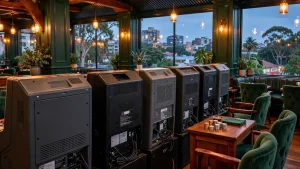
Best pokies in Brisbane: games, venues and claims
The guide weighs what can be verified about local venues, opening hours and online play...

Pokies in Canberra: Checking Venue and Gaming Hours
Venue opening times and gaming-area availability can differ, so a general listing may not answer...

Best pokies in Geelong: what local searches can confirm
A careful guide to checking venue hours, interpreting payout claims, and distinguishing local facts from...

Best Pokies in Melbourne: Finding Local Options
A location-focused guide distinguishes neighbourhood searches, venue-hour claims and gaming-floor rules from assumptions broad Melbourne...

Best pokies in New South Wales (NSW): access
Venue opening status does not establish machine access; location searches and available details can leave...

Best pokies in Perth: hours and comparison limits
Venue hours, machine availability and payout comparisons require separate checks, so broad Perth listings do...
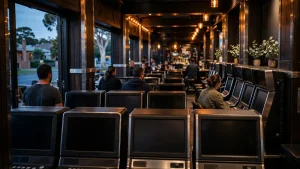
Best pokies in South Australia: venues, RTP and access
A practical guide to RTP, venue availability and the legal distinctions that shape searches for...
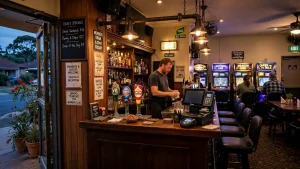
Best Pokies in Sydney: What Location Searches Reveal
Location terms can point to venues, directories, advertisements or online gambling pages, but they do...

Best Pokies in Tasmania: Venue Hours and Local Rules
Tasmanian gaming access depends on venue-specific hours, local rules and the distinction between land-based rooms...

Online Pokies for Real Money in Australia: What to Know
Australian law distinguishes offshore operators from domestic services, while deposits, payment methods and access alone...

Big Red Pokies Online in Australia: Free Play
A clear look at demo play, real-money rules and why a familiar game name cannot...

Most Trusted Online Casino Australia: What Trust Means
The guide separates operator claims from Australian licensing, payment methods, payout terms and what the...



































































































































































































